Philosophy

Symposium’s collections of writings and references are best described as the curation of symbols and light.
Symbols
In his studio, George Frederic Watts was feeding the beauty of the ancient Parthenon sculptures directly into his paintings. Neighbouring him in the south of England, Edward Burne-Jones scrupulously studied the figures of Michelangelo to enrich his own painting language. Arnold Böcklin, surrounded by the Renaissance masters in Rome and the Italian landscapes, would from this inspiration go on to produce his most famous work. But they were not creating the paintings typical of the 19th century École des Beaux-Arts.
There had been a rising dissatisfaction with the academic salons, whose historicist tendencies and technical virtuosity had become a suffocating standard. The Impressionists found a way to reconnect with art by painting their immediate surroundings, focusing on capturing the sensations of wind and fleeting light effects of daily life, and loosened the rigidity tradition in favour of experimentation.
However, at the same time another group of painters gripped tighter onto tradition, though it was not that of the salons’ principles. It was a human tradition, a return to the stories we have been telling for millennia with a new emphasis on capturing the emotion and mystery of their beauty.
Whether studying the sculptures of the Ancient Greeks or Renaissance Masters, or the glittering mosaics of Byzantium, the Symbolist painters created a shift from prioritizing the heights of aesthetic intellect, to reaching for the inner depths of the soul. They used classical as well as innovative techniques to depict ancient myths and symbols, and sought to bring out that which was most visceral.
They held the belief that in these ancient stories, there lay a beauty that was relevant to their century’s struggles, and forged new ways for current audiences to connect to them.
‘Let there be light’
But while a powerful example, the Symbolists were of course neither the first nor the only painters to succeed in this endeavour.
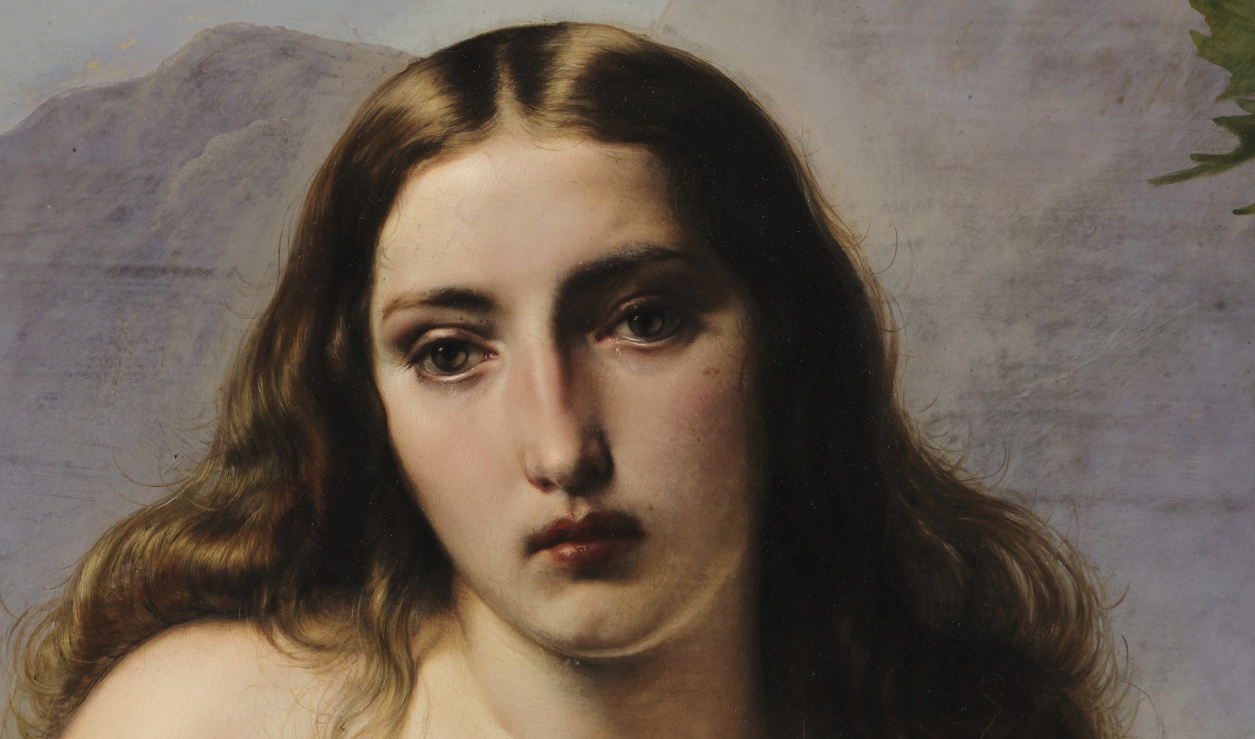
Rembrandt, while clearly demonstrating a mastery over creating the material realism of books and fabric and skin, was more focused on using this in service of capturing the emotional or spiritual realism of light. Likewise, the deep golden eyes of Francesco Hayez’s Mary Magdalene as a Hermit, the elegant curves of Botticelli’s female portraits, and Henry Fuseli’s haunting dreams all served this same purpose.
Thus, symbolism is not limited to the exact qualities of the fin de siècle Symbolist painters, but to those seeking to use their classical training to discover, within the universal stories and images of the past, that which is relevant and personal to today, and in the intimate quietness of simple scenes and portraits, to find that which is universal.
Mission
Read about our aim to support artists, and gather art enthusiasts.
Founders
Symposium began with a partnership between two sisters.