Editing an Old Master’s Work
Constantly, different versions of artworks circulate online.
Melancholy
Odilon Redon
1876
Charcoals and gouache, with pastel and black chalk on gray wove paper
36.8 × 35.7 cm
Collection: Art Institute of Chicago (not on display)
A popular digital copy of Redon’s work online.
Someone edits a photo radically, and their copy then becomes the most famous digital representation of the work. When the artwork is in a prominent museum, with museum catalogues and tourist videos available online to check, this is a little easier to get around.
Another clue is to look at the artist's other work: what palette do they typically lean to? Is this copy radically different?
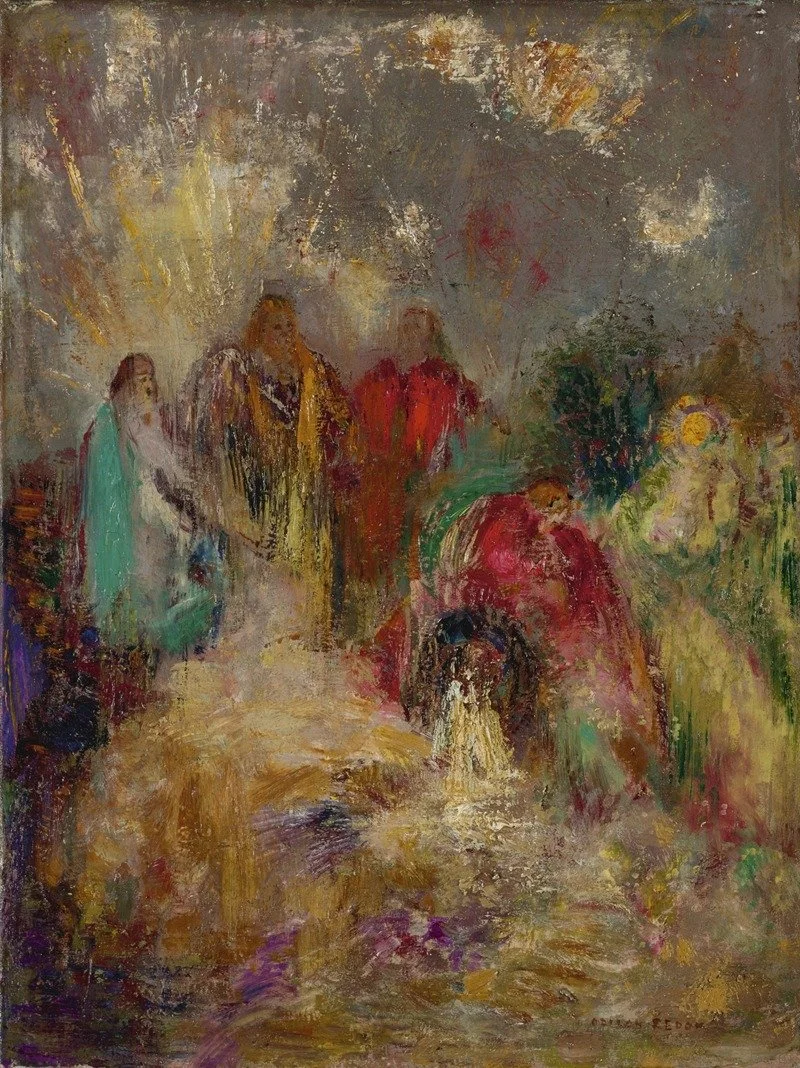
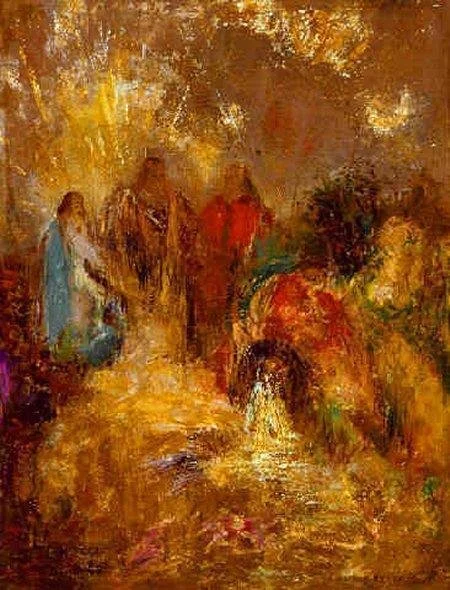
While the gold is a beautiful rendition, the left is far more typical of Redon’s palette.
Christ and His Disciples Odilon Redon circa 1905 Oil on canvas 32.39 x 24.45 cm Collection: Private collection
Even then, sometimes the more accurately colour-graded photos tend to be the lowest resolution ones. And it's particularly hard when the artwork is in private collection, unavailable to view and verify.
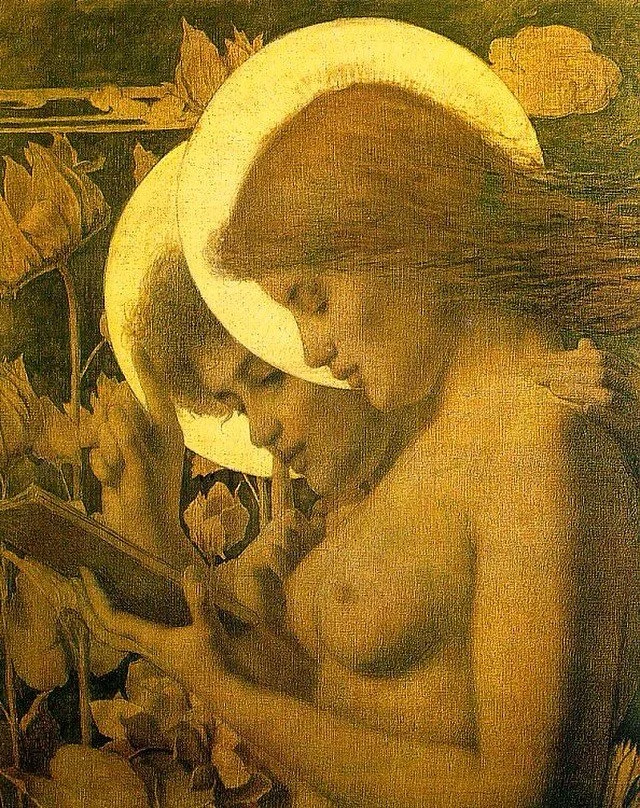
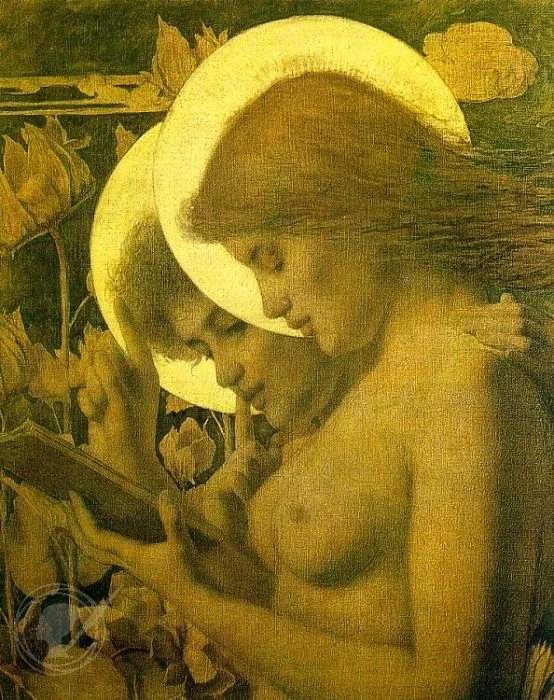
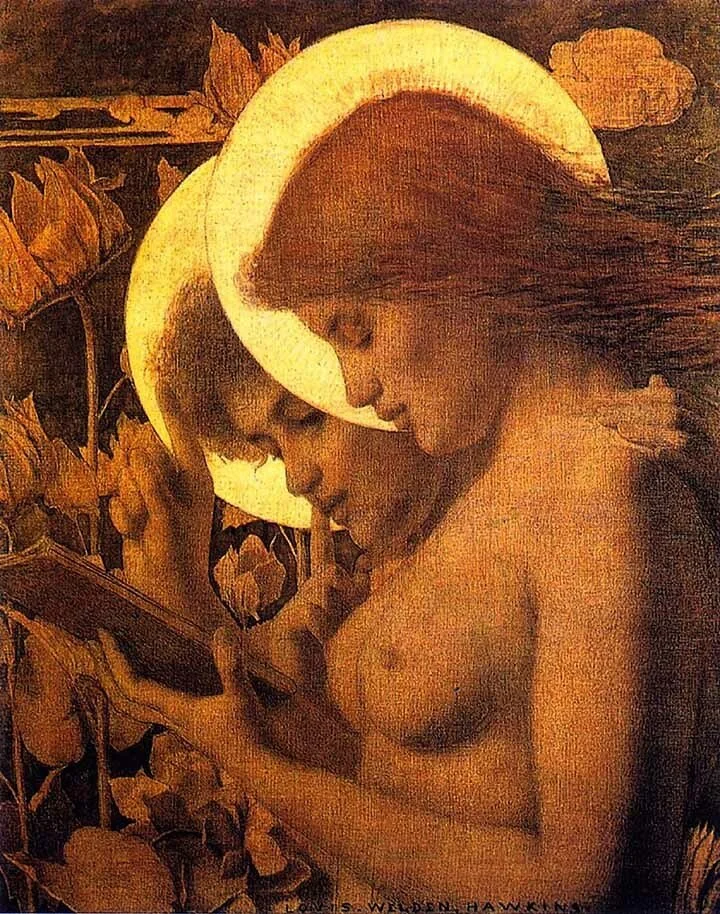
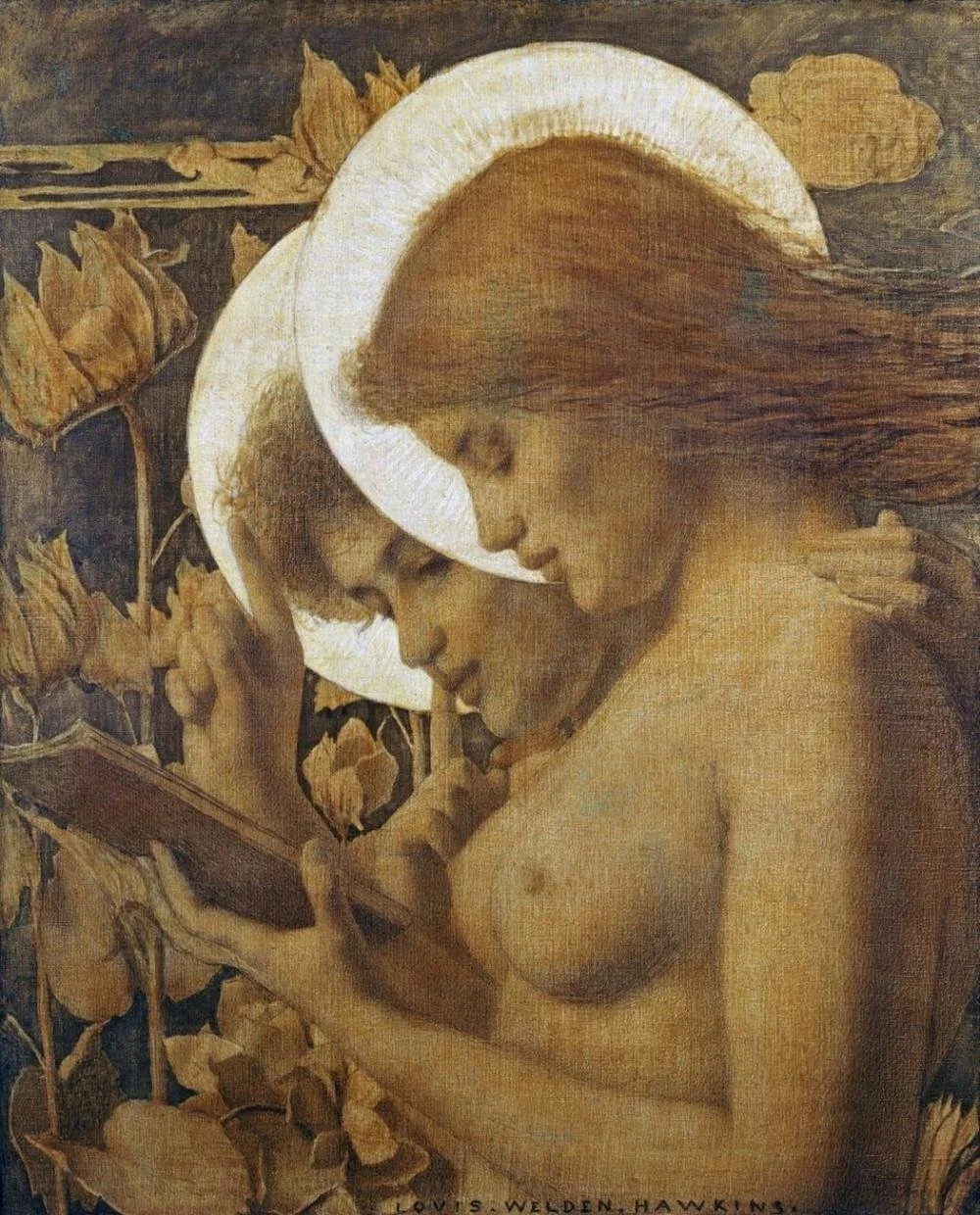
Several versions of Les Auréoles
(The Haloes) by Louis Welden Hawkins
c 1891-94
Oil on canvas
61 x 50 cm
Collection: Private collection in Paris
But we've been doing this for so long. When the old epics like Beowulf were created, they were made through multiple iterations, each storyteller adding and changing details according to their preferences.
People changed others' artworks, even when the concept of 'the artist' became prominent.
Do you think digital art edits are a bad thing, or part of a natural process that can have good outcomes? What if a copy improves the work?
Salome Dancing before Herod (Salomé dansant devant Hérode) Gustave Moreau 1876 Oil on canvas 143.5 cm × 104.3 cm Collection: Hammer Museum, Los Angeles
Which do you think is the original?
A beautiful portrait with a fascinating history. Read more.