The Head of John the Baptist from the Perspective of the Painter: Symbol Shorts
n
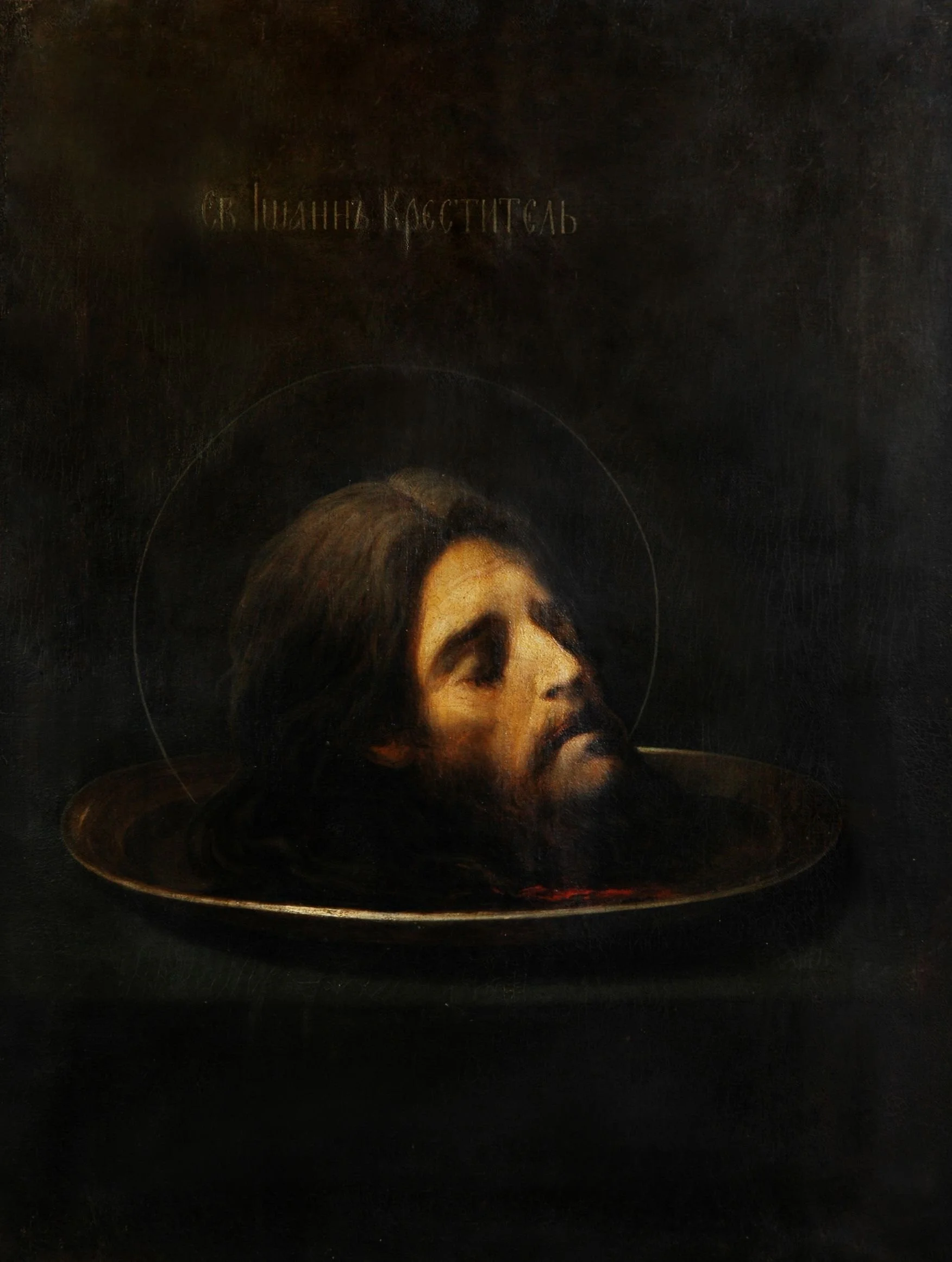
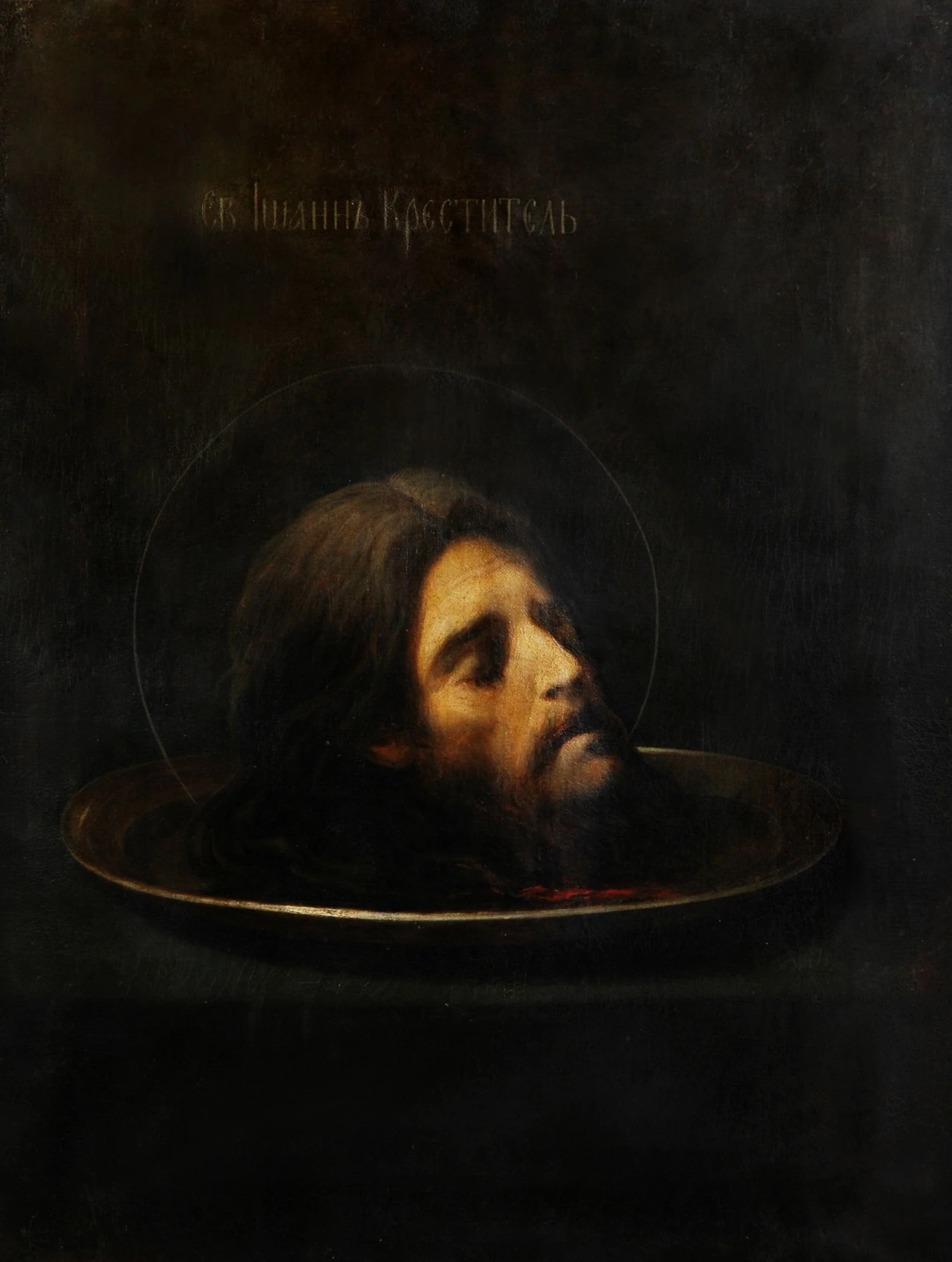
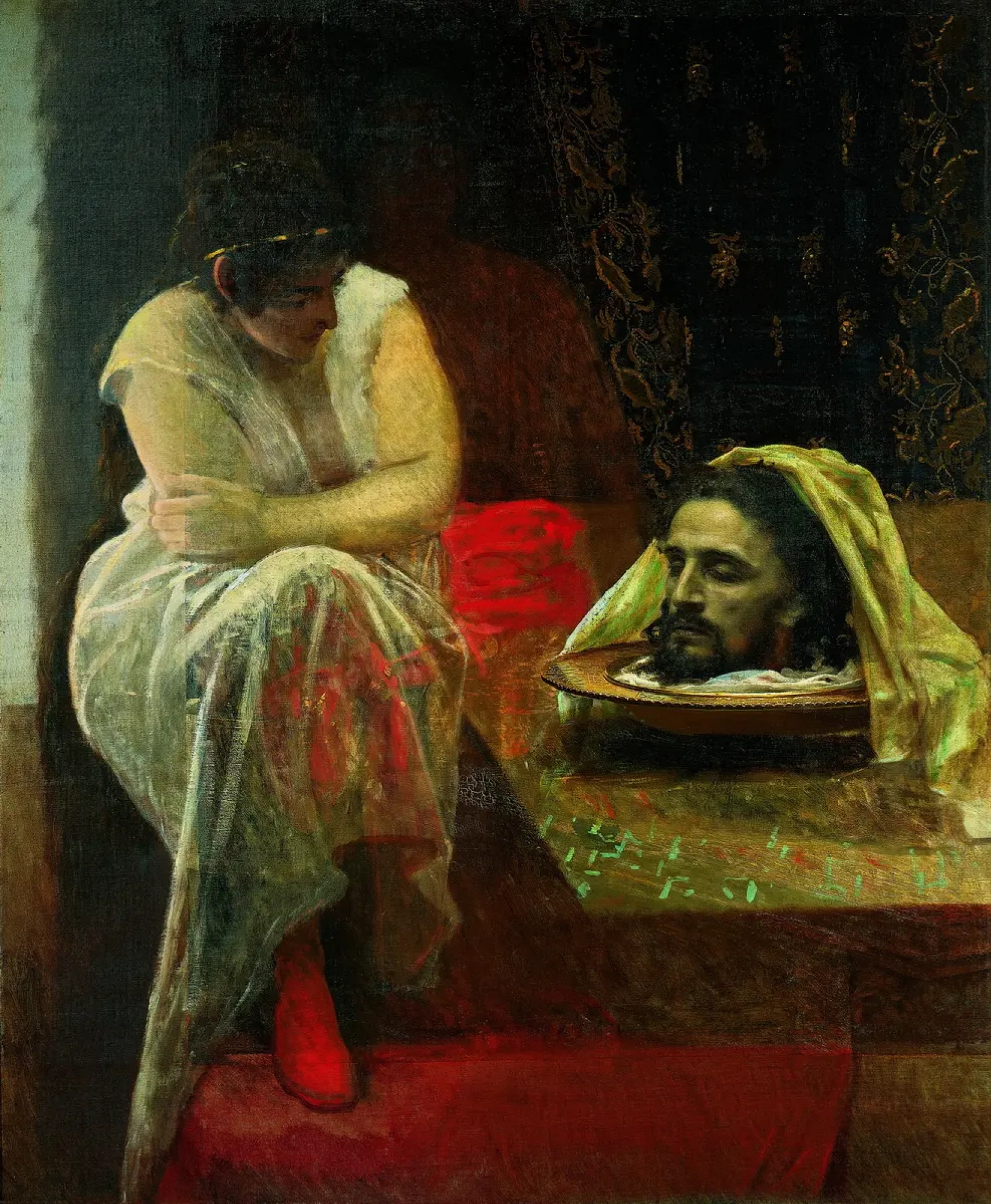
Head of John the Baptist, Alexey Mikhailovich Kolesov (1834 - 1902)
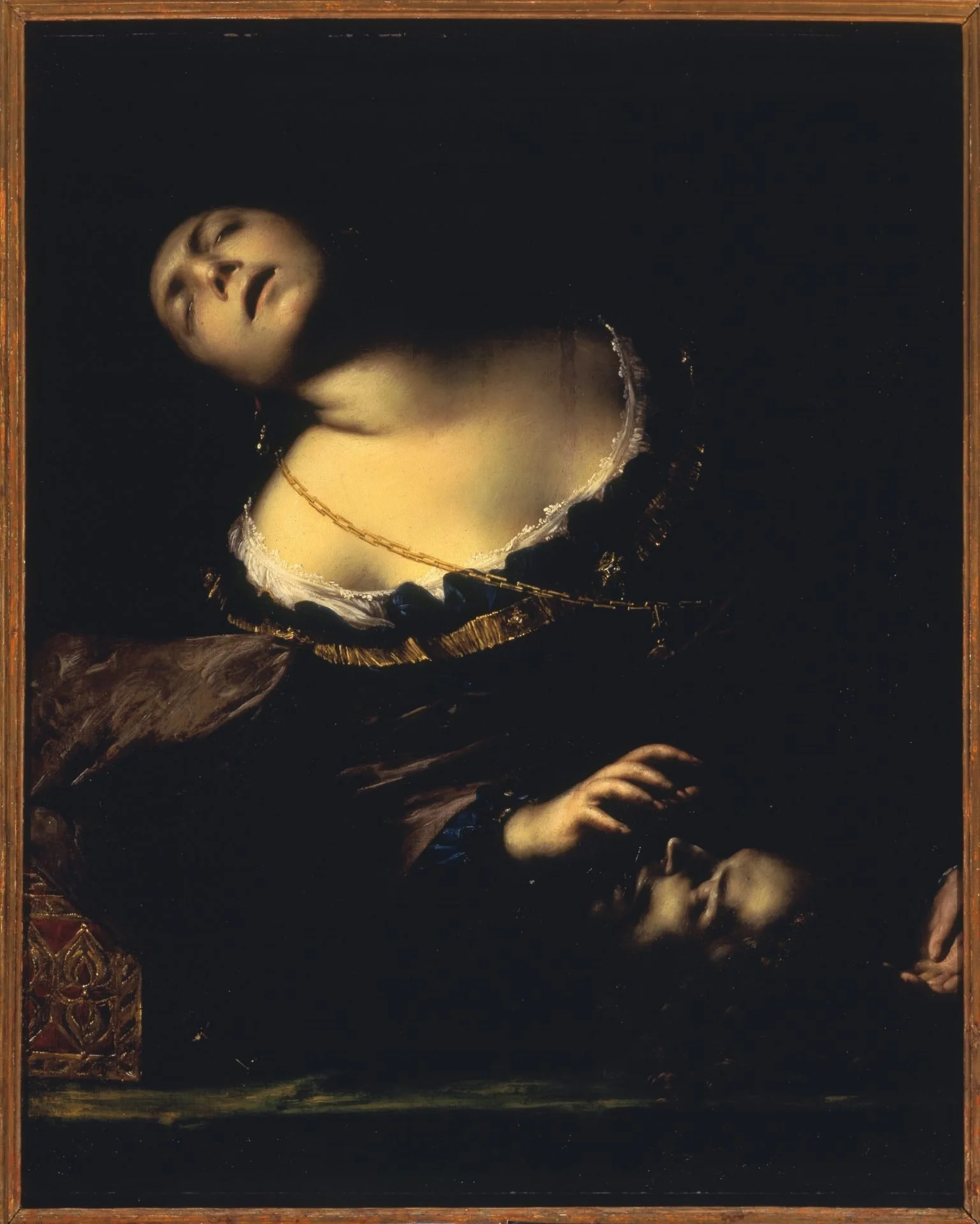
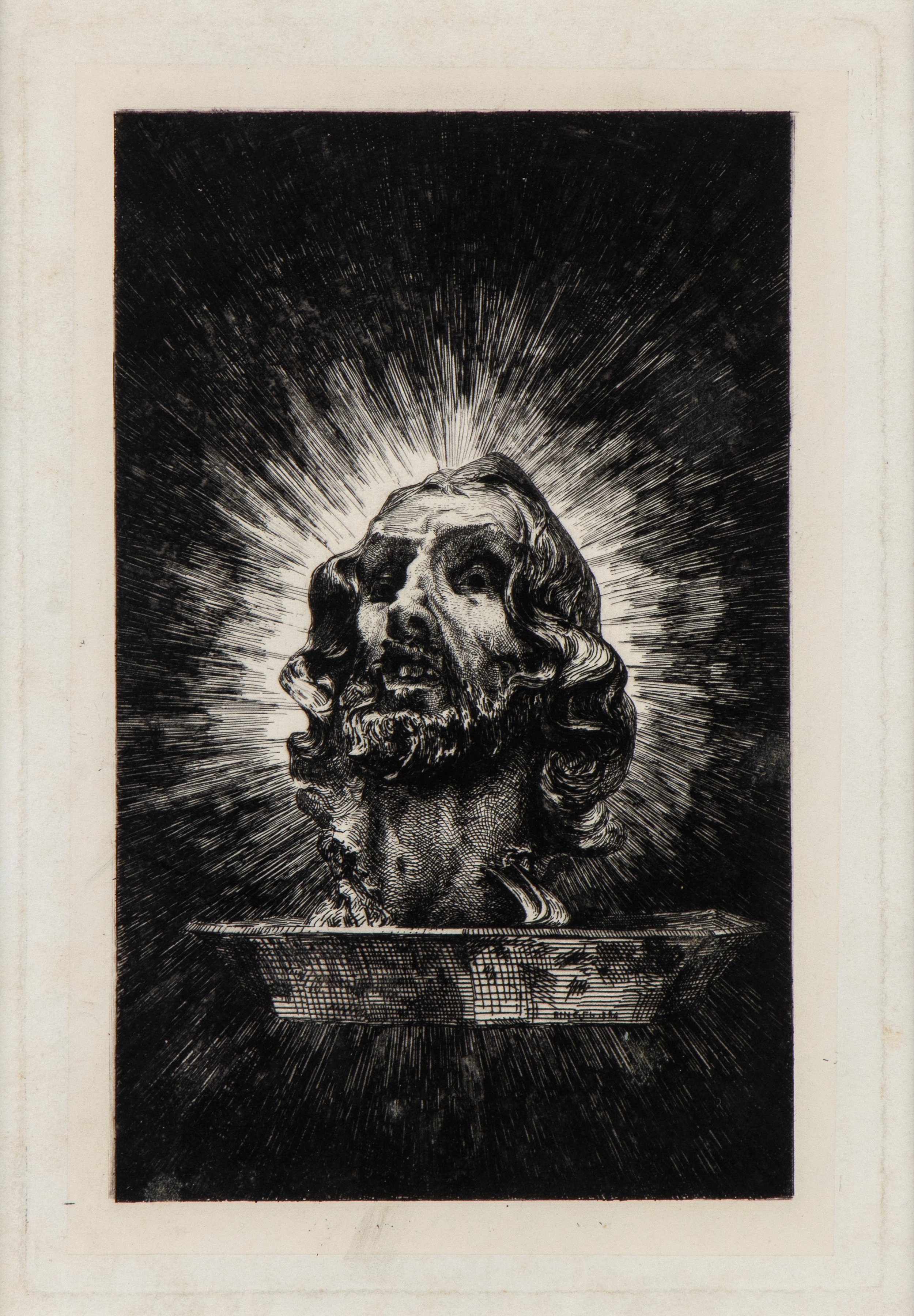
The painter’s eye often gives an insight into past works that might otherwise remain unseen. Attempting to depict the Biblical scene of the decapitated John the Baptist on a platter, one runs into a problem that is seen surfacing in a lot of paintings: the perspective of the head.
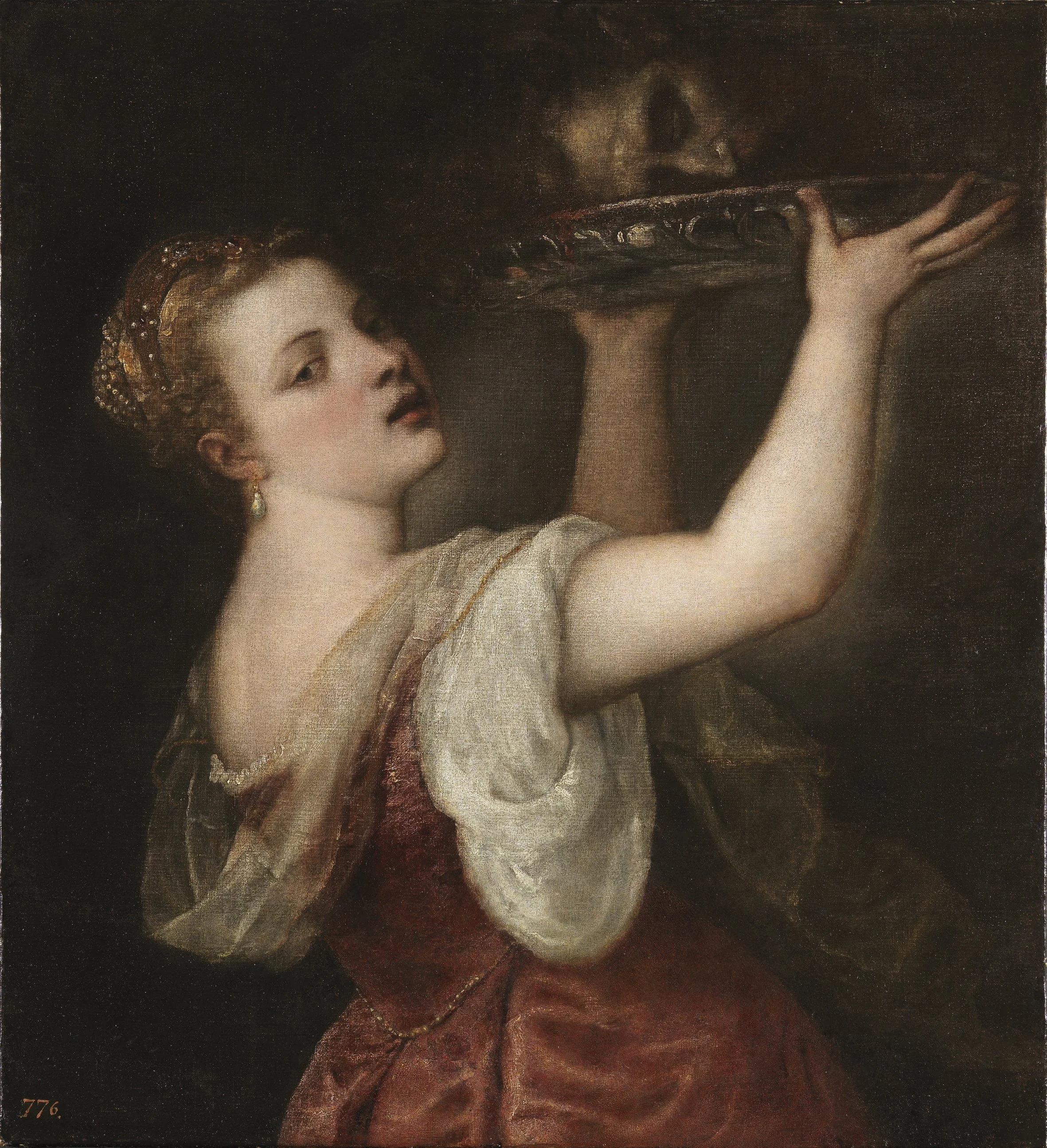
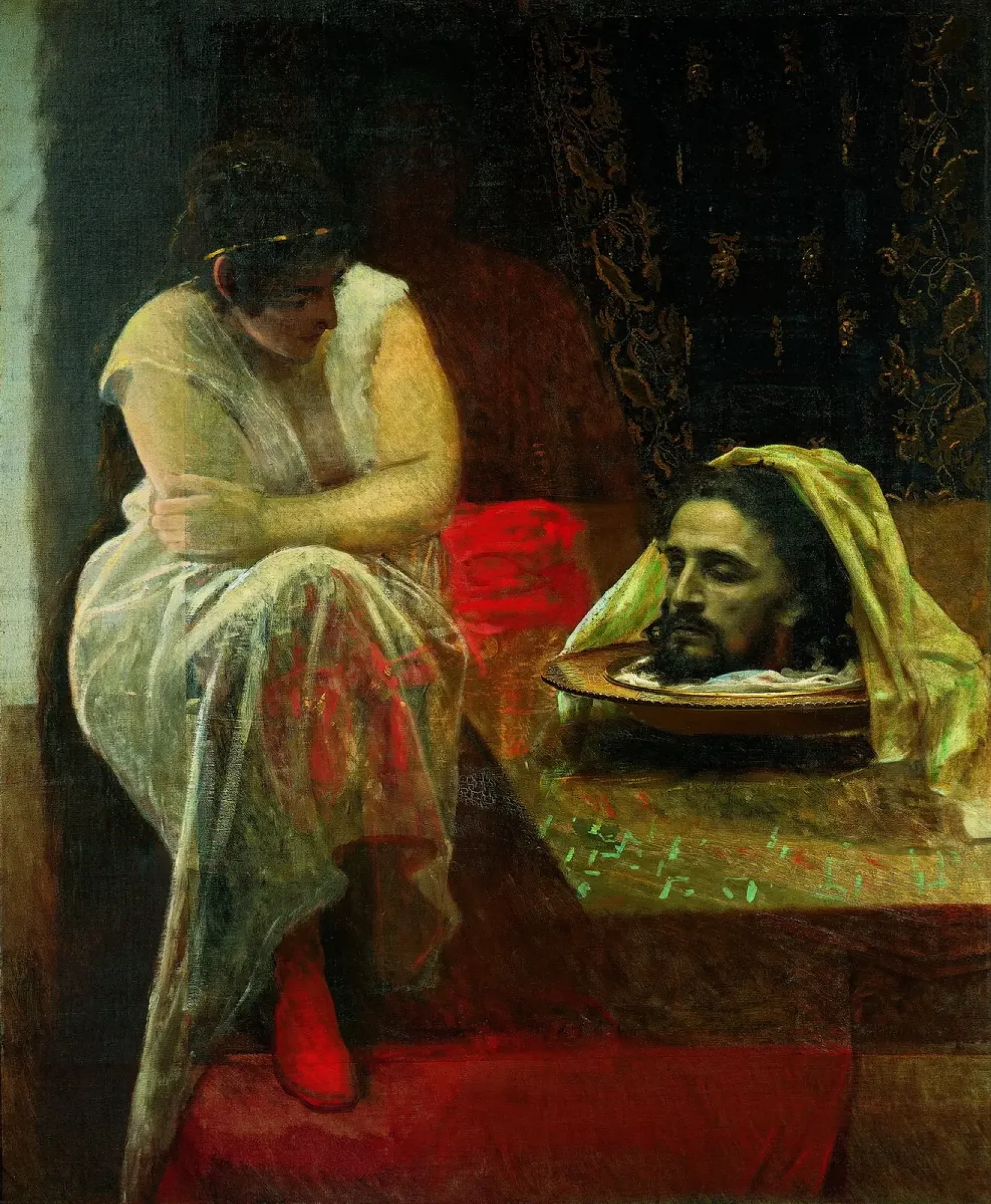
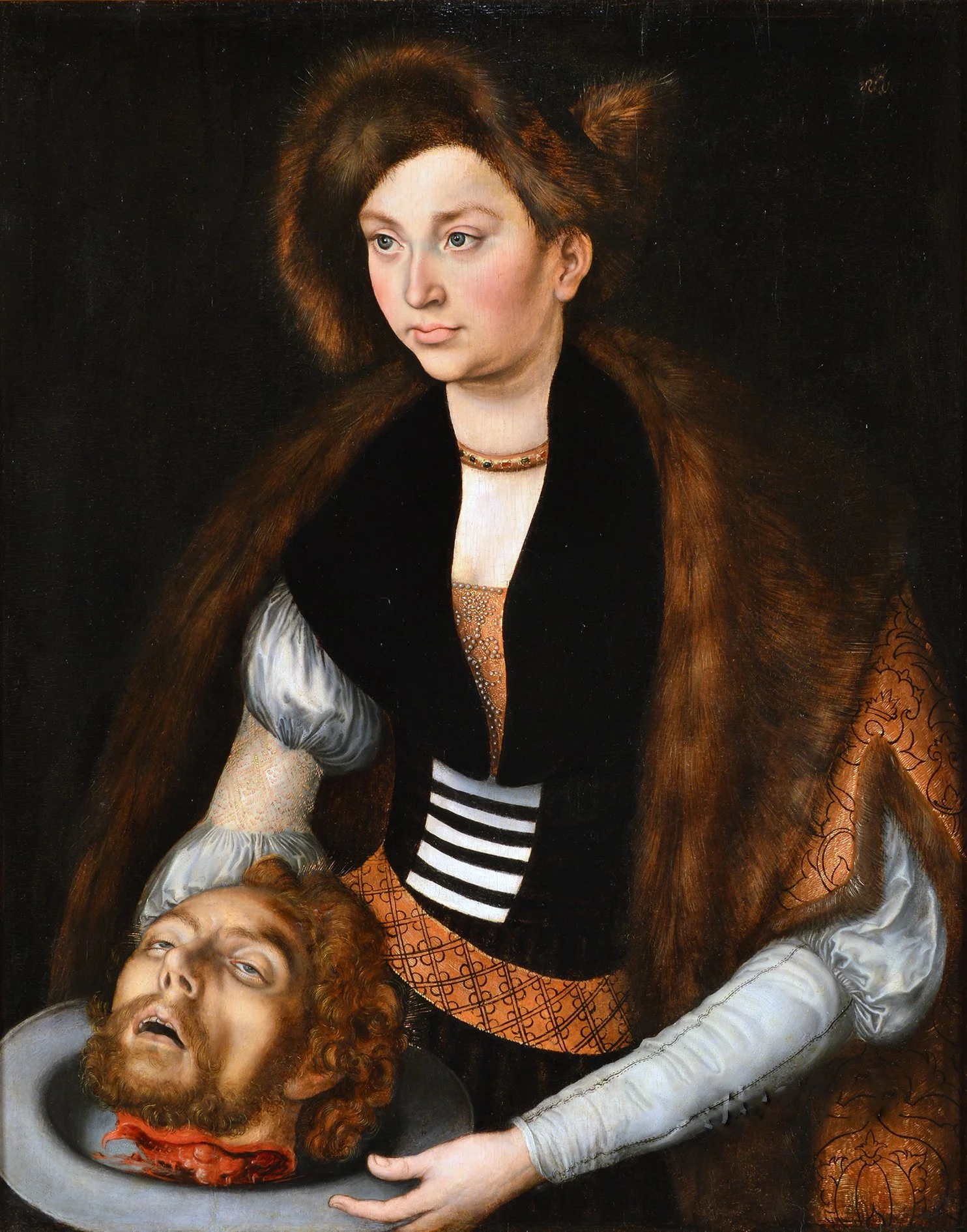
Placing John at eye level will mean that even shallow platters cover the base and neck and head. Conversely, placing him below eye level or look sharply downward into the bowl can be an awkward angle even if achieved accurately.
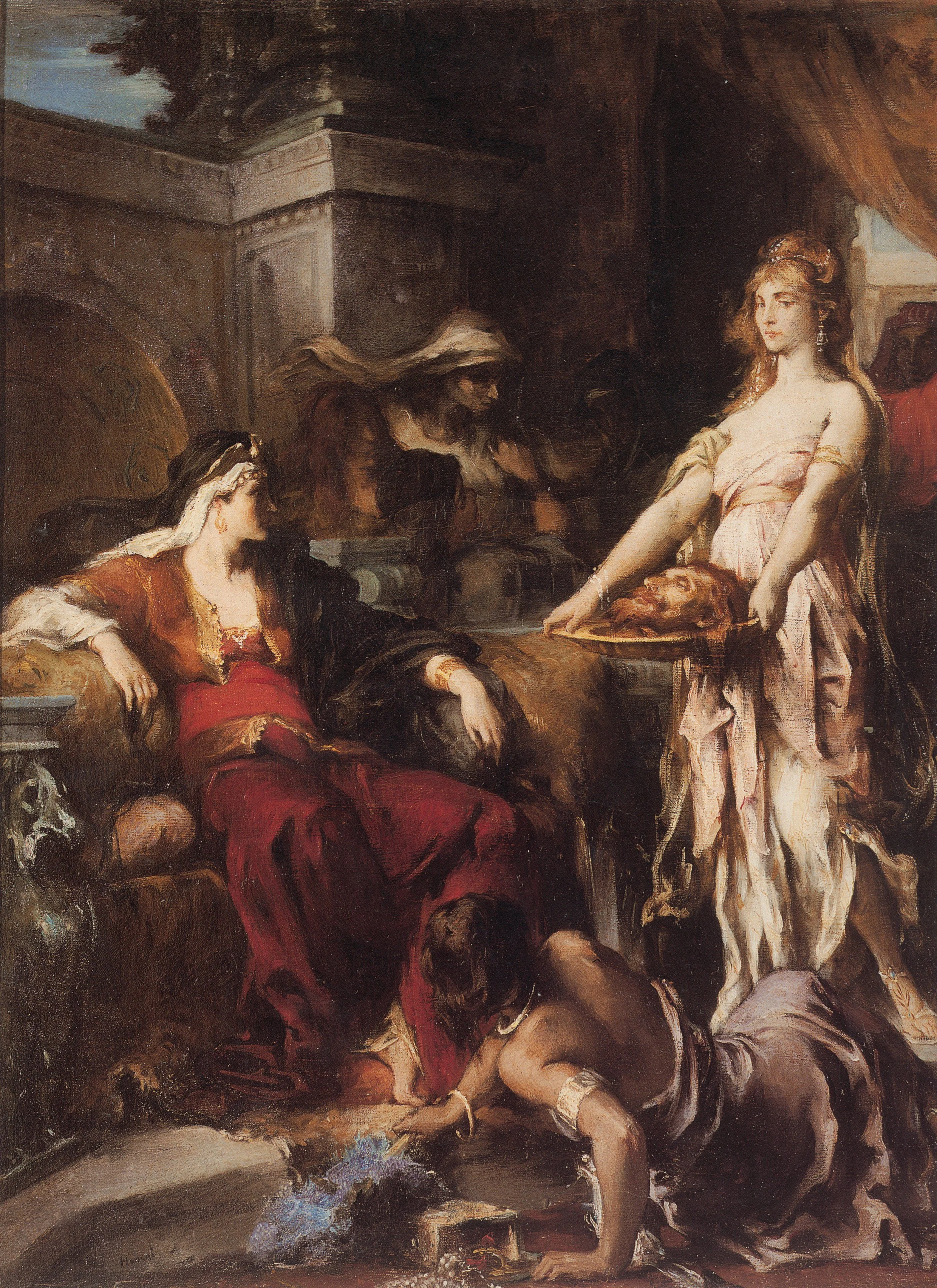
You can see how a few painters have mistakenly depicted a more bird’s eye view of the plate, while still trying to meet the audience and John at eye level.

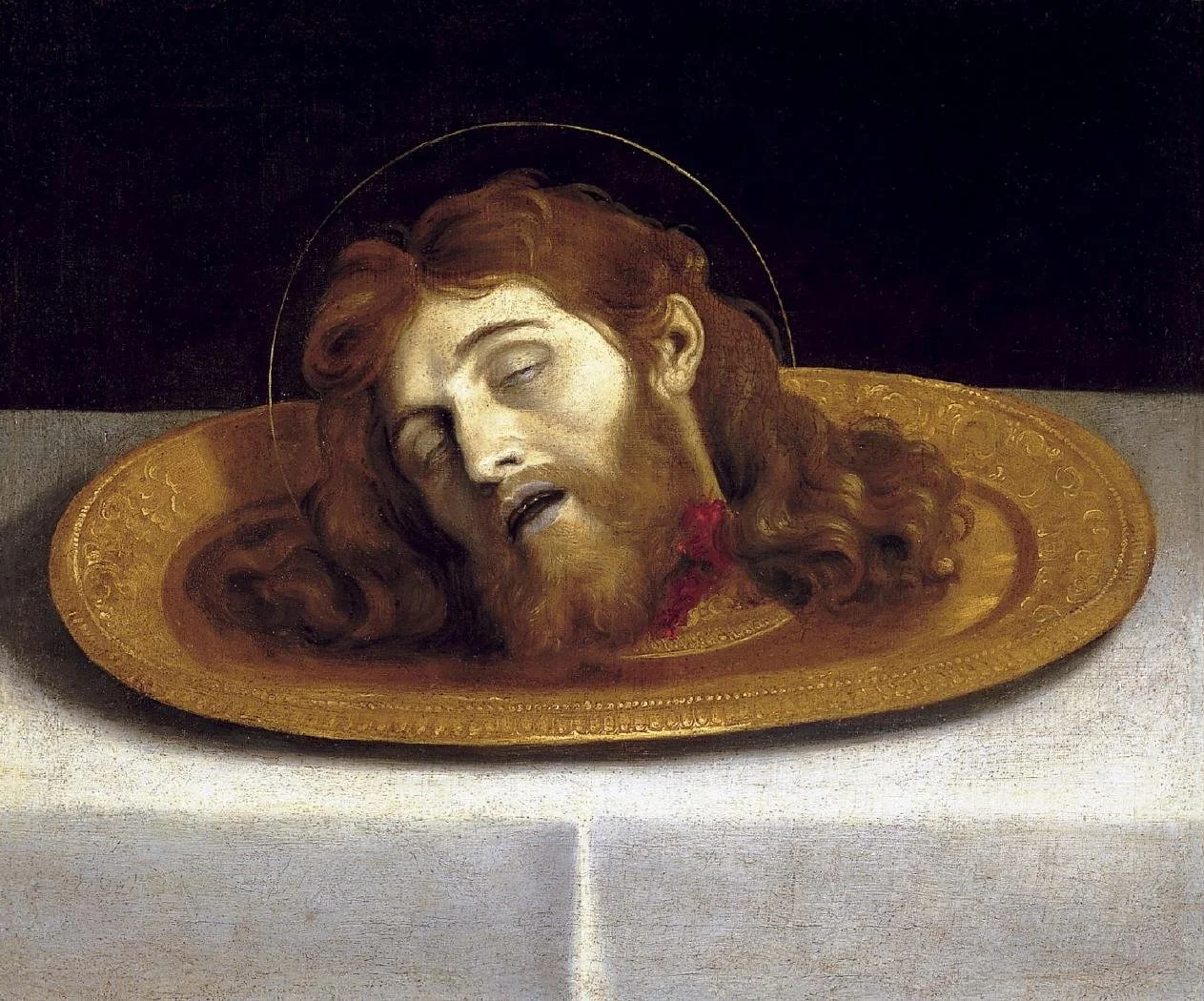
As a painter, you reach to the hundreds of past paintings to see if therein lies a solution.
More successful painters who didn’t want a partially covered head came up with a range of solutions:
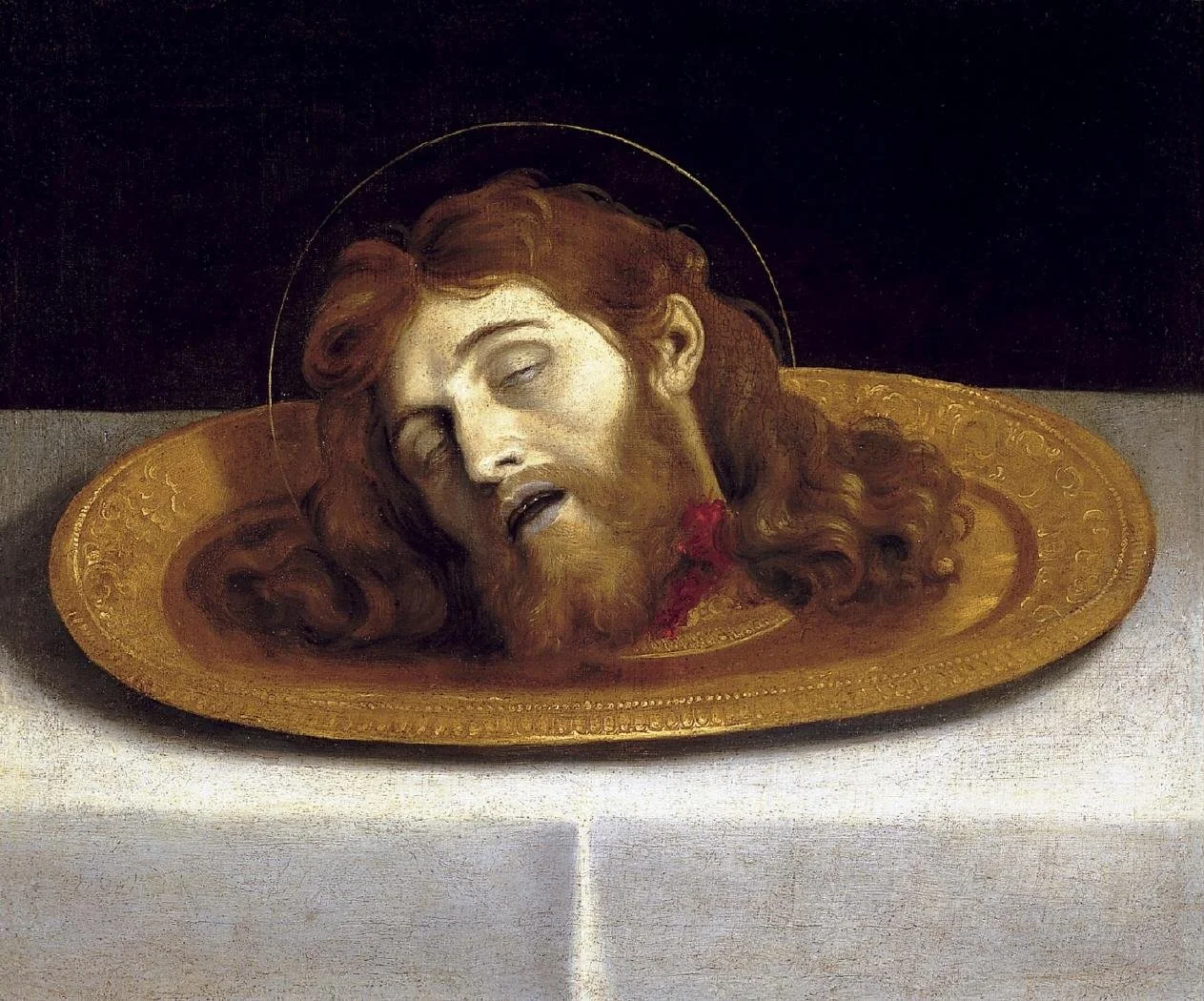
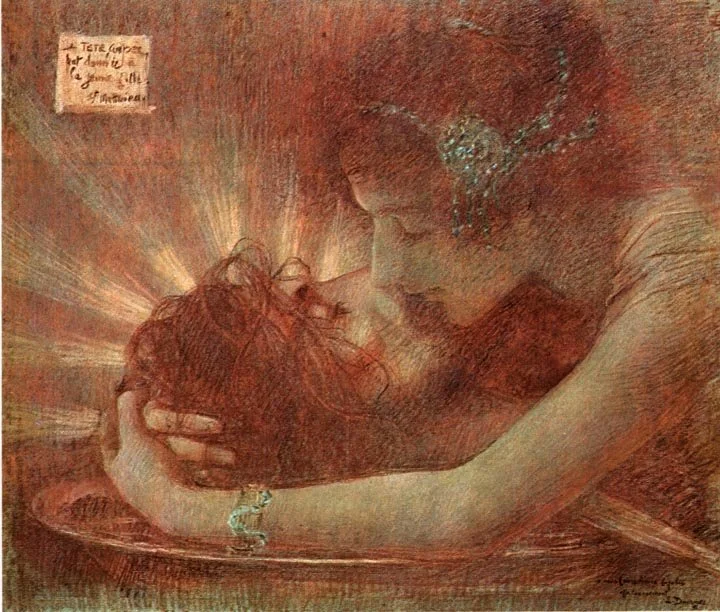
Lifting the head out of the bowl
Propping the head up with a cloth
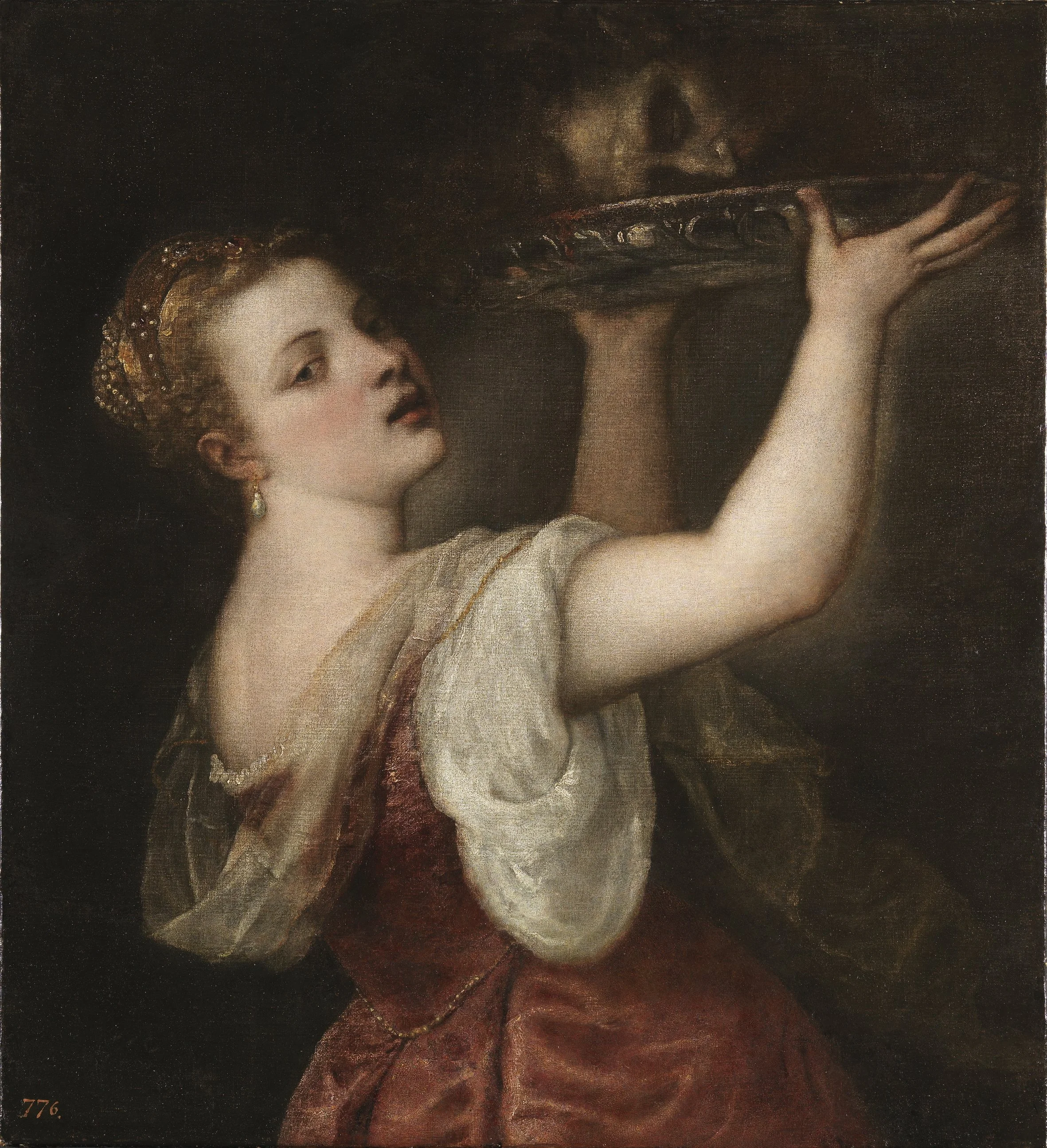
Angling the plate towards the viewers
Using a totally flat platter/table

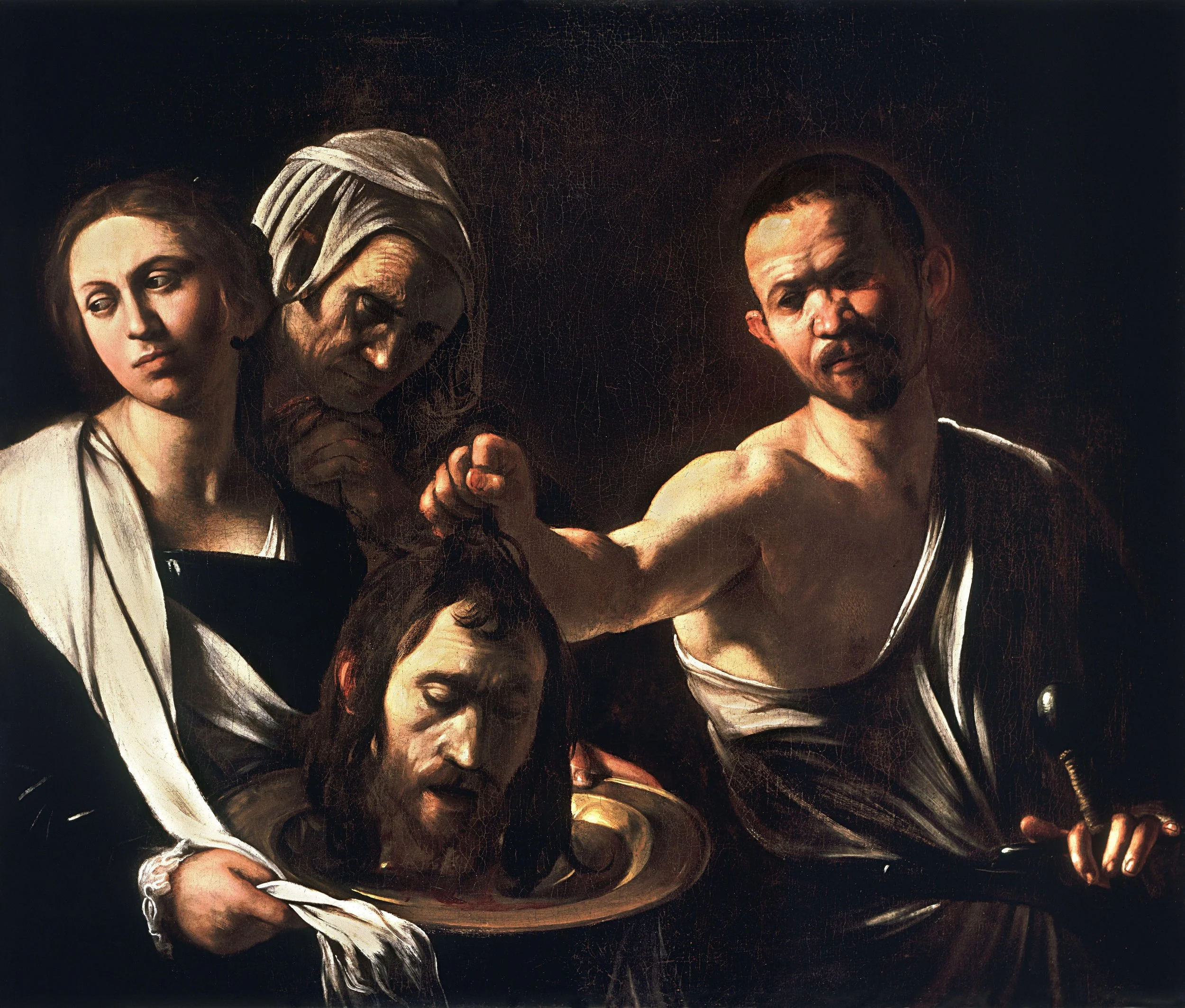
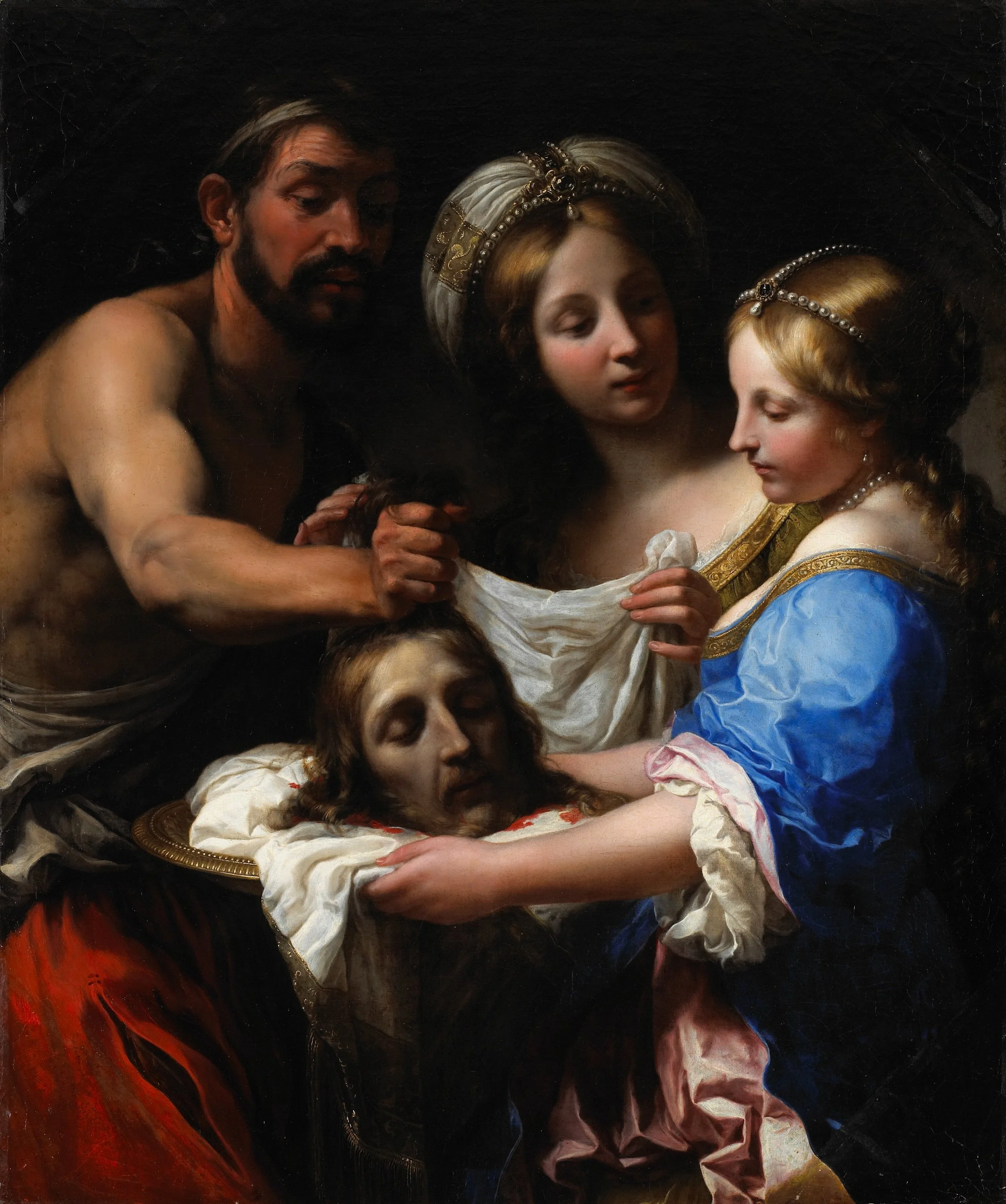
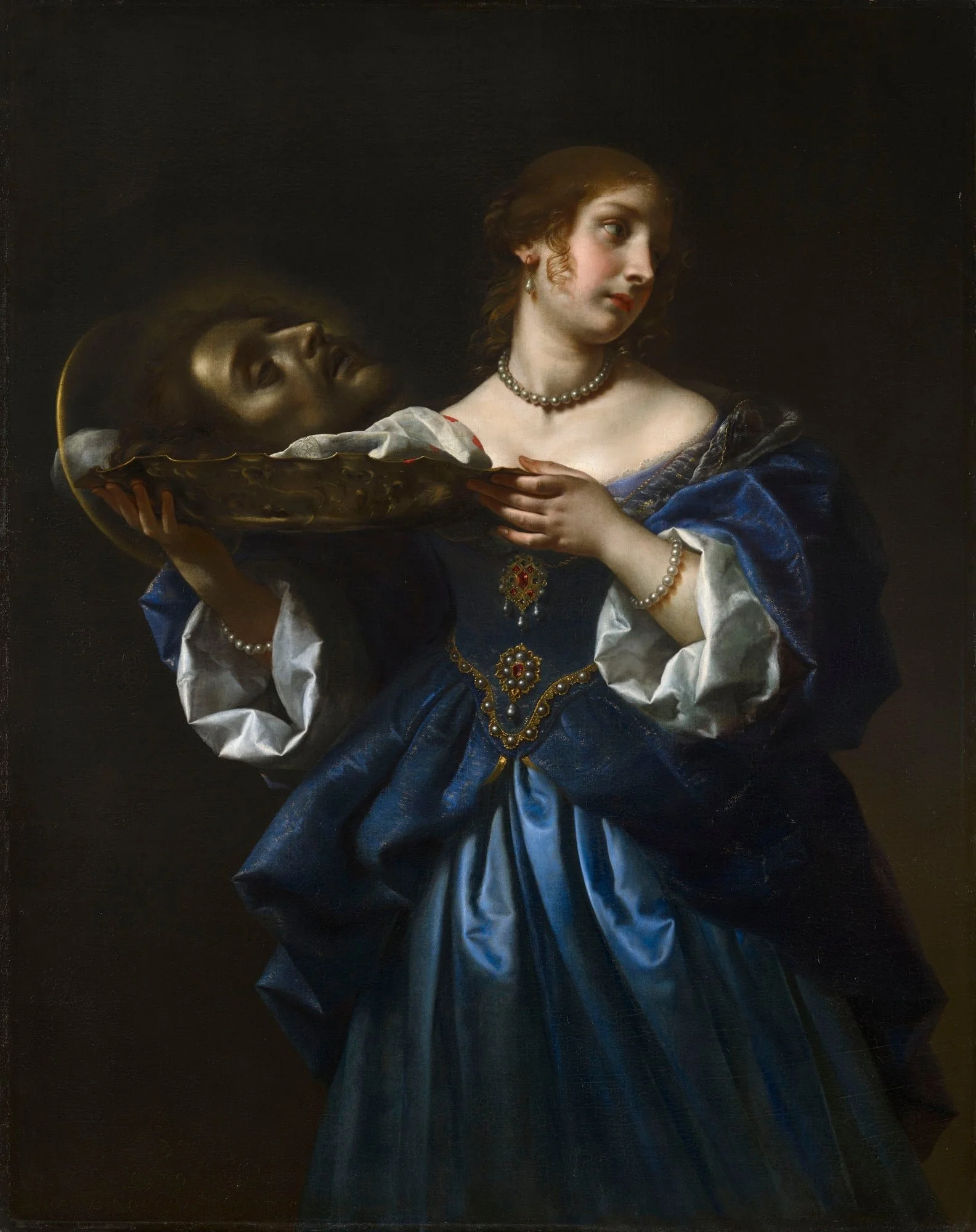
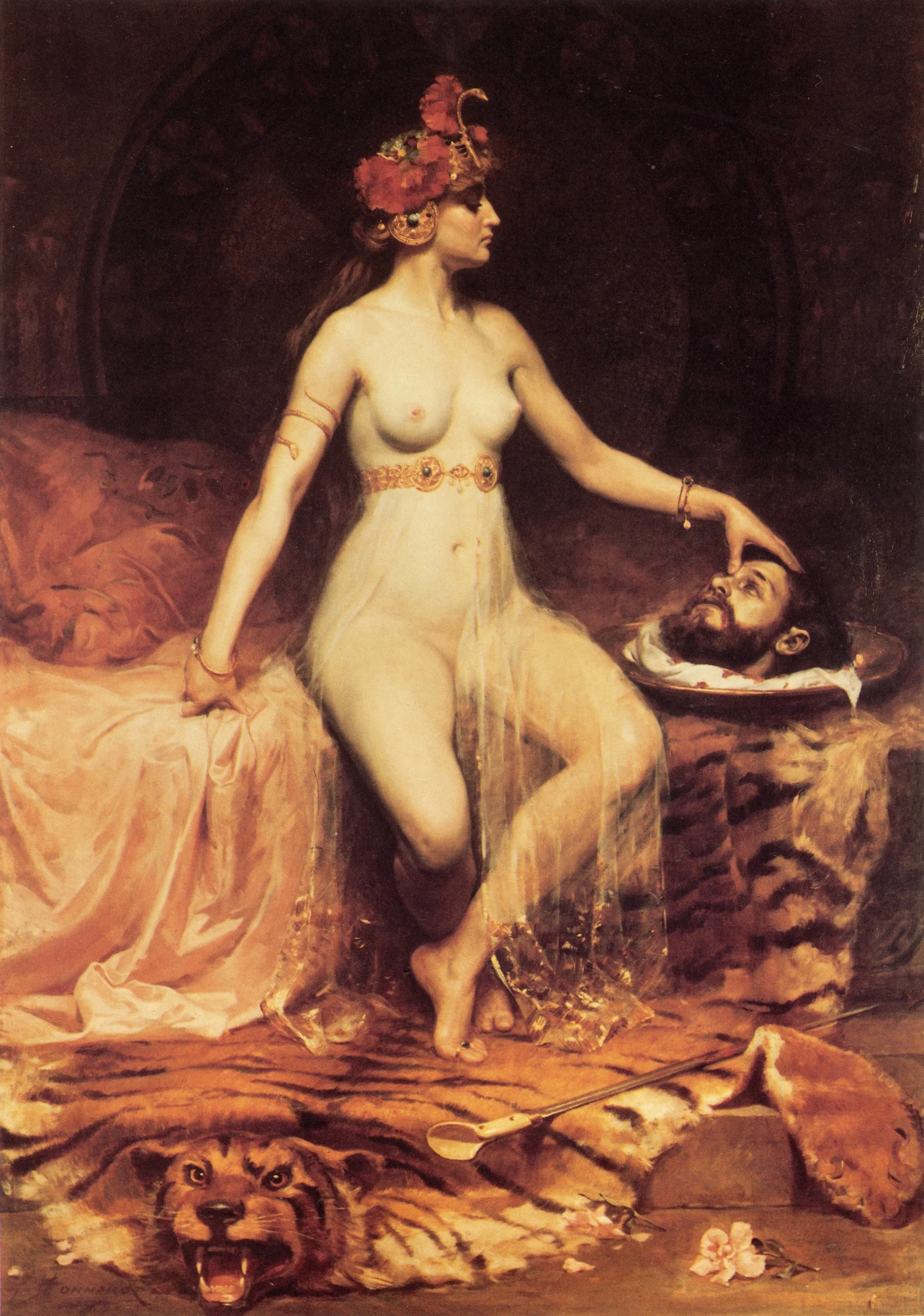
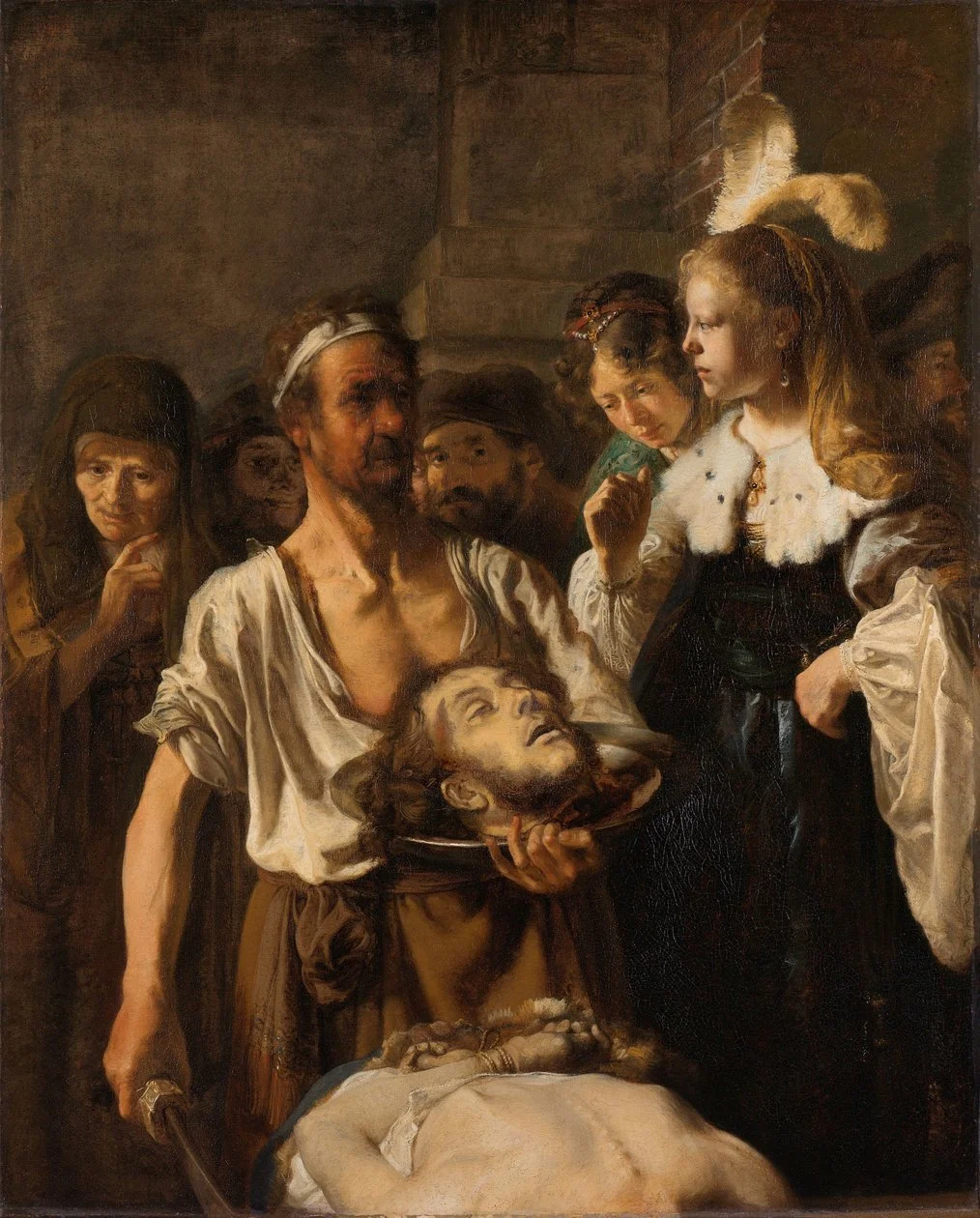
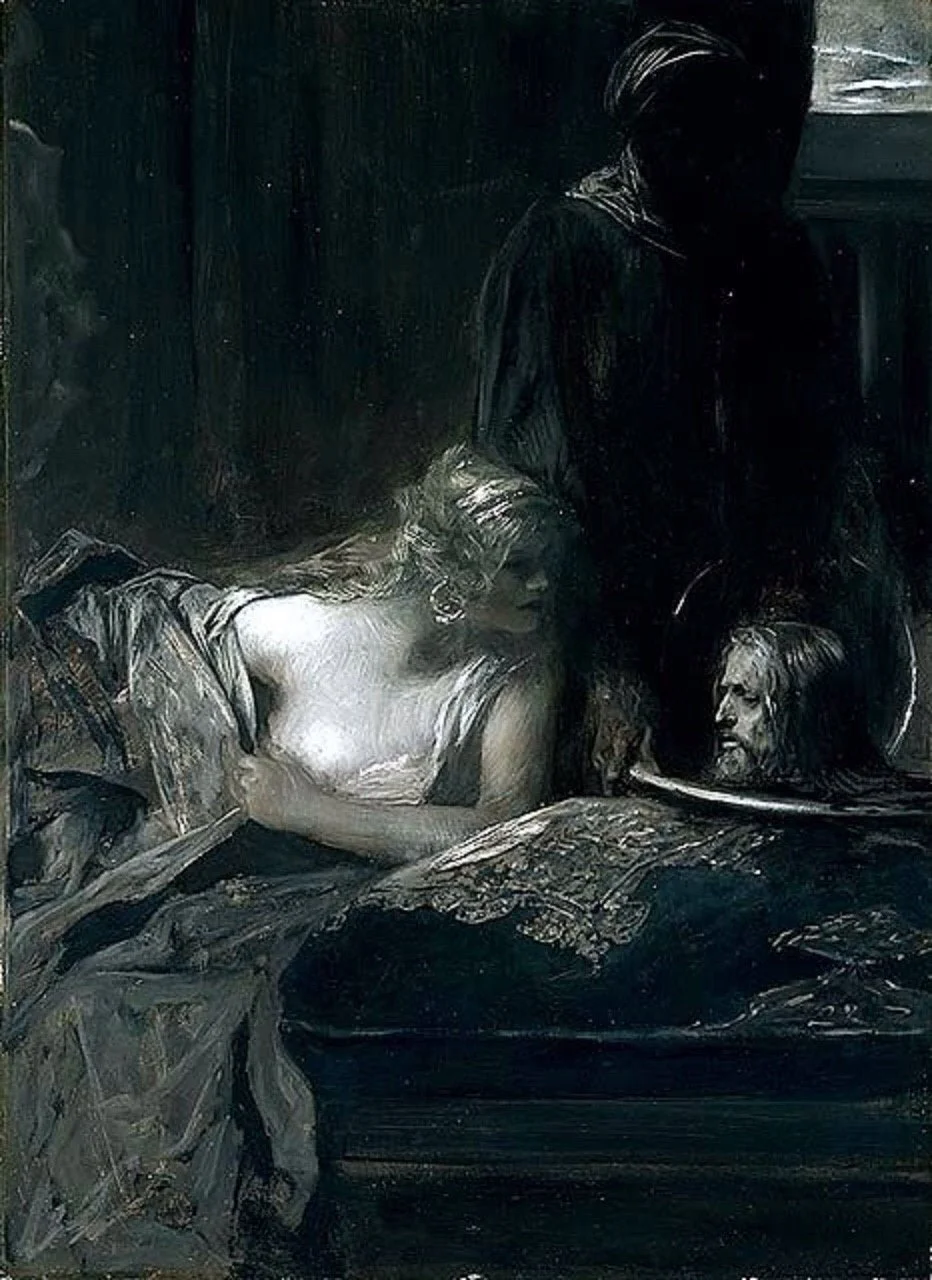

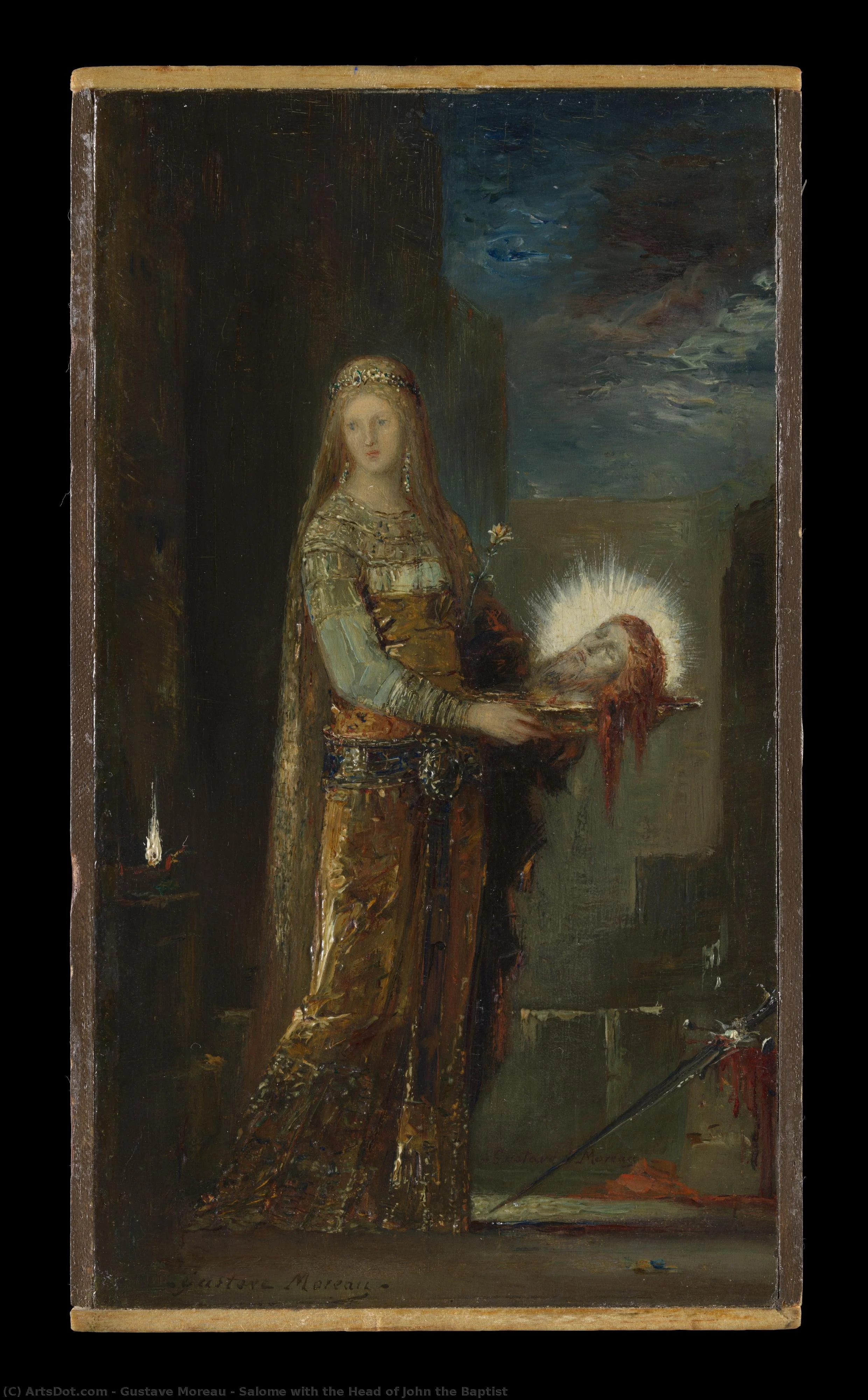
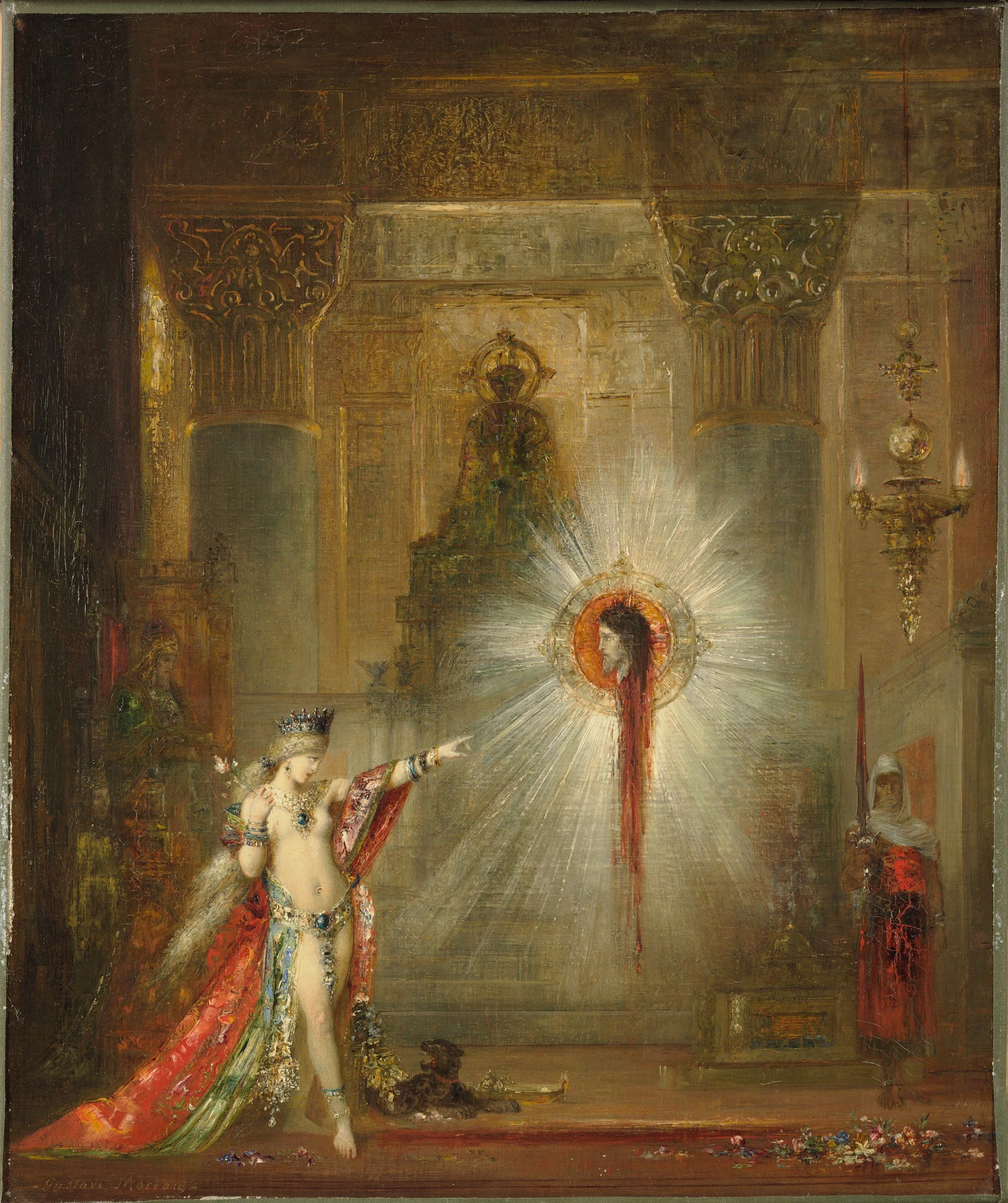
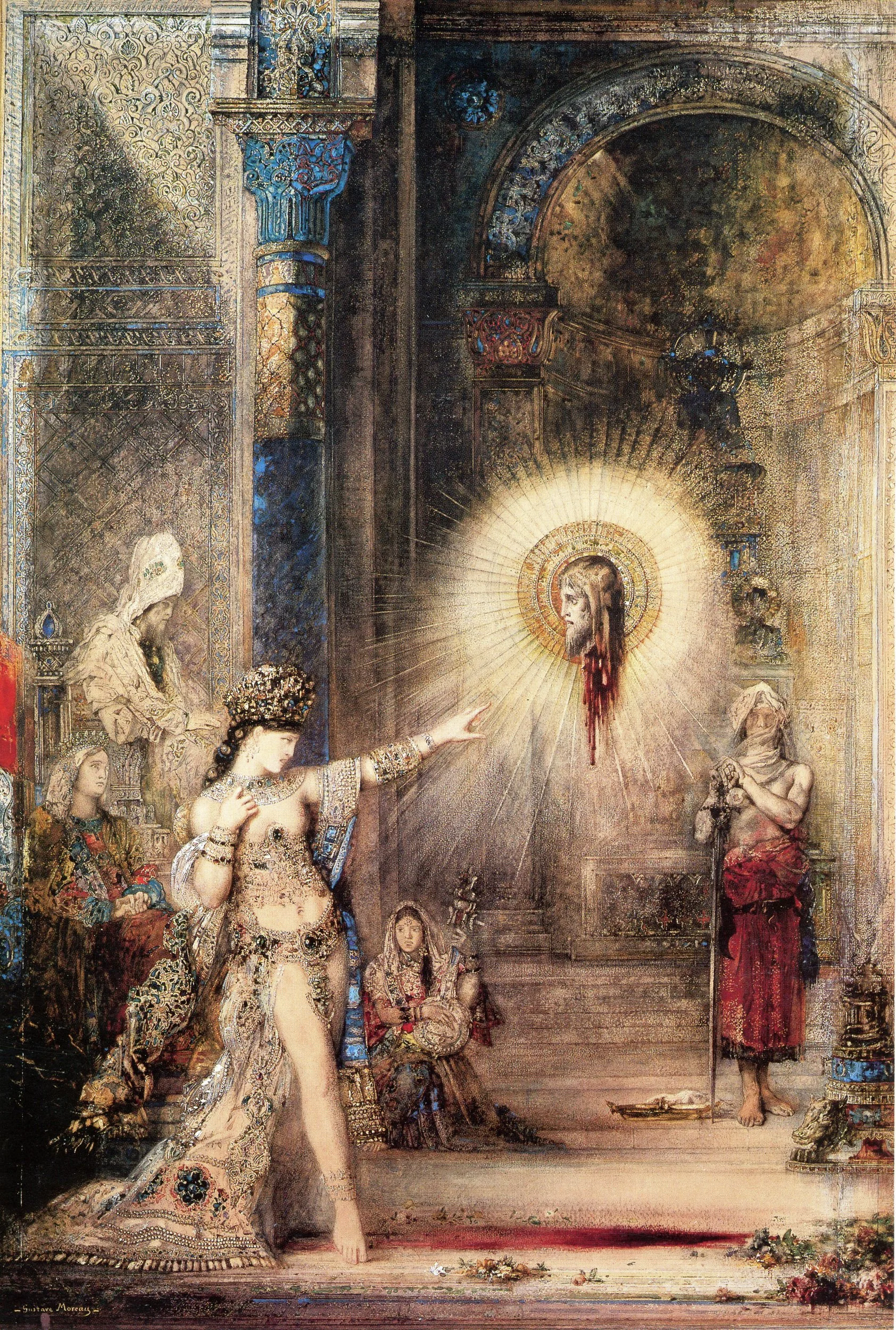
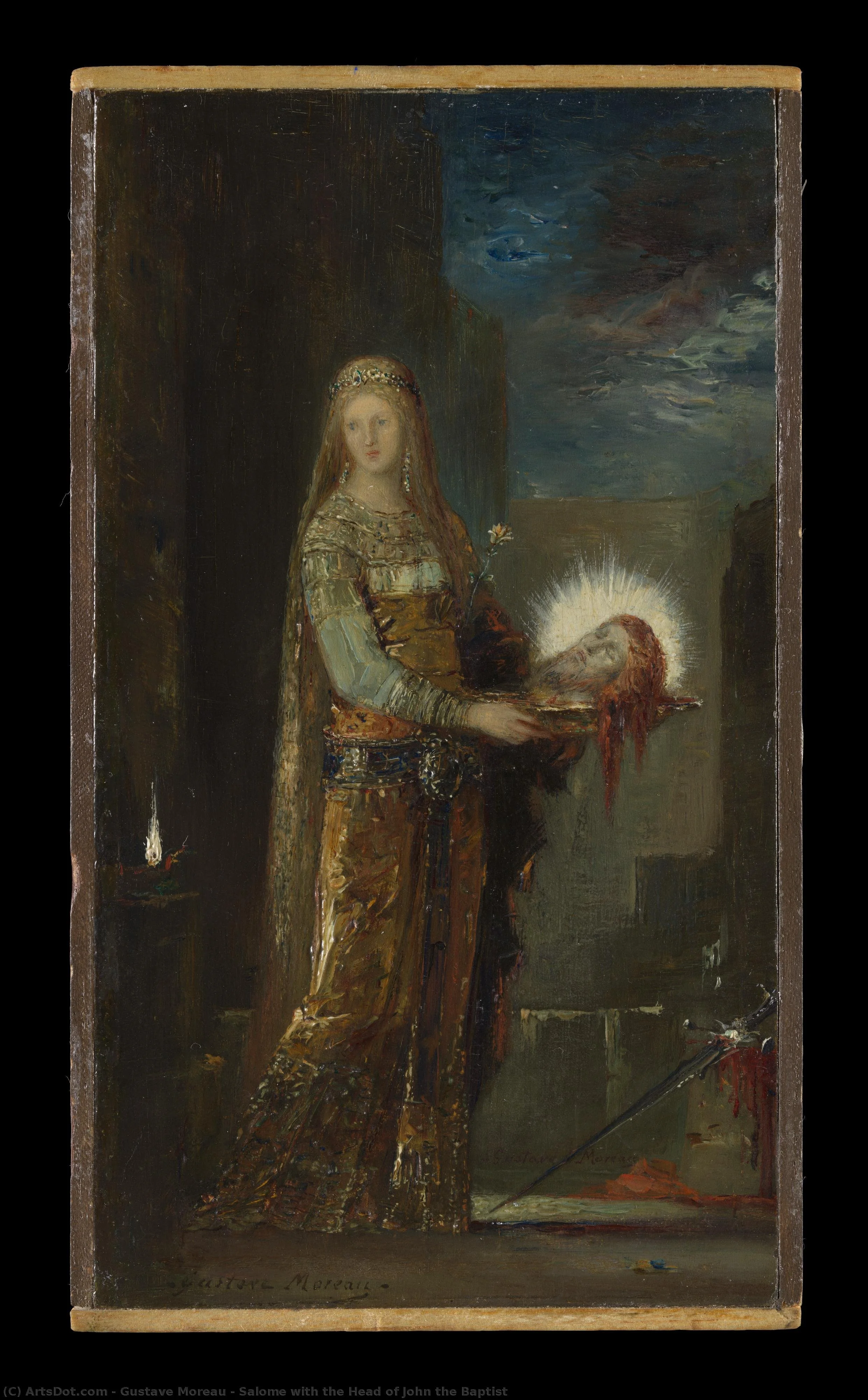
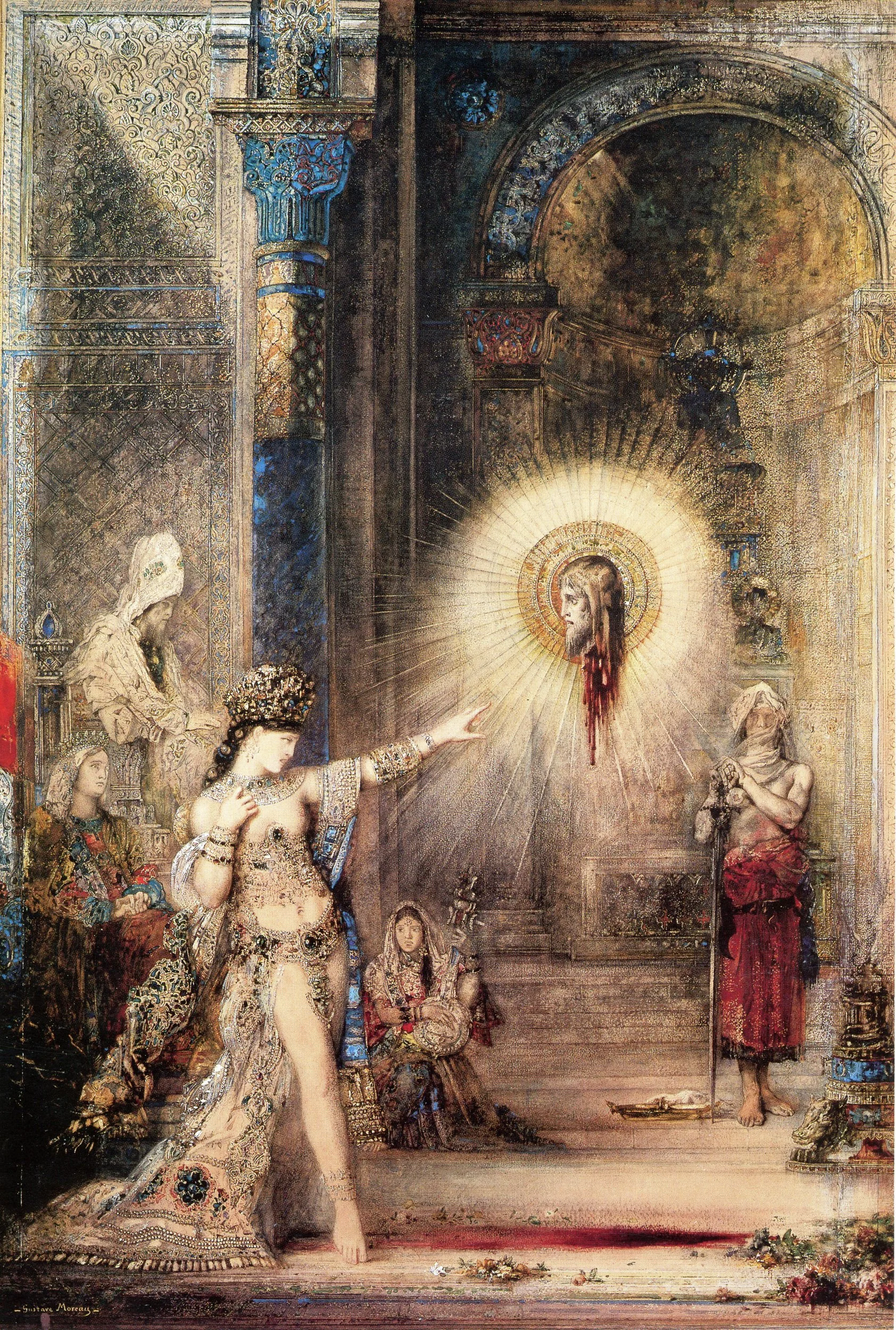
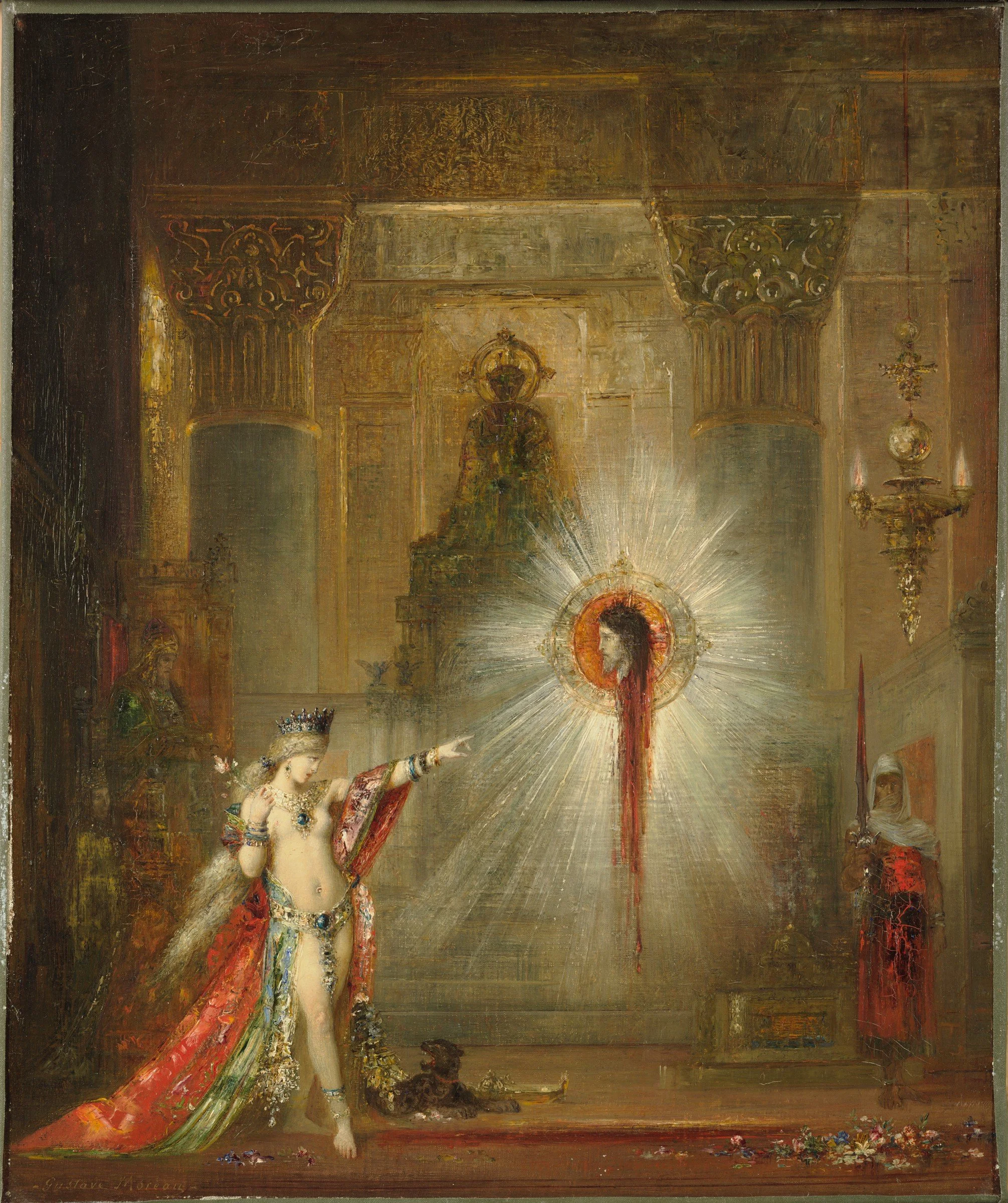
Gustave Moreau beautifully creates a new image of the head suspended in space.
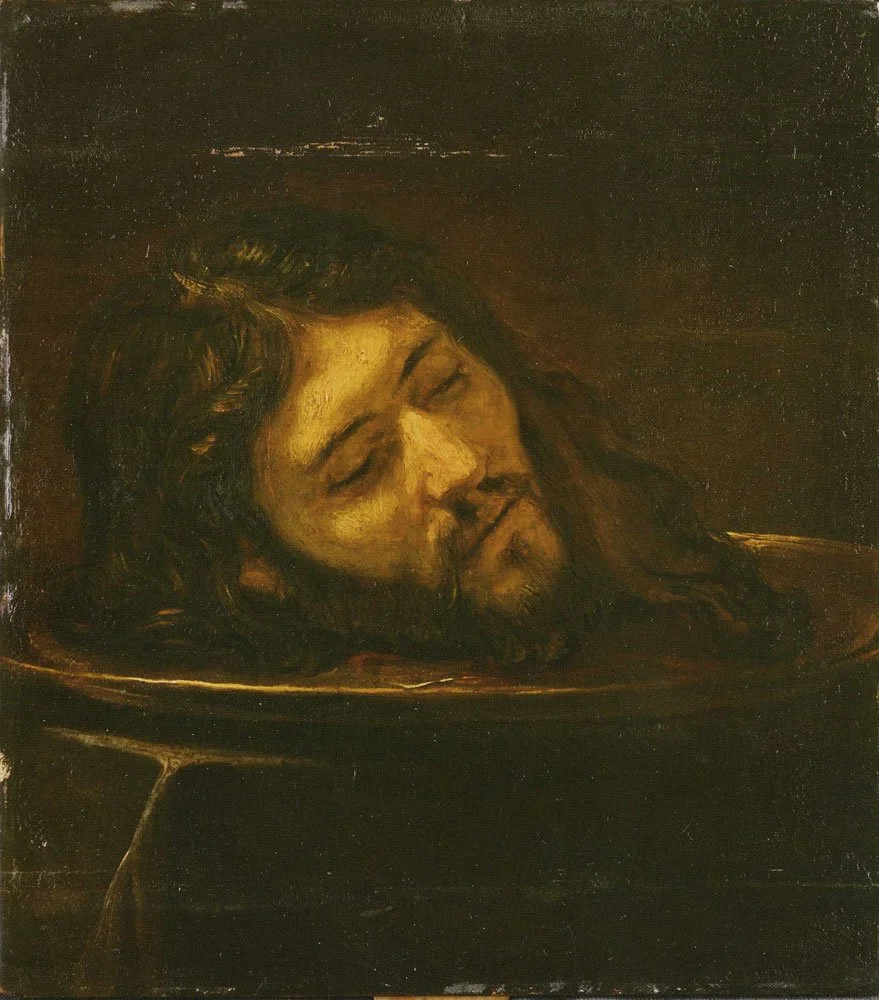
But something else emerges when comparing these painters scattered across hundreds of years: the head of John remains relatively unchanged throughout every rendition.
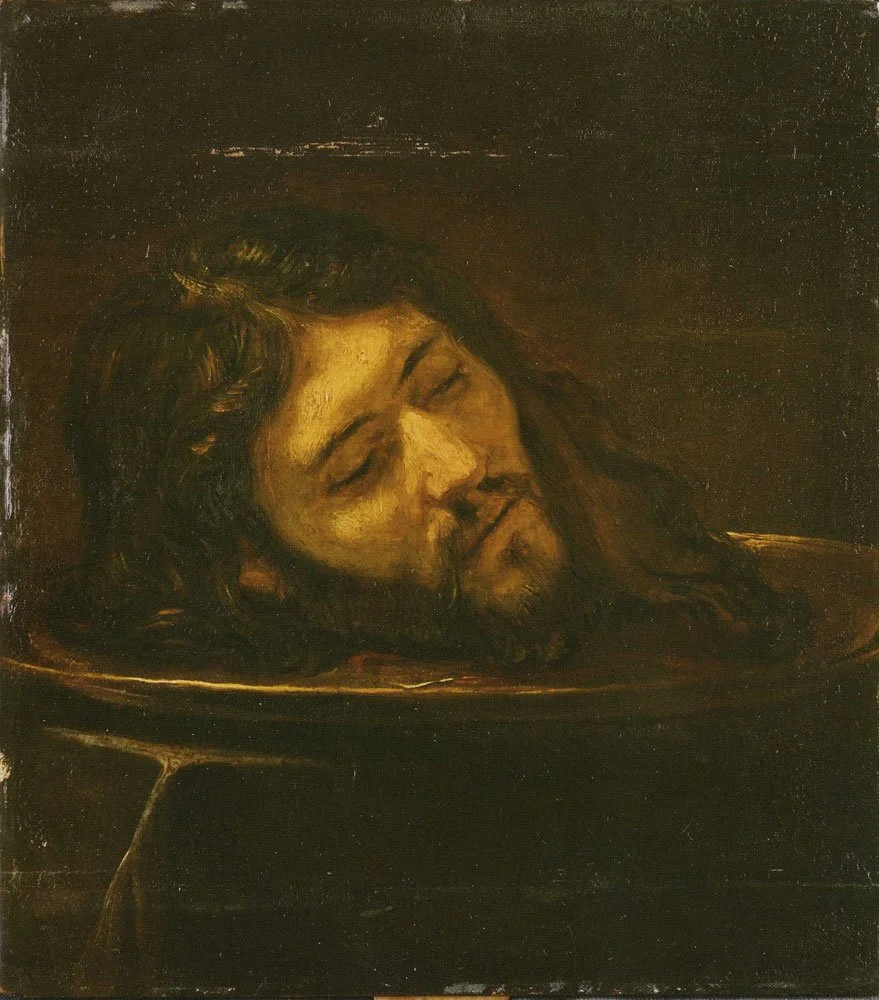
Head of John the Baptist on a Platter, Rembrandt Workshop, c. 1648-56, Oil on panel, 25 x 28.4 cm, Collection: Private collection
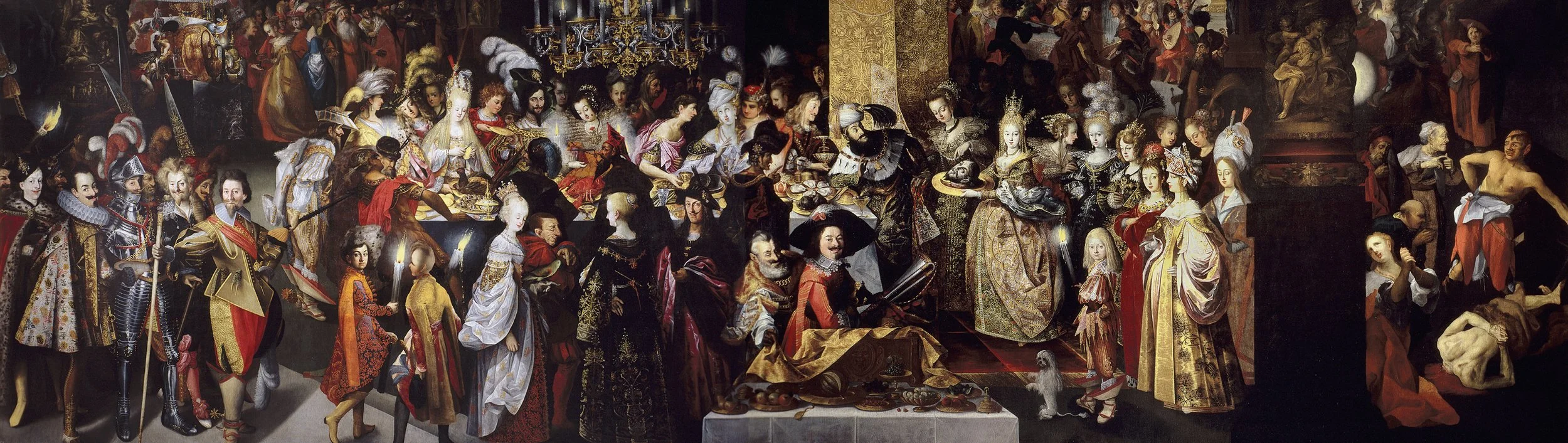
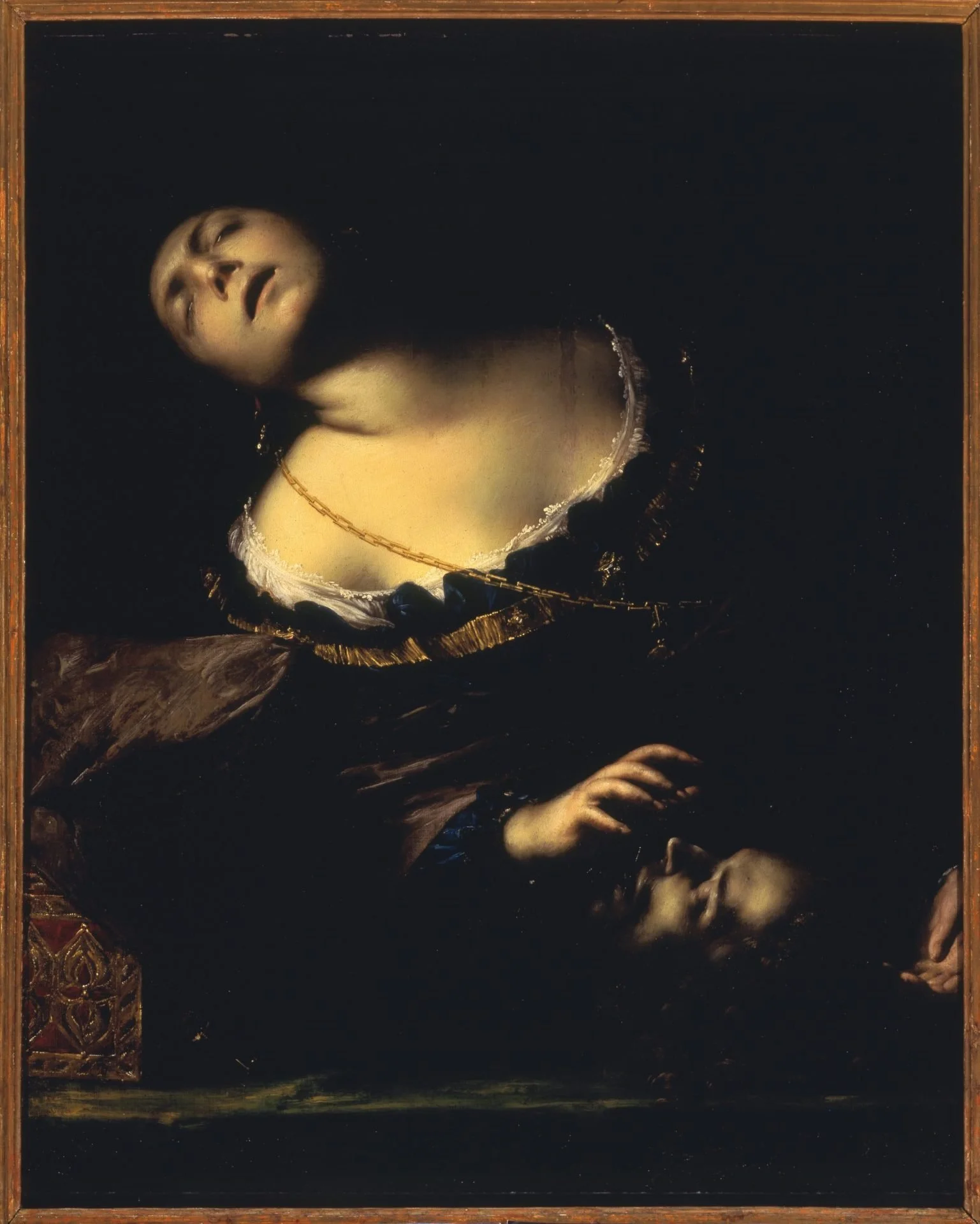
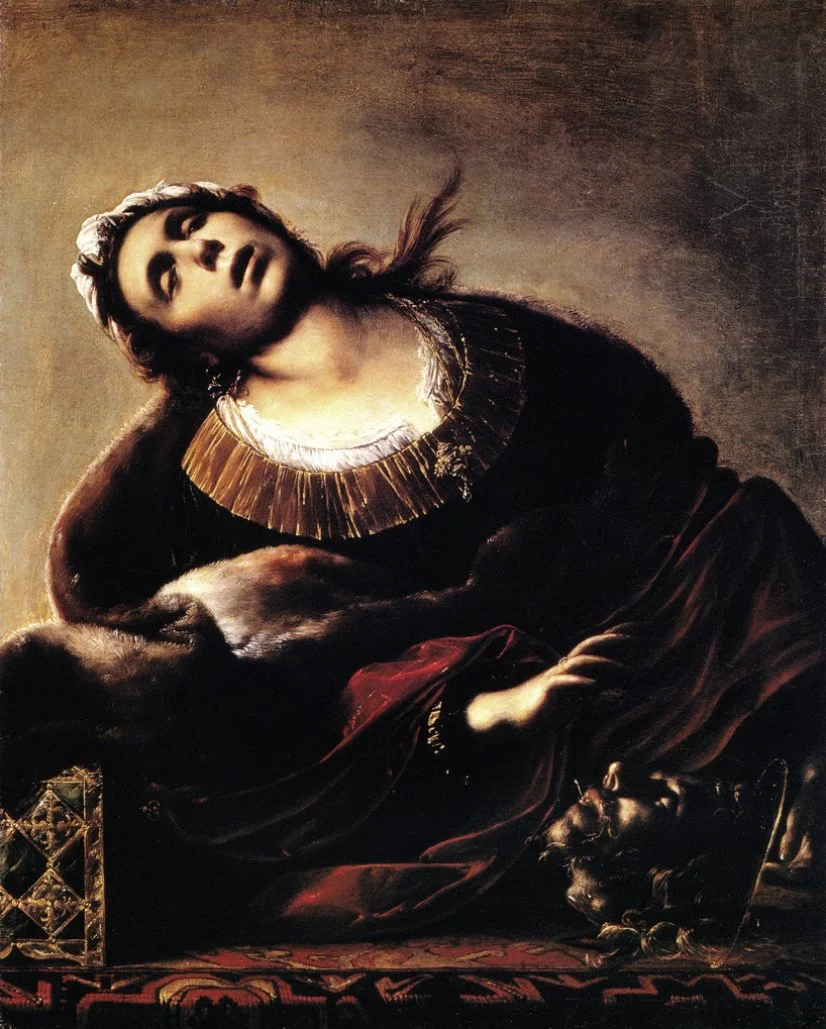
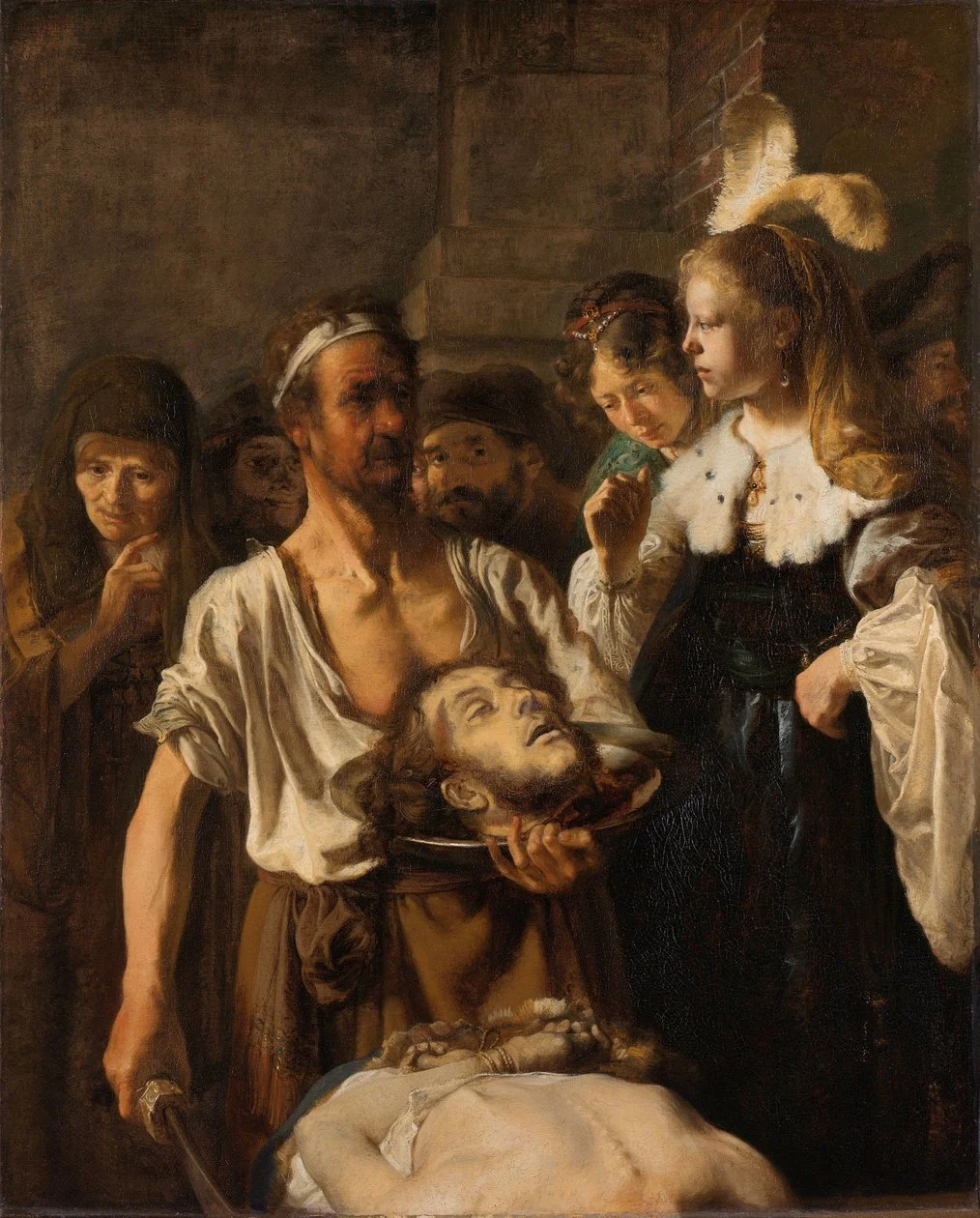
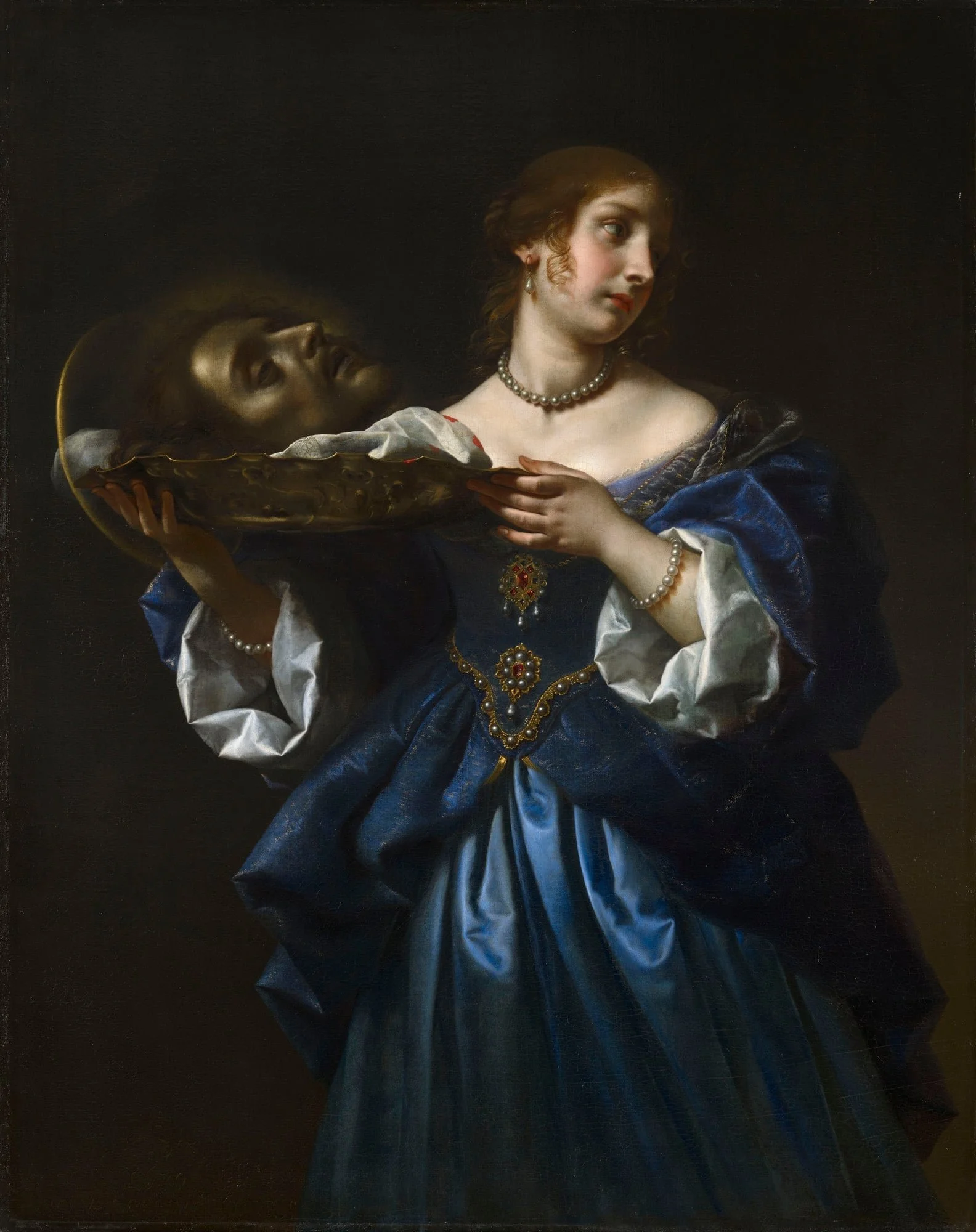
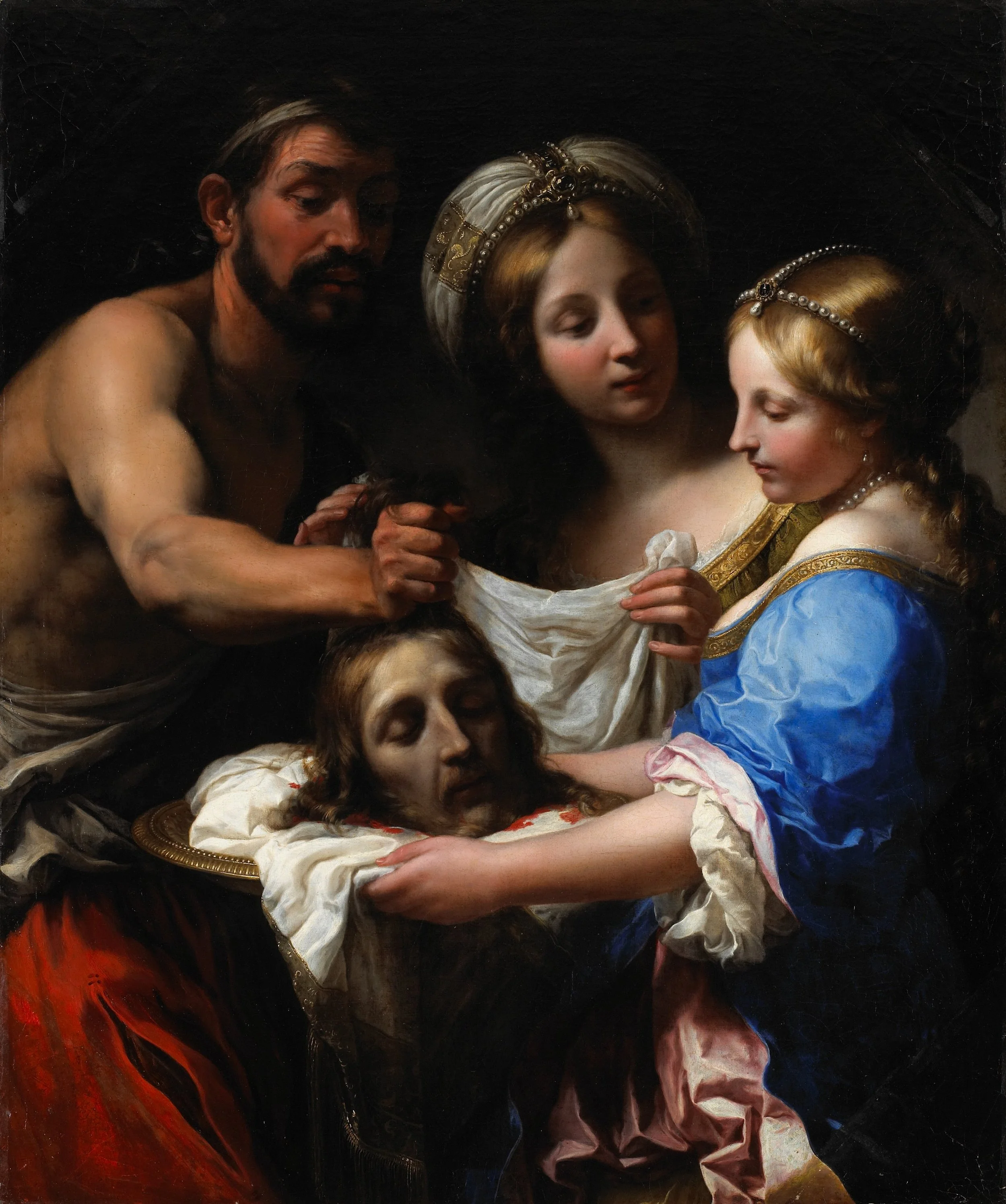
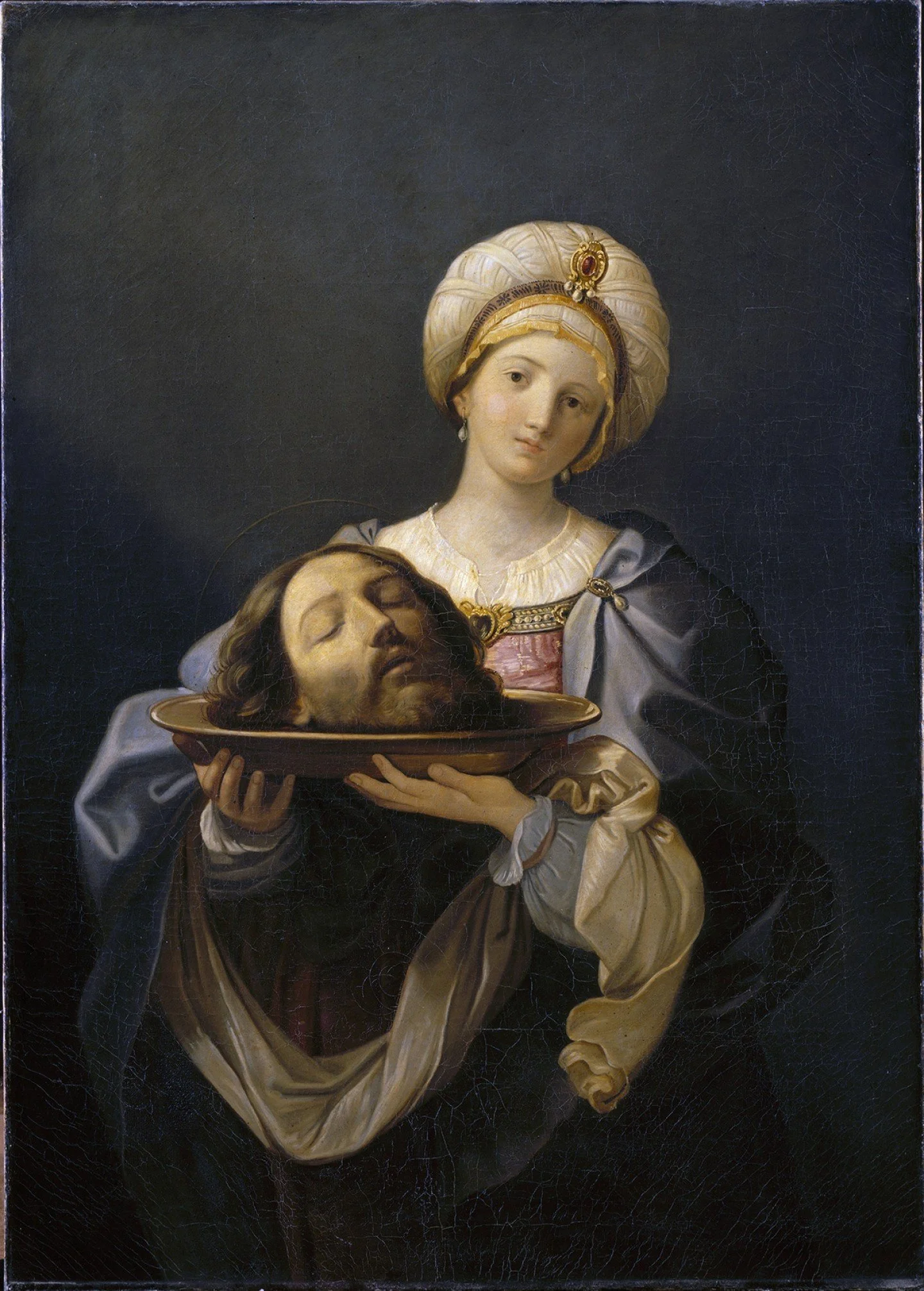
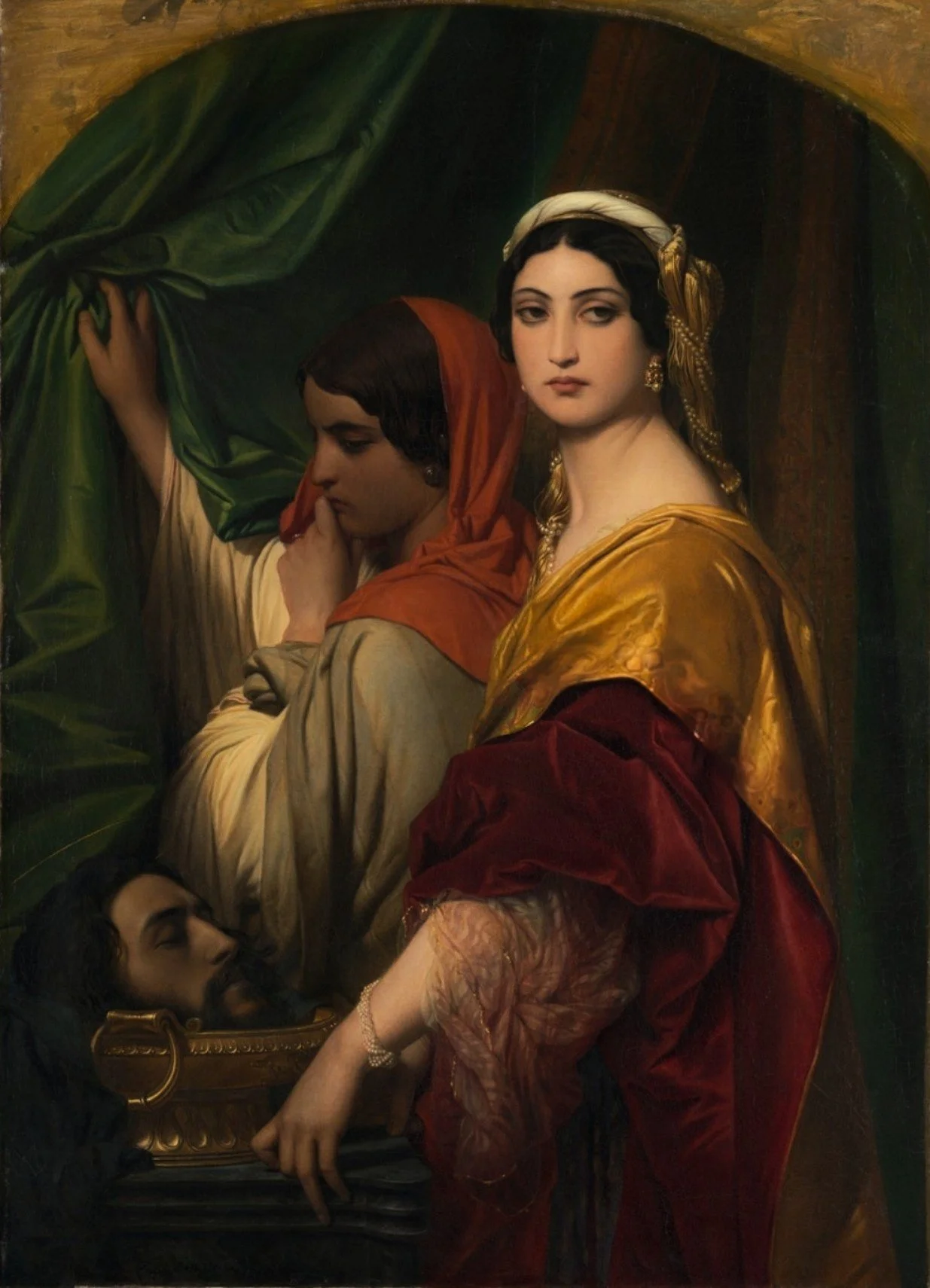
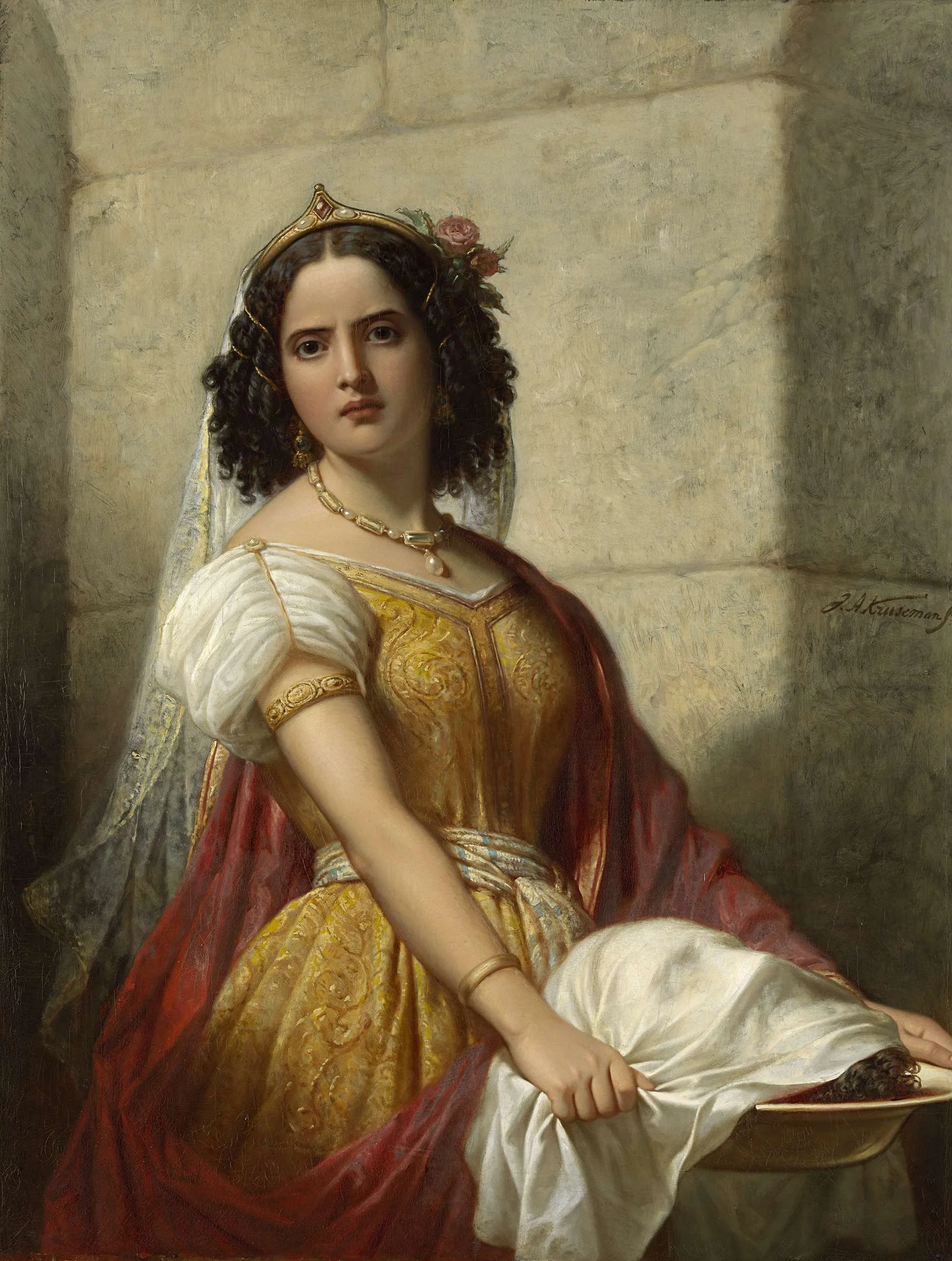
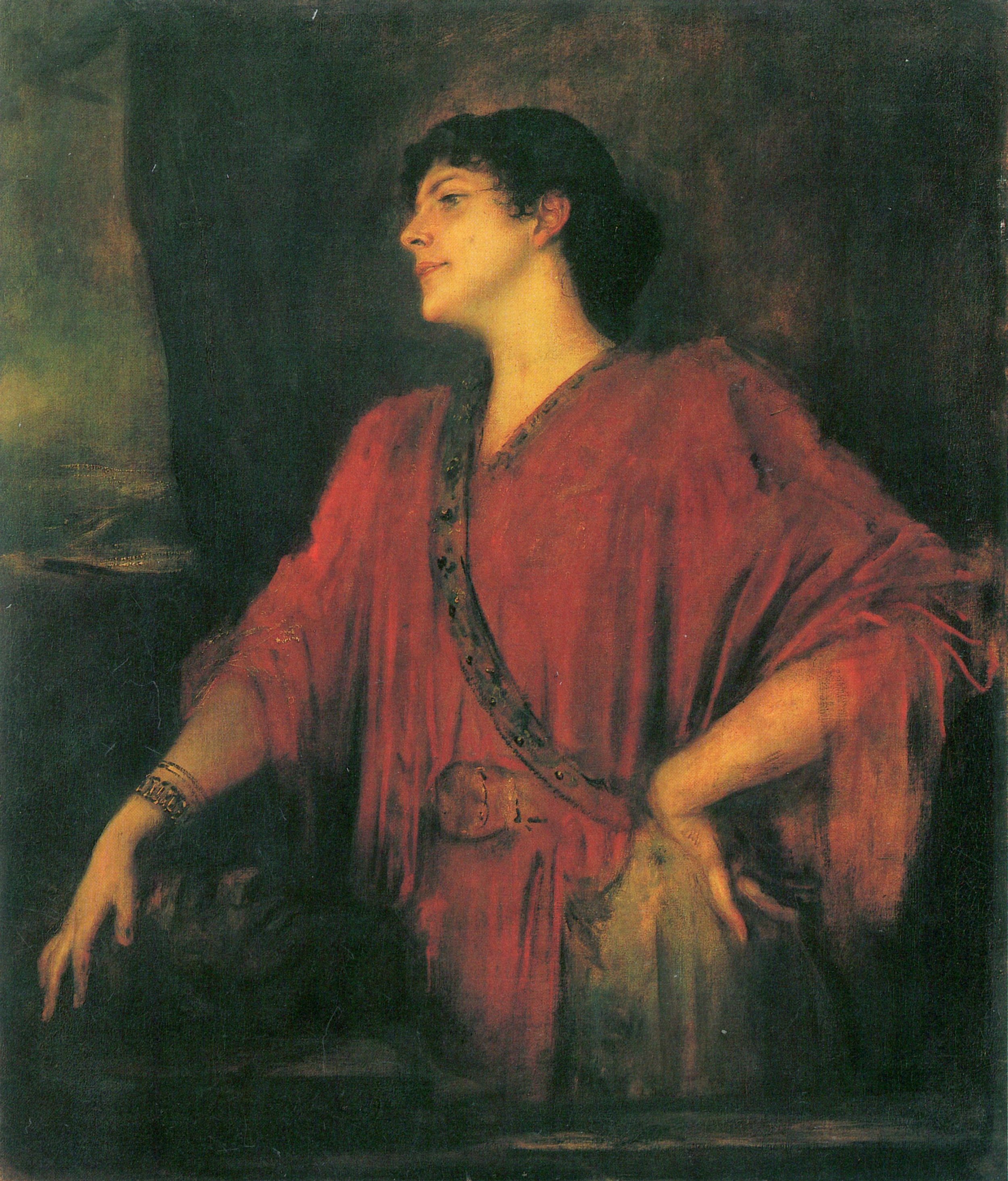
Very few painters consider the historic accuracy of Salome or Herodias, each portrayed with facial features and clothing relevant to the painter’s context. Some have fair skin and silk French dress, others have harsh features and black hair; some are modest, others are not merely nude but erotic. Regardless, the head of John the Baptist remain almost exactly the same throughout: long brown hair, a beard, and striking similarities within the facial structure.
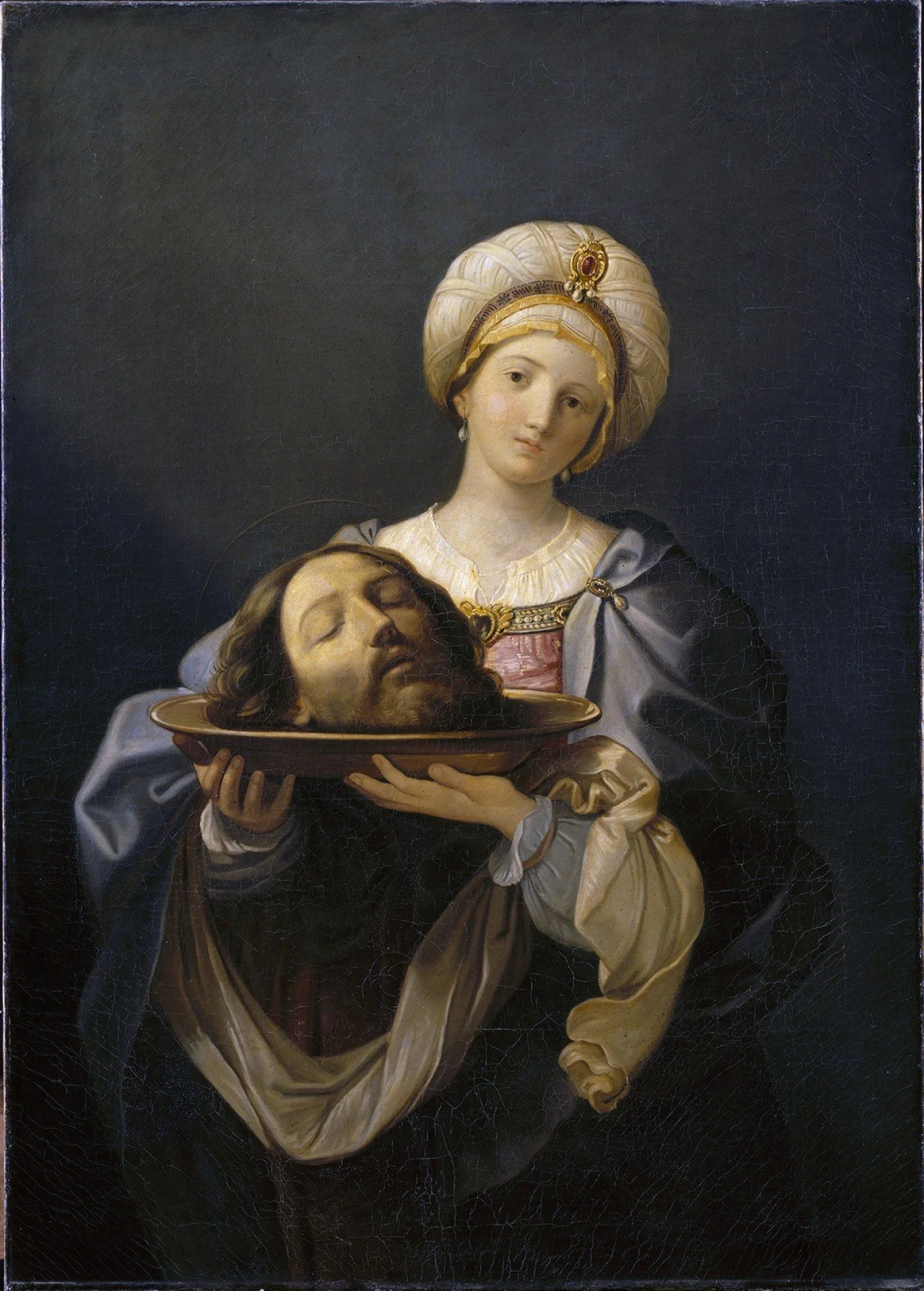
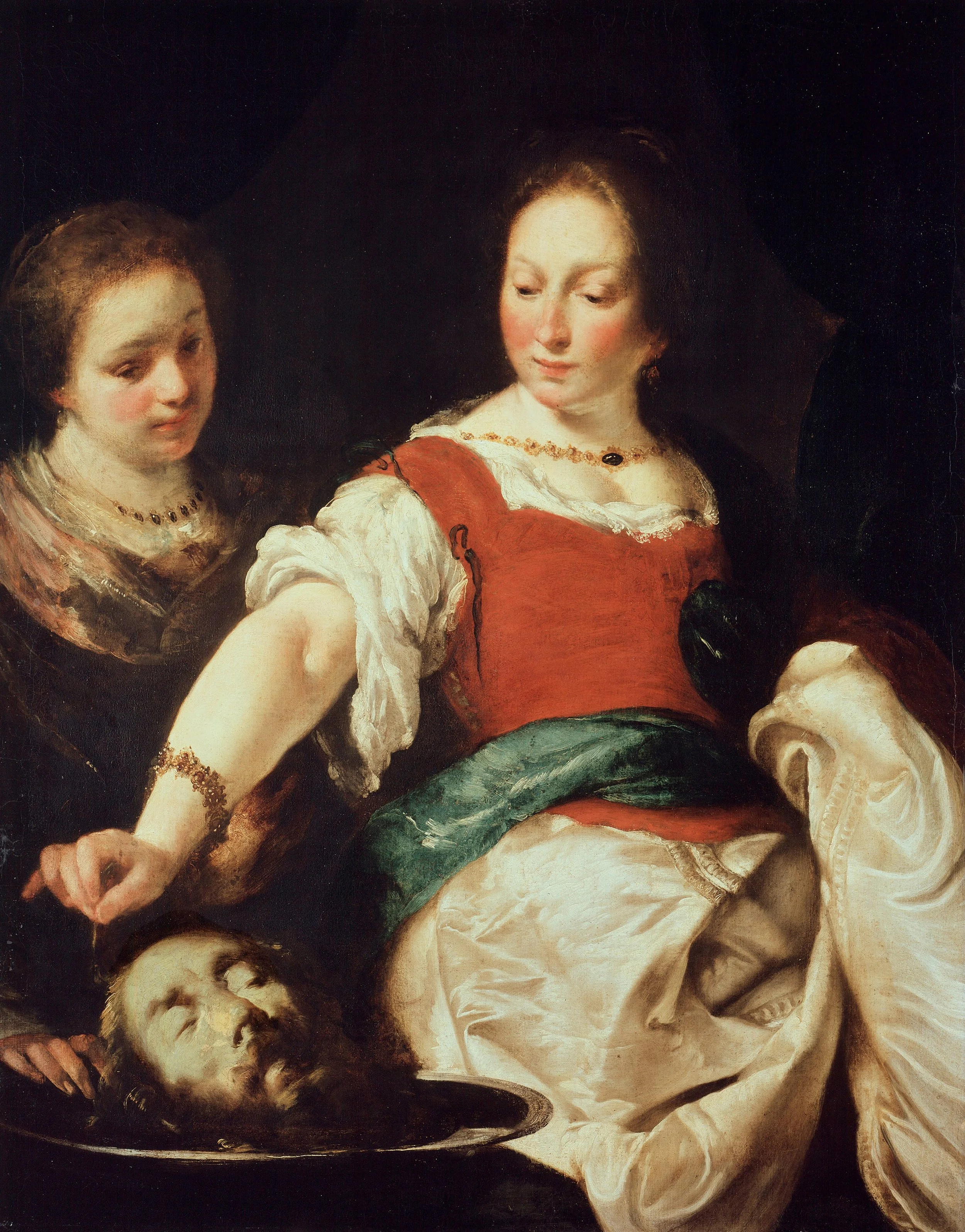

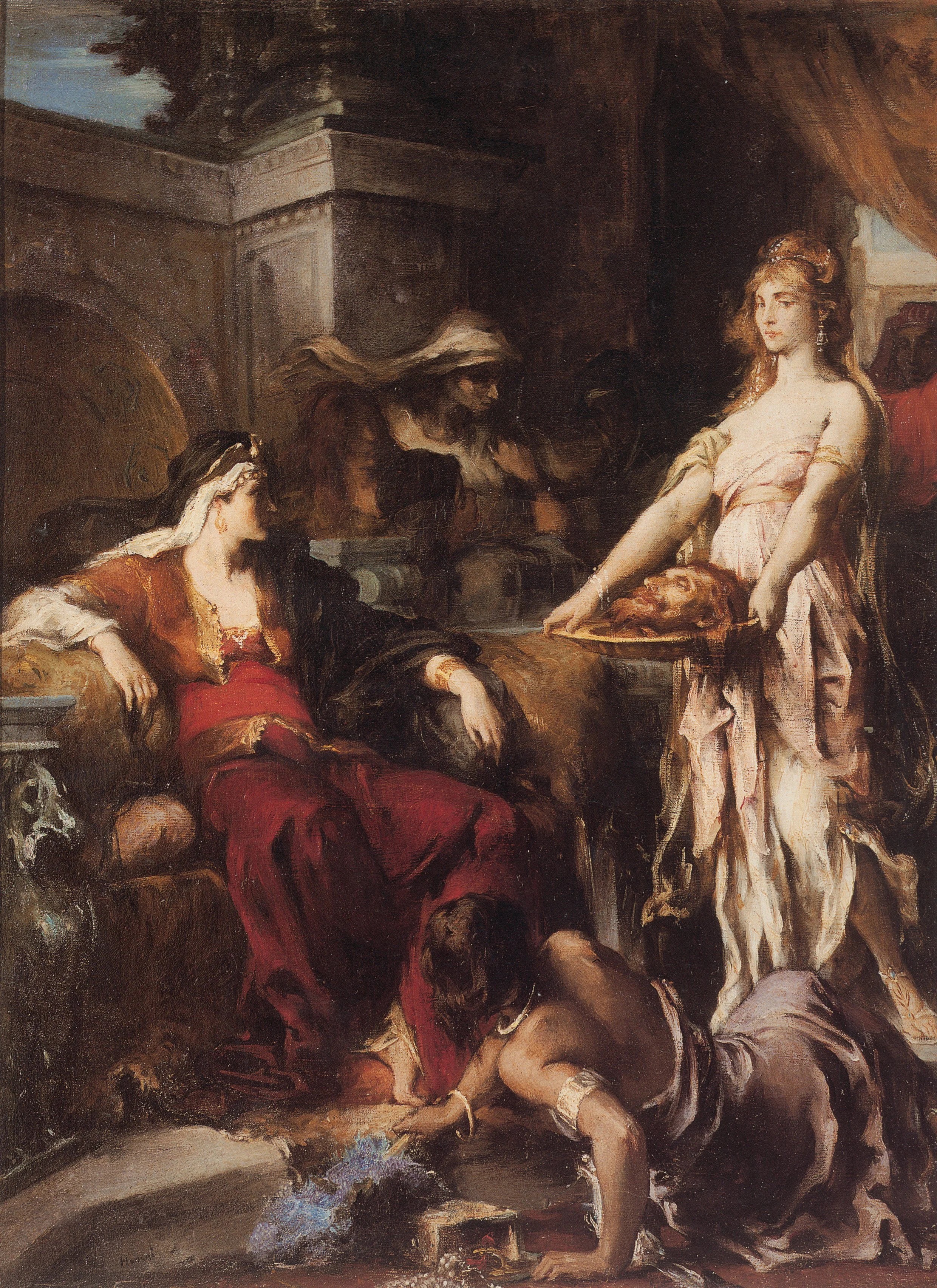
The original Biblical account of the beheading can be found in Mark and Matthew. Mark, despite being the richer account, gives very few visual details. Almost no visual description is given about John, other than that he was rugged and wore goat skins, and not even a name is given to Salome. In fact, it’s only in Flauvius Josephus’ account in Antiquities of the Jews (94AD), that she is named.
For centuries, depictions of Salome changed only so much as her dress and features, all remaining relatively prude and indifferent to the head.
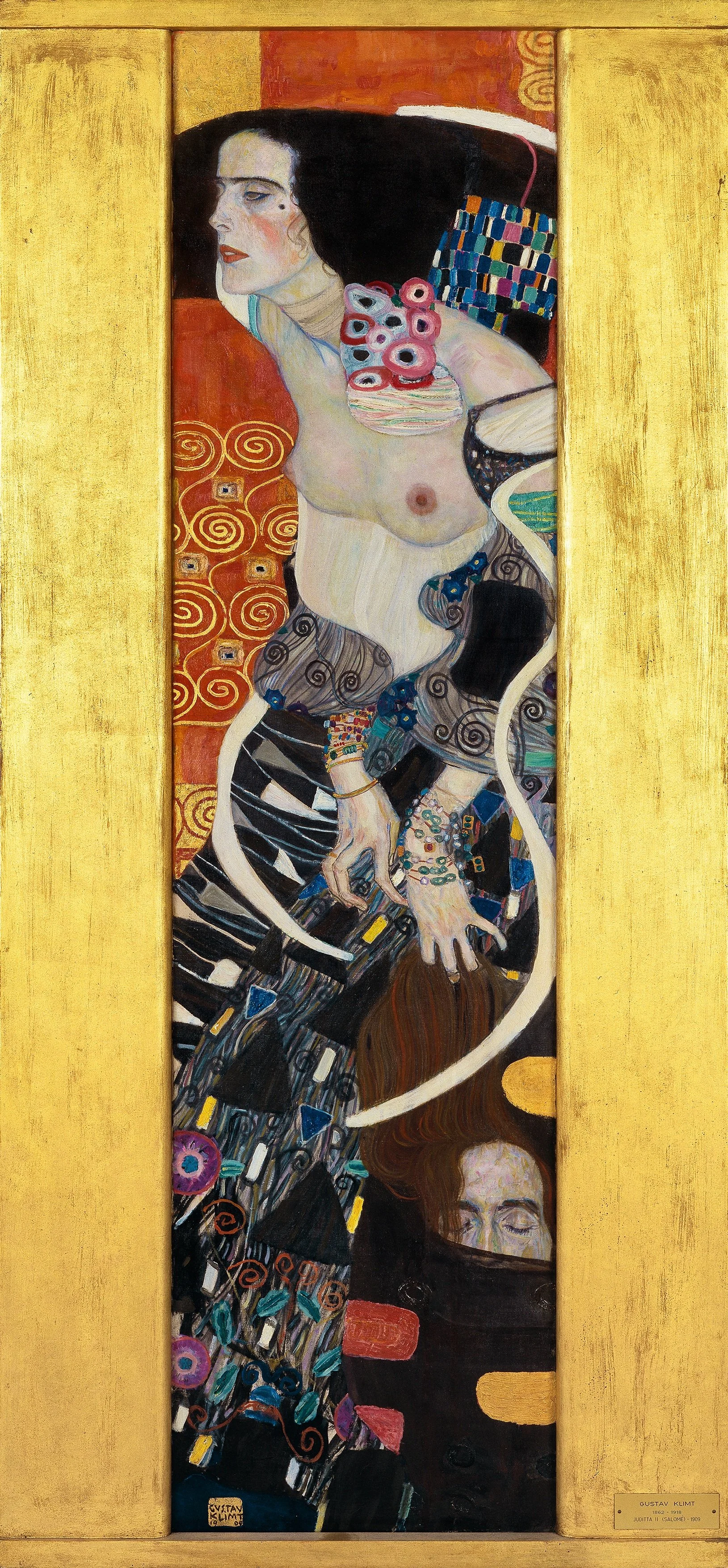
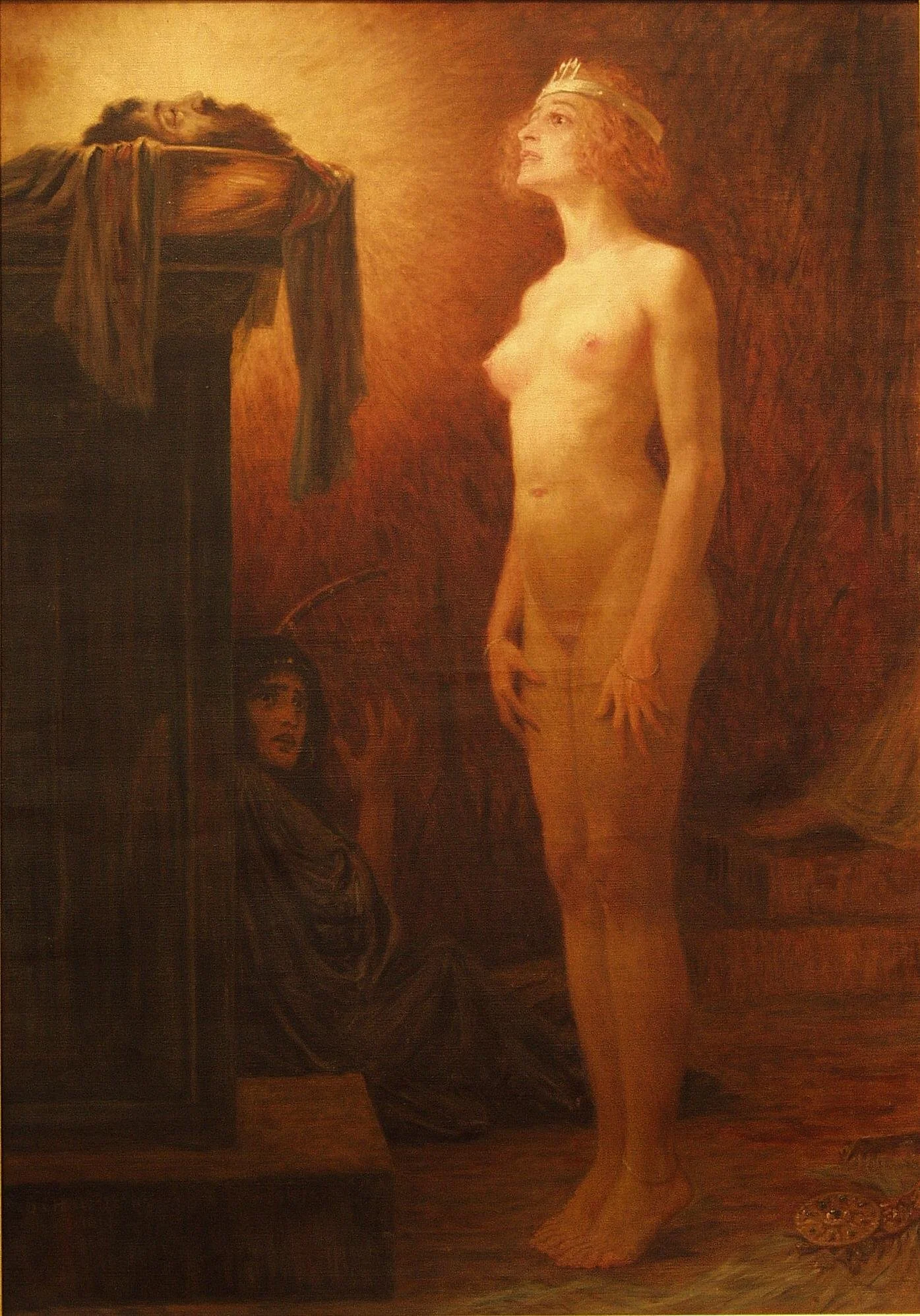
Then around 1870, Gustave Moreau paints his rendition of the story, depicting Salome with a very different demeanor. She fixates sharply on the levitating head, standing almost nude. Moreau and his contemporaries had been steadily becoming more interested in the femme fatal archetype— a deadly woman who, as the siren, lures and manipulates men through beauty, charm, and sexual allure. Around the same time as Moreau’s painting, Gustave Flaubert writes a historical short story on Salome called Herodias.
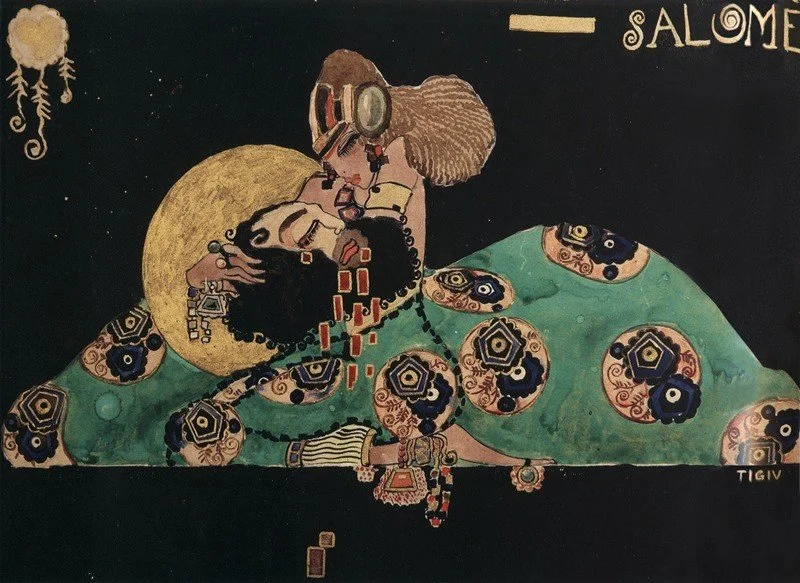
Having read Flaubert’s stories, Oscar Wilde then writes a play in 1891 called Salomé, in which he invents a new story: that Salome had been deeply in love with the Baptist. Infuriated by his refusal of her, it is she who asks for his head.
This play marked a definitive shift in painting from Herodias as the culprit, to her daughter. Now, she is not the hesitant young girl of the Bible who was manipulated by her mother, but a deadly seductress.
Salome evolves throughout the centuries, as does her relation to the John, and the role and presence of Herodias.
But the head of John remains almost unchanged.
Why did the human mind then settle on this image? Is it an echo of what was historically accurate? Is there a psychological association with these characteristics? Is this a type of visual archetype?
Or is it all of the above?
Should we understand everything about great paintings, we would not return to them again and again. Should human behaviour change across the millennia, we would not see similar eyes in figures from 2,000 years ago, as we do today. The Truth of the human experience renders different images as unchangingly relevant as love.
‘Love is always new. Does it make it less profound, less meaningful, knowing that every man and woman has been drunken upon its aromatic liquor? Does it matter that Romeo once loved Juliette, or that we feel the same quickening of the heart, the same shortness of breath, the same warm flickering in our bellies that they once felt? No, love is new for every person, and that it has been felt before, immortalized in literature before, only serves to make it more beautiful, more poetic, more profound.’
— Richard T. Scott
Why do you think we return to this portrait again and again? What truth therein lies?
~
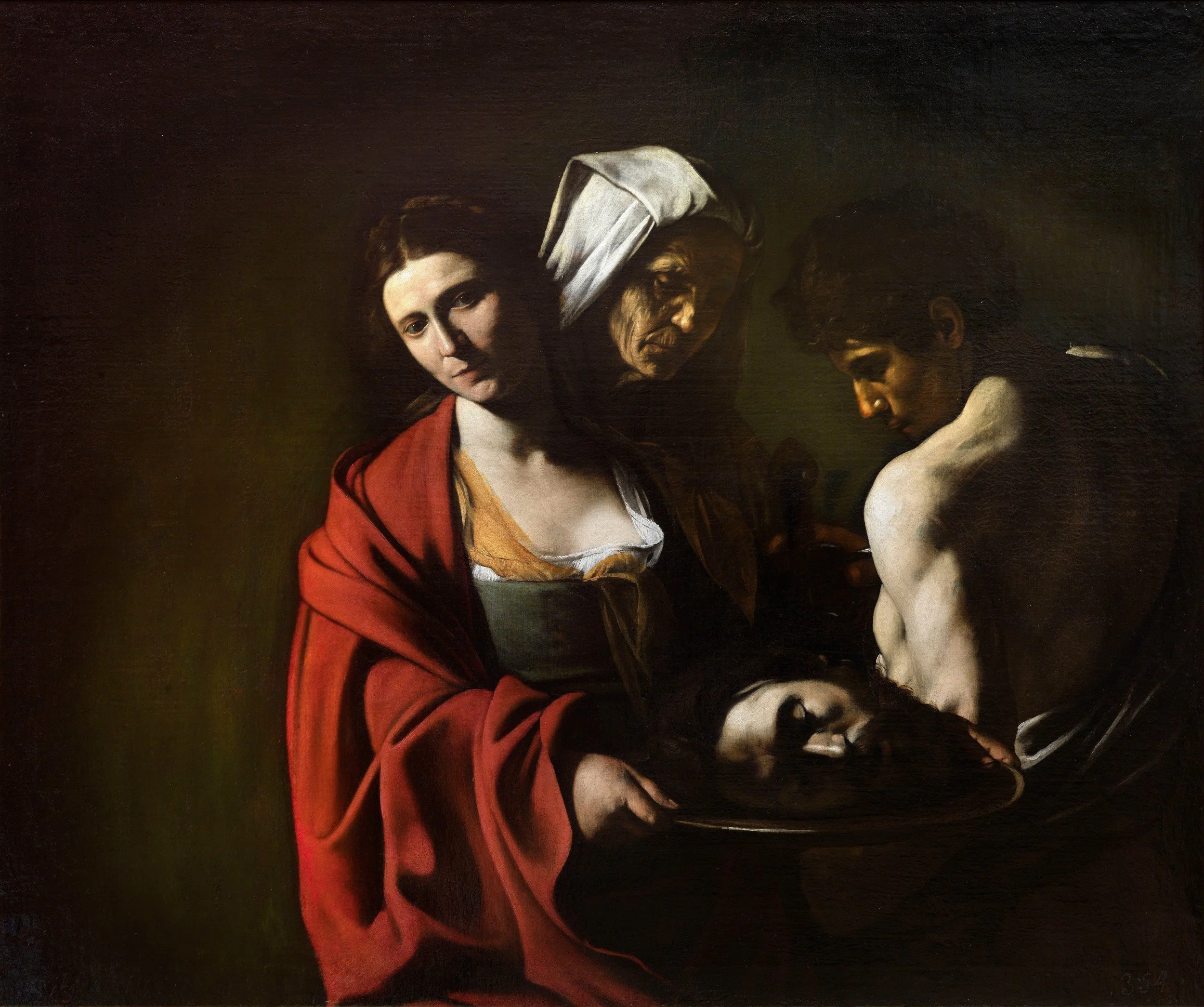
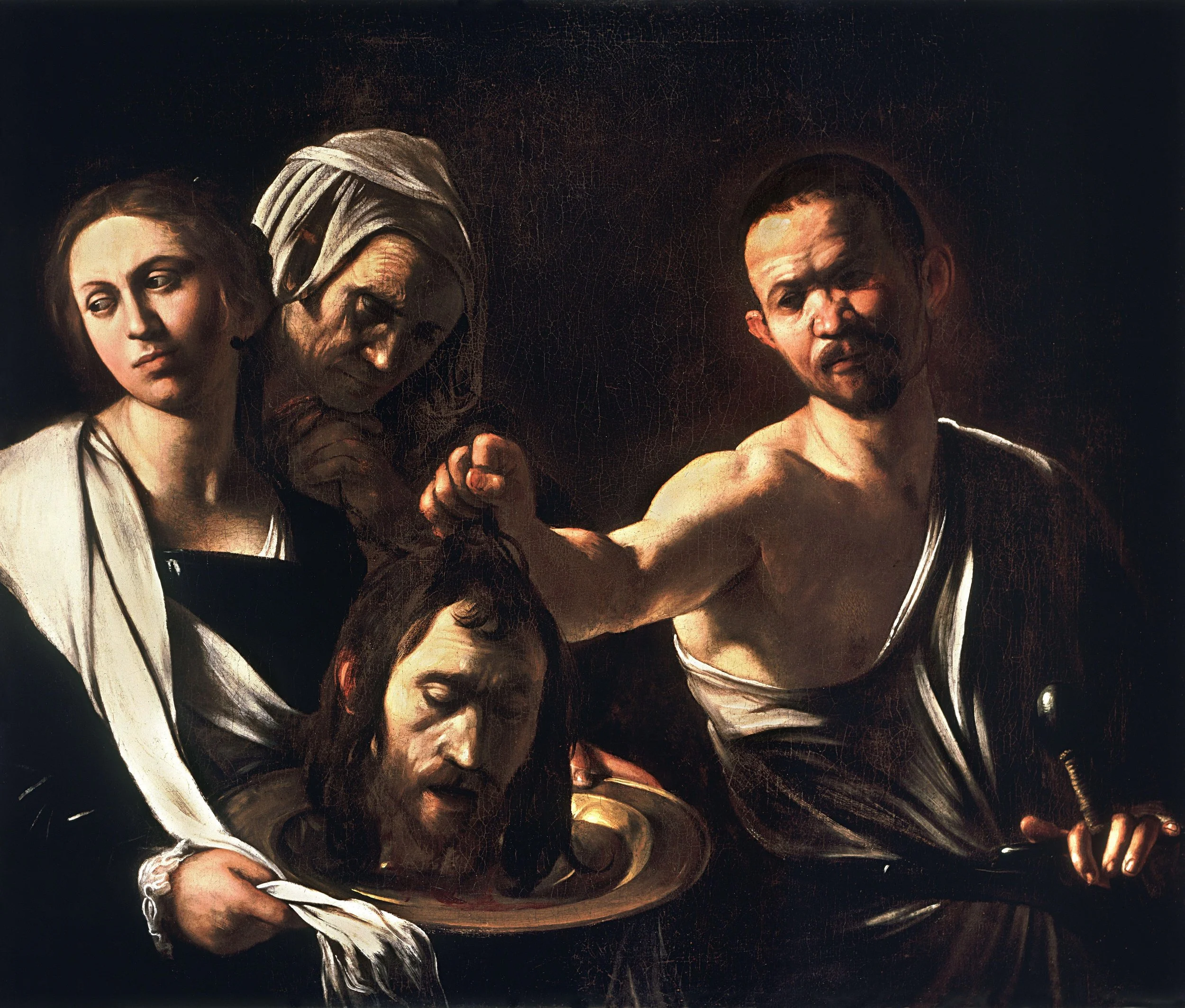
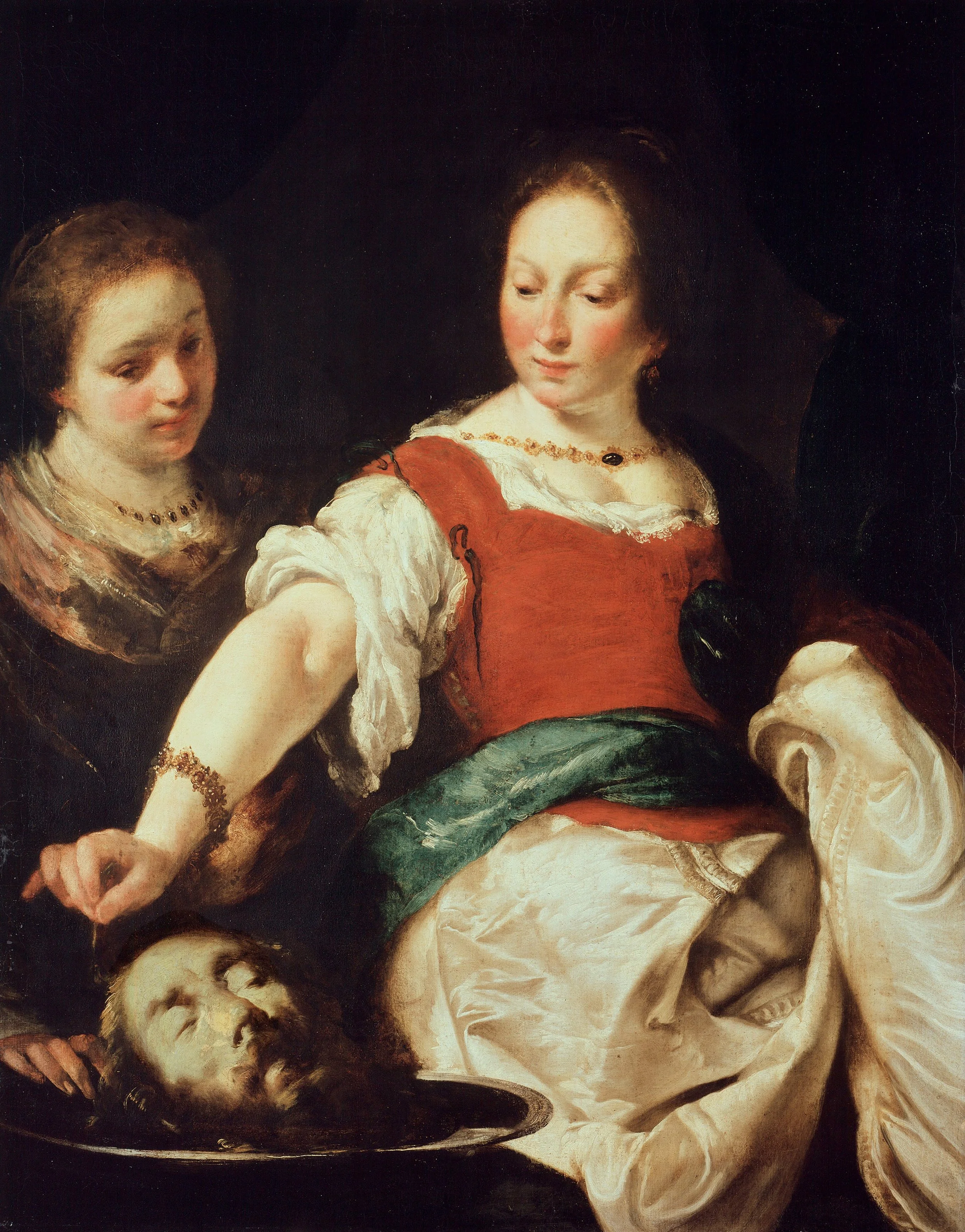
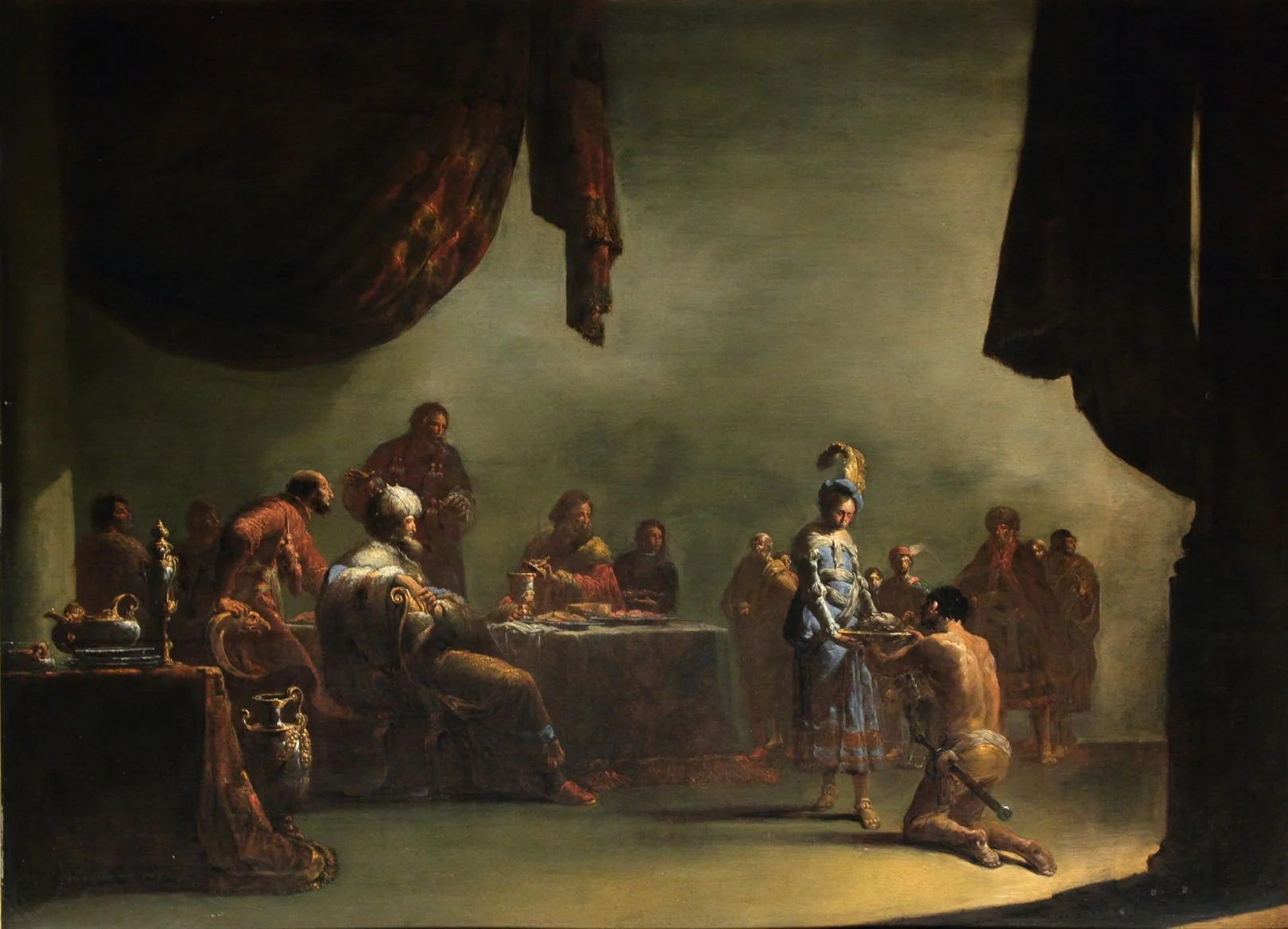
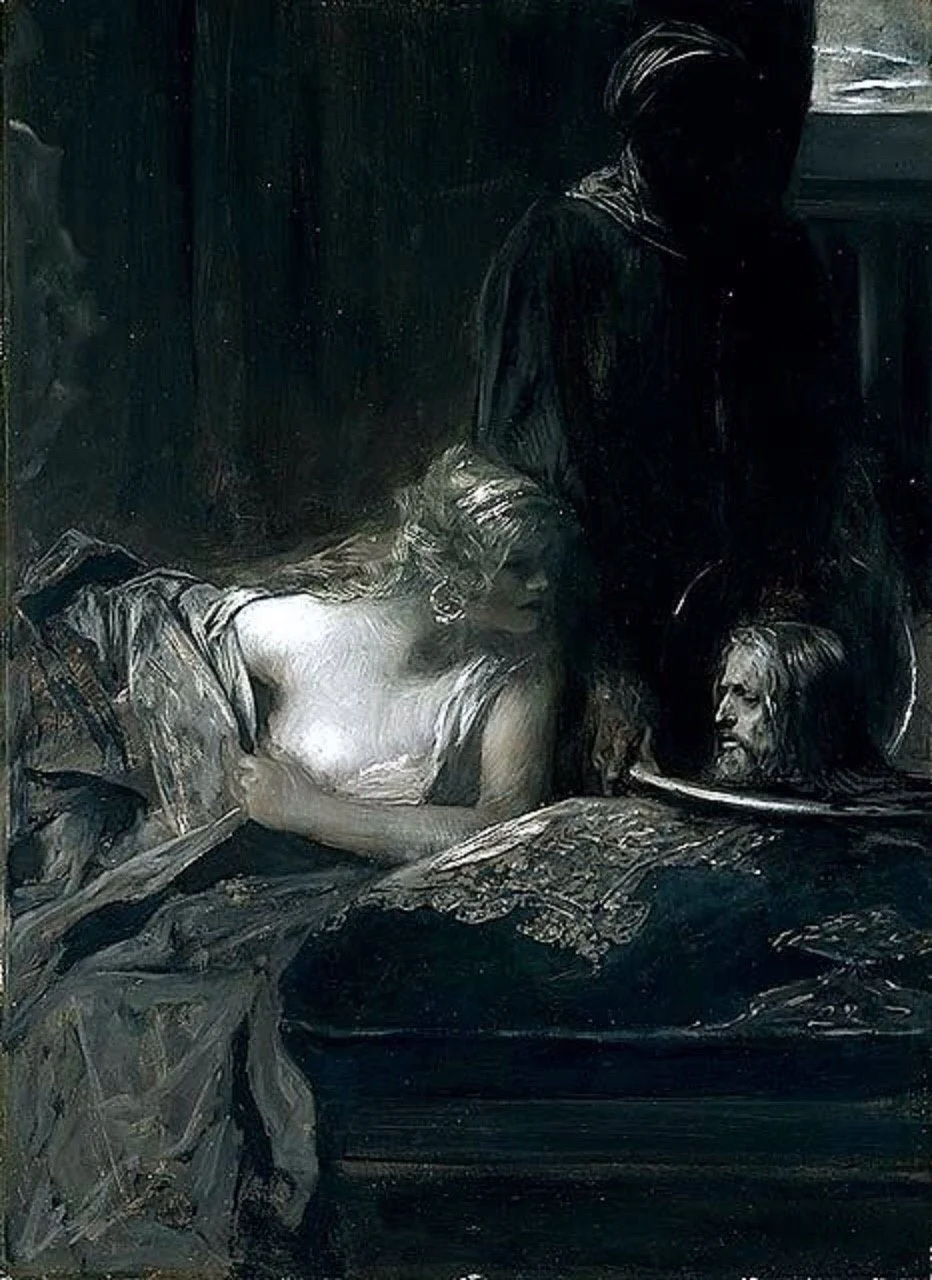
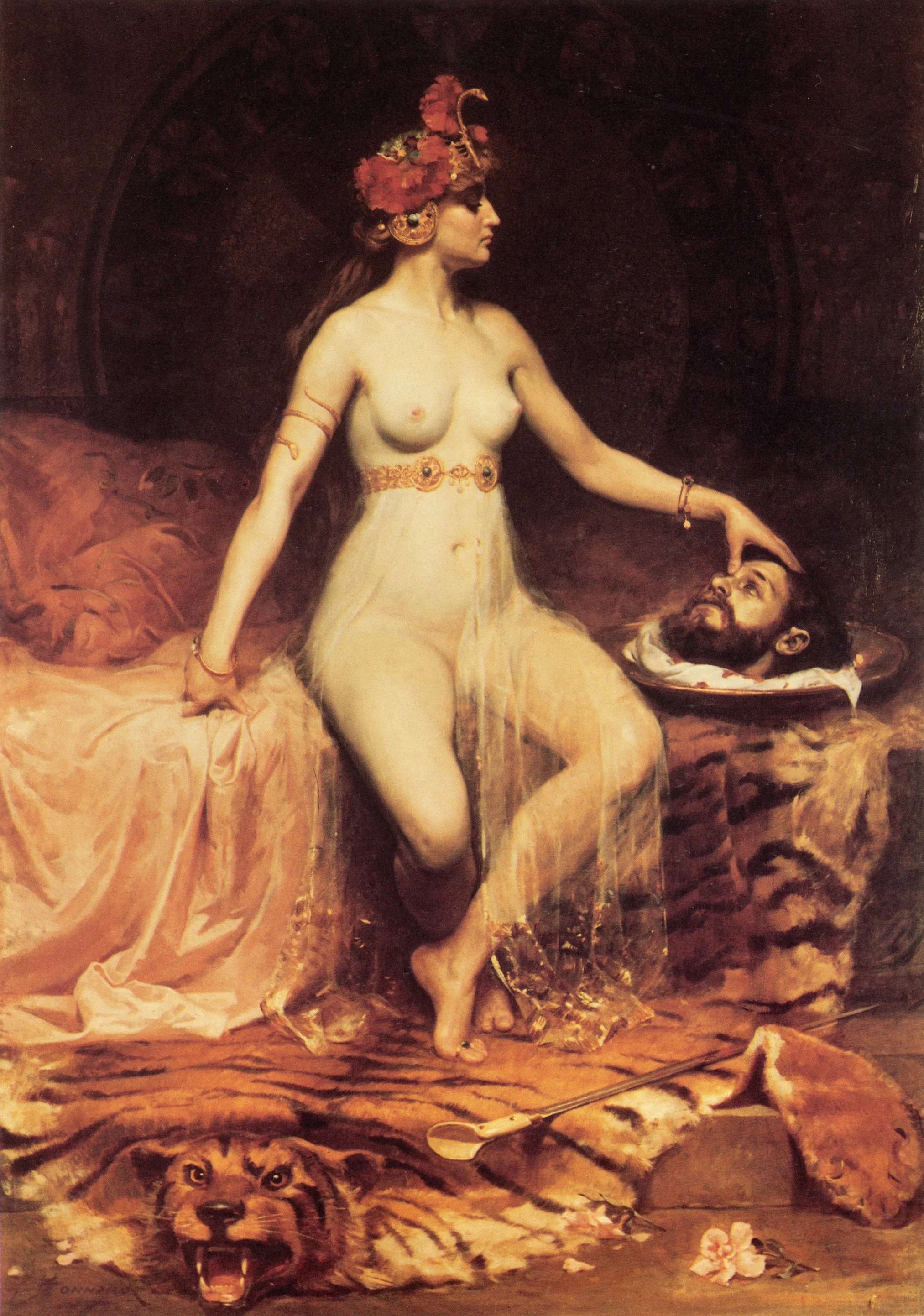
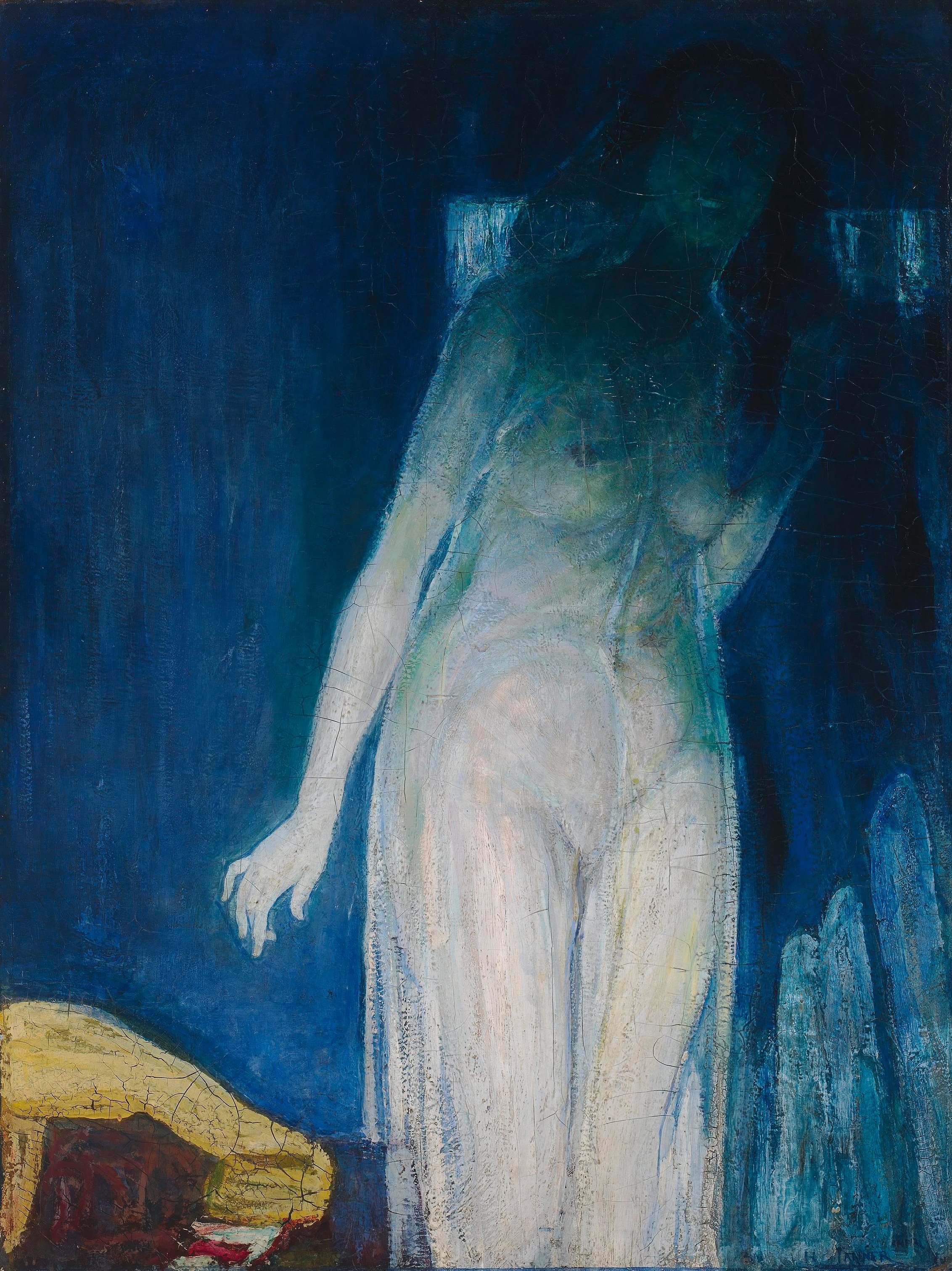
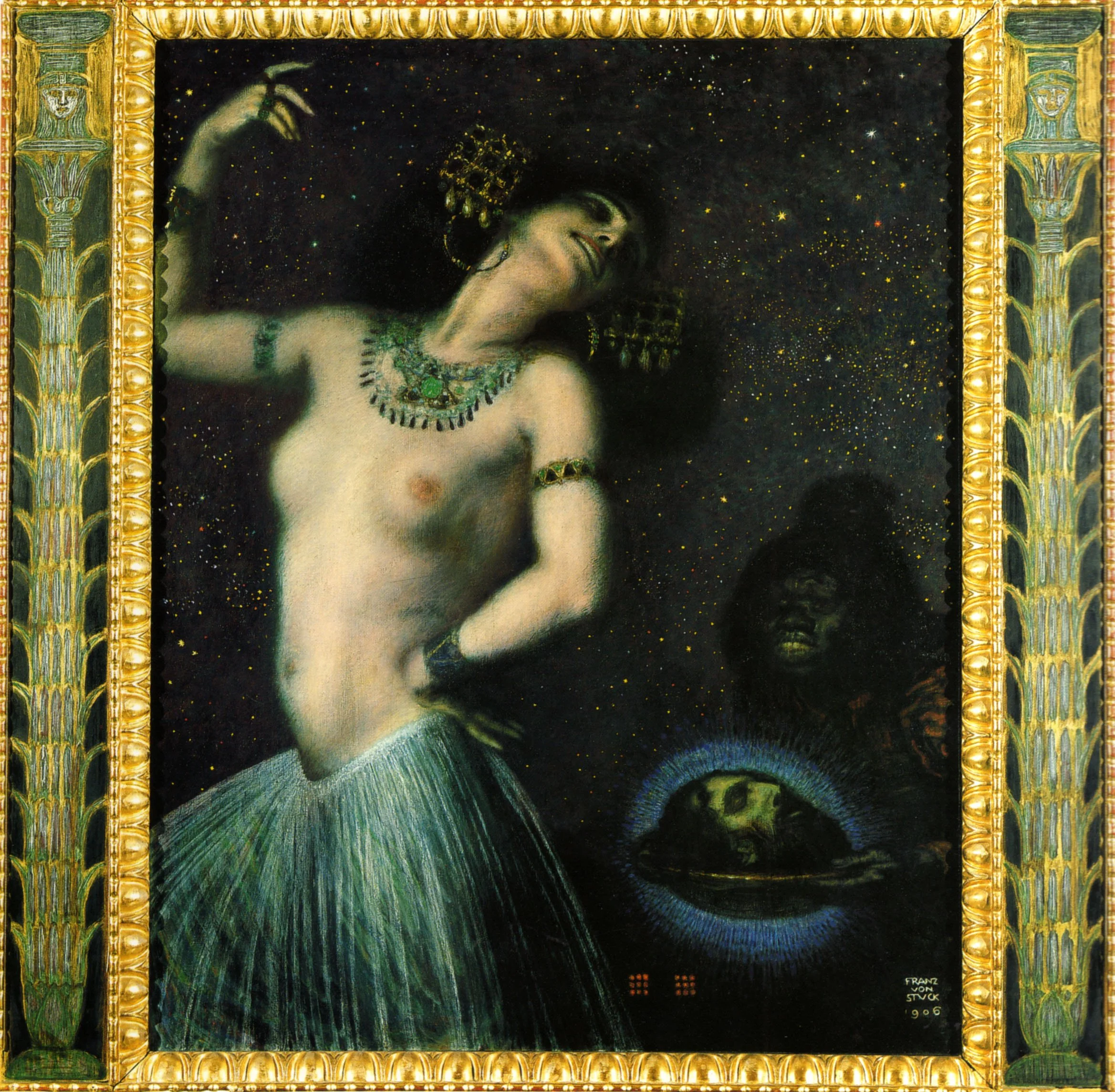
Below is Symposium’s collection of The Head of John the Baptist paintings, with the original excerpt from the gospel of Mark.




Mark 6:17-29 (NIV translation)
17 For Herod himself had given orders to have John arrested, and he had him bound and put in prison. He did this because of Herodias, his brother Philip’s wife, whom he had married. 18 For John had been saying to Herod, “It is not lawful for you to have your brother’s wife.” 19 So Herodias nursed a grudge against John and wanted to kill him. But she was not able to, 20 because Herod feared John and protected him, knowing him to be a righteous and holy man. When Herod heard John, he was greatly puzzled[b]; yet he liked to listen to him.
21 Finally the opportune time came. On his birthday Herod gave a banquet for his high officials and military commanders and the leading men of Galilee. 22 When the daughter of[c] Herodias came in and danced, she pleased Herod and his dinner guests.
The king said to the girl, “Ask me for anything you want, and I’ll give it to you.” 23 And he promised her with an oath, “Whatever you ask I will give you, up to half my kingdom.”
24 She went out and said to her mother, “What shall I ask for?”
“The head of John the Baptist,” she answered.
25 At once the girl hurried in to the king with the request: “I want you to give me right now the head of John the Baptist on a platter.”
26 The king was greatly distressed, but because of his oaths and his dinner guests, he did not want to refuse her. 27 So he immediately sent an executioner with orders to bring John’s head. The man went, beheaded John in the prison, 28 and brought back his head on a platter. He presented it to the girl, and she gave it to her mother. 29 On hearing of this, John’s disciples came and took his body and laid it in a tomb.”