Icarus : Symbol Shorts
n
‘And as he called upon his father's name his voice was smothered in the dark blue sea, now called Icarian from the dead boy's name.’
- Metamorphoses, Ovid
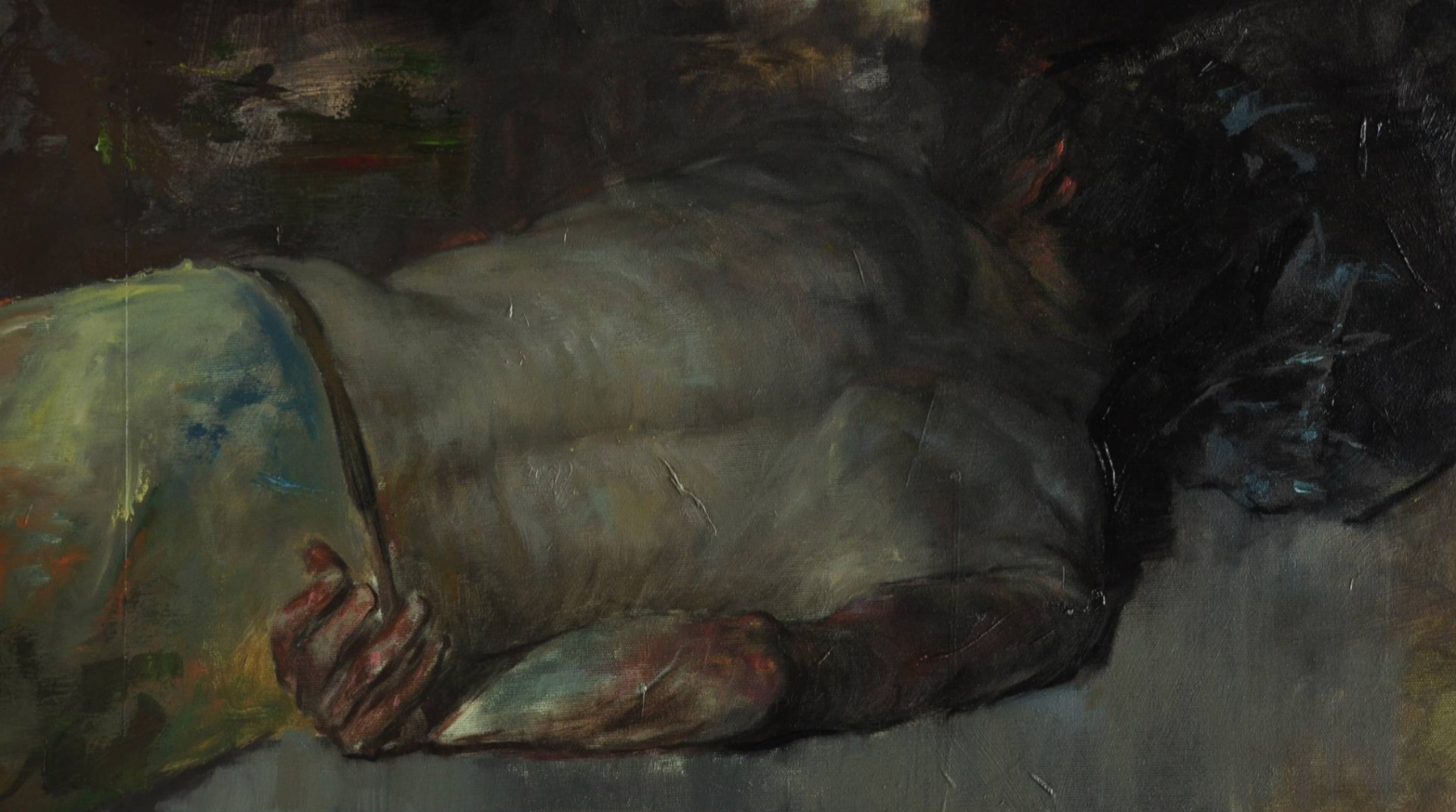
'The Lament for Icarus', Herbert James Draper, detail shot by Howard Lyon
Daedalus, a master architect and craftsman, builds for King Minos an inescapable maze to hid the sin of Pasiphaë’s adultery with the white bull of Crete. With the Minotaur trapped in the labyrinth, Minos has Daedelus imprisoned to forever prevent its secrets from escaping. Daedalus, trapped by the waves of the island, starts building magnificent wings of feathers and wax.
With his boy standing beside him, Daedelus completes the wings and fastens a pair to himself, and another to Icarus.
‘While he worked and issued his warnings the ageing man’s cheeks were wet with tears: the father’s hands trembled.
He gave a never to be repeated kiss to his son, and lifting upwards on his wings, flew ahead, anxious for his companion, like a bird, leading her fledglings out of a nest above, into the empty air.’
As those below gaze up, they mistake the two as gods. Icarus rises up with the burning air, climbing with his ambition. However, the gods reinforced the separation between divine and mortal, and Icarus fell.
But the tragedy of Icarus is worse than that naïve ambitious youth.
Years before, Daedalus had gained notoriety through his genius craftsmanship. He had unsurpassed expertise in carpentry, and sculpted figures that were so lifelike that they were destroyed by Hercules who mistook them for living flesh. But he had also murdered his nephew whom he feared might surpass him in skill. After having been expelled and received by the king of Crete, Daedalus betrayed him when he constructed a lifelike bull for Pasiphaë to satisfy her infatuation for a great bull King Minos has been gifted. And it was because of his hubris and greed that Daedalus and his son attempted to escape from Crete at all.
Did Icarus fall because he grew too ambitious? Or as a consequence of his father’s actions and hubris?
The layers in this story and its symbolic imagery make it one of the most poetic subjects for painting, and any one moment in the narrative lends itself to a composition.
This sensitive painting by Draper sits in the Tate as one of the most famous depictions.
The Lament for Icarus, Herbert Draper, 1898, Oil paint on canvas, 182.9 x 155.6 cm, Collection: Tate
This is another iconic depiction. In a many of Schwarzschild's paintings, you feel how keenly he takes into account the rectangular frame of the canvas, and he choreographs his figures perfectly within it.
Icarus Fallen, Alfred Schwarzschild, 1920, Oil on canvas, 76.3 x 133.5 cm, Collection: Sold in 2021 to a private collection
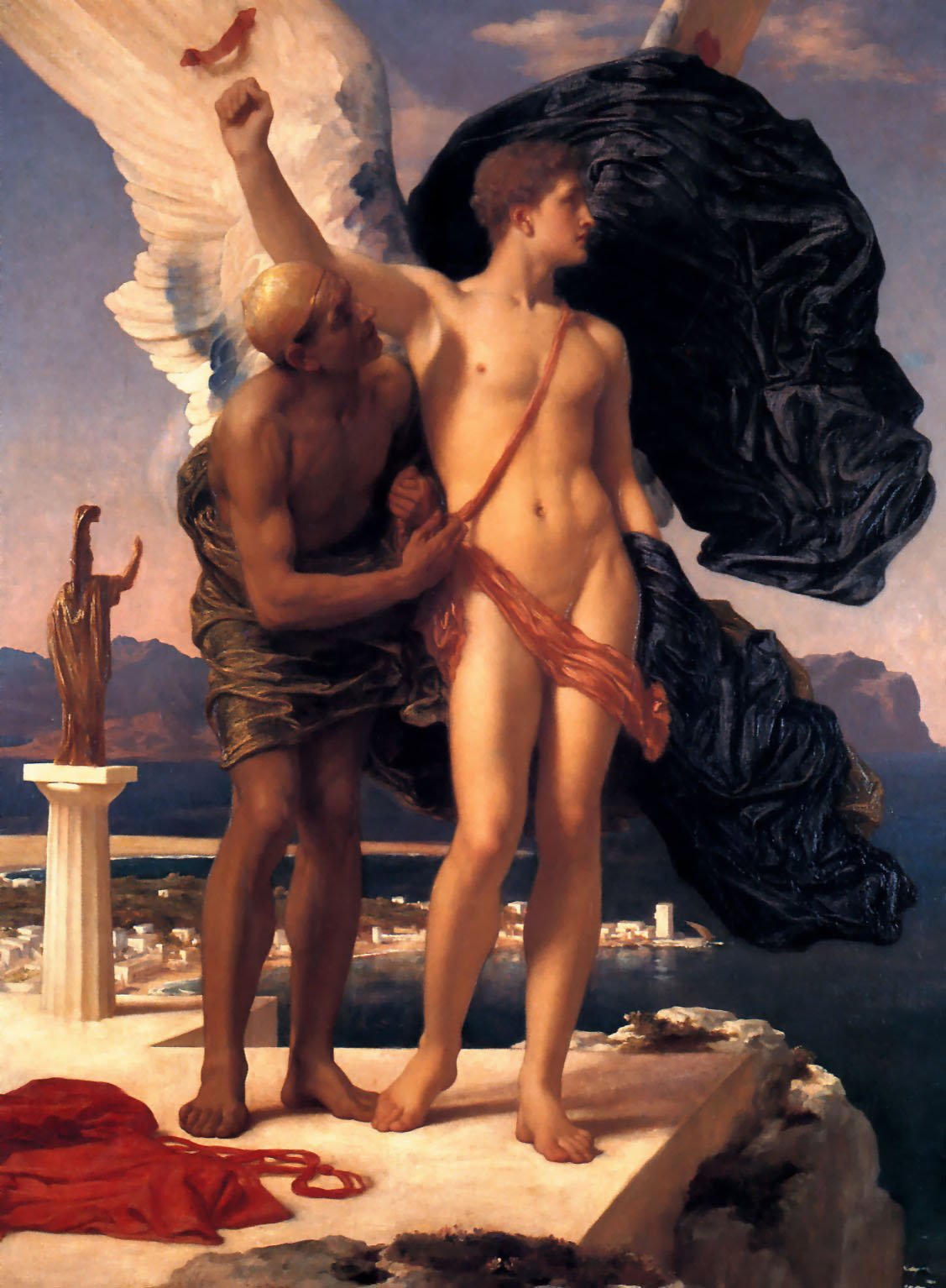
On the opposite end of the story, Leighton depicted Icarus in all his youth and beauty, with his father tenderly adjusting his wings.
Frederic Leighton: Icarus and Daedalus, 1869, Oil on canvas, 138.2 cm x 106.5 cm, Collection: Private collection
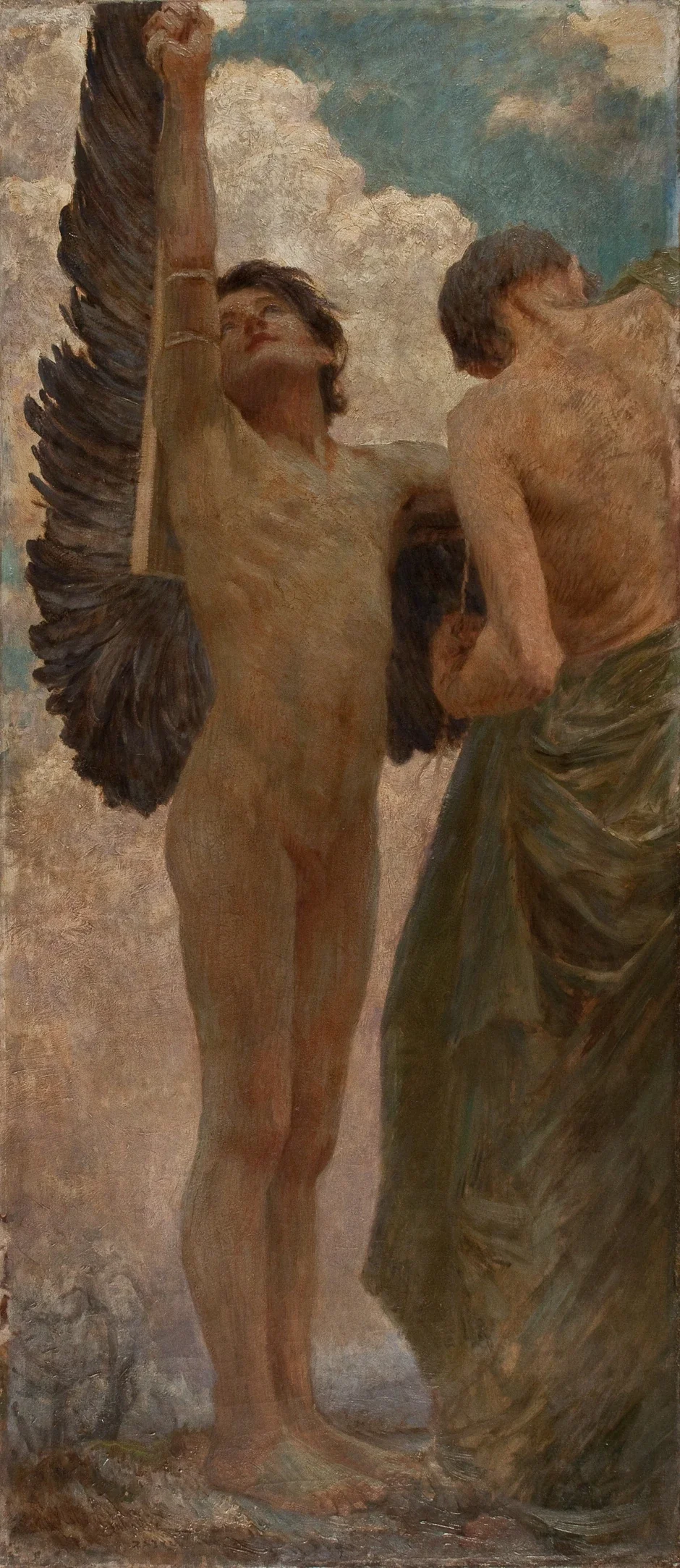
This painting is by Vlaho Bukovac, showing Icarus’ blissful naivety and innocence.
Daedalus and Icarus - I Diptych Panel, Vlaho Bukovac, 1897-1898, Oil on canvas, 56.5 x 128.5 cm each, Collection: Vlaho Bukovac House
Which moment of the story of Icarus would you depict?
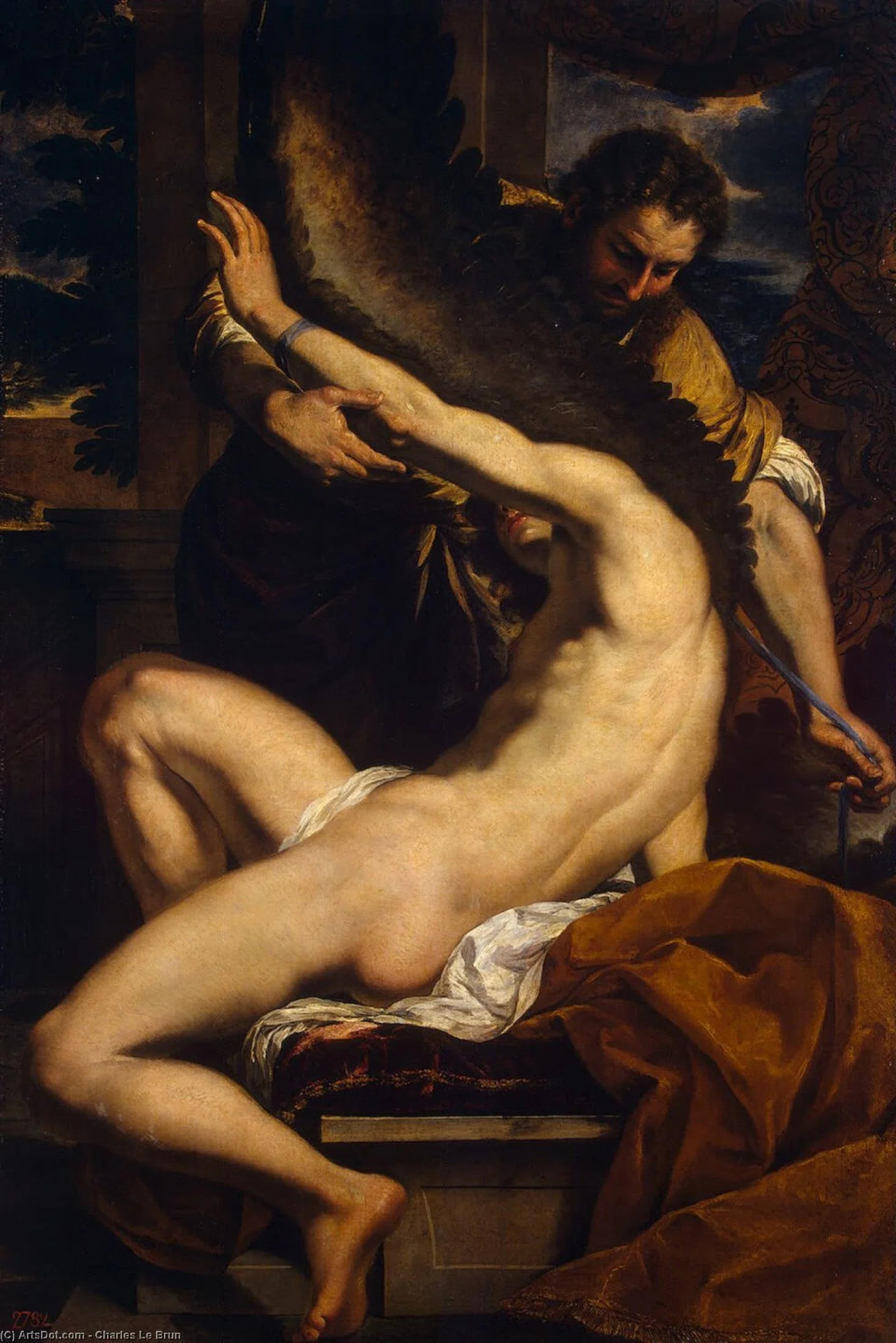
Daedalus and Icarus, Charles Le Brun, c. 1645–1646, Oil on canvas, 190 x 124 cm, Collection: Hermitage Museum in St. Petersburg, Russia.
Before the Fall?

Daedalus and Icarus, Anthony van Dyck, 1615 – 1625, oil on canvas, 115.3 x 86.4 cm, Collection: Art Gallery of Ontario
The beauty and innocence of youth, tinged with the forecoming tragedy?
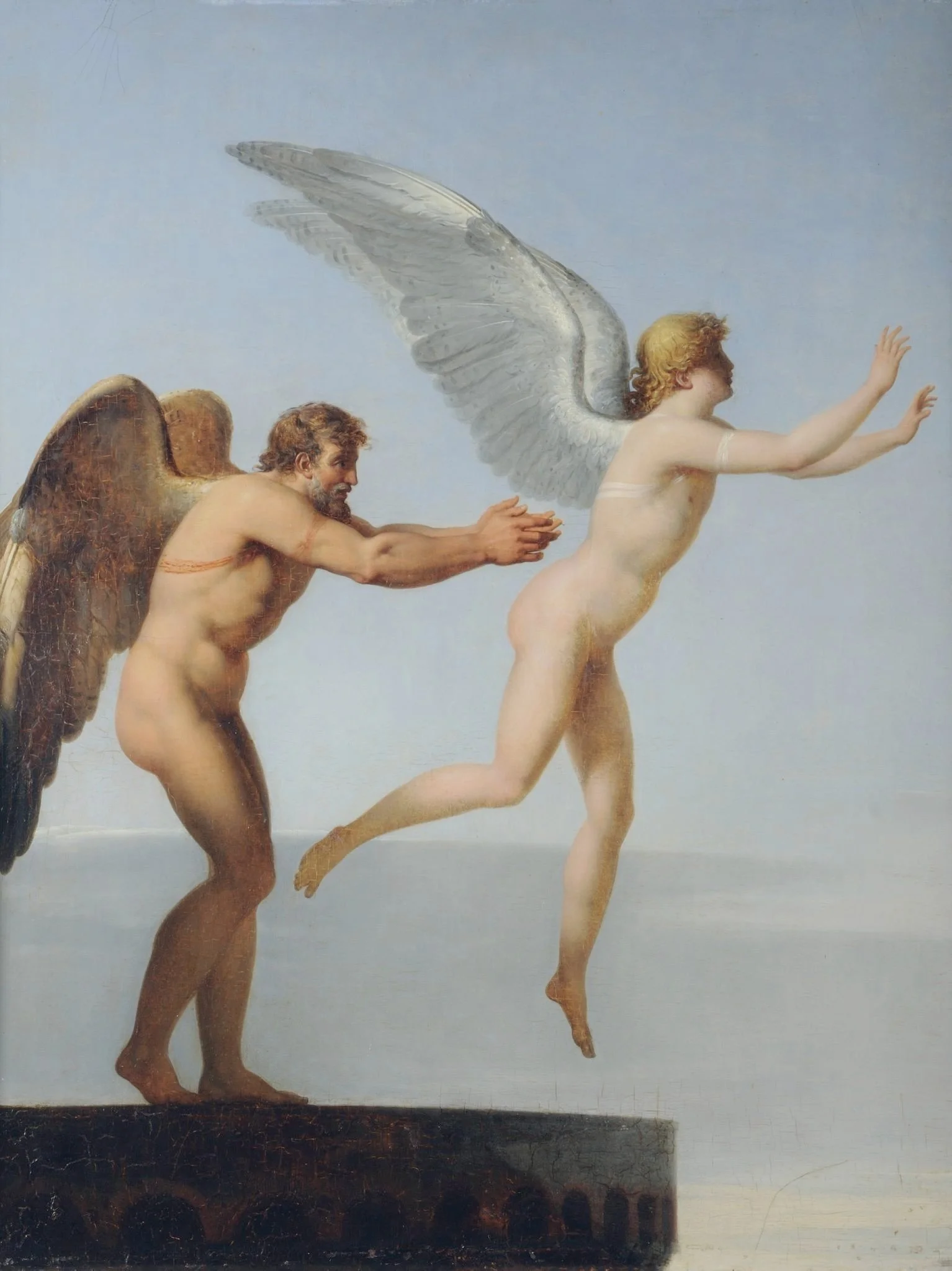
Icarus and Daedalus, Charles Paul Landon, 1799, Oil on canvas, 54 x 44 cm
Collection: Musée des Beaux-Arts et de la Dentelle, Alençon
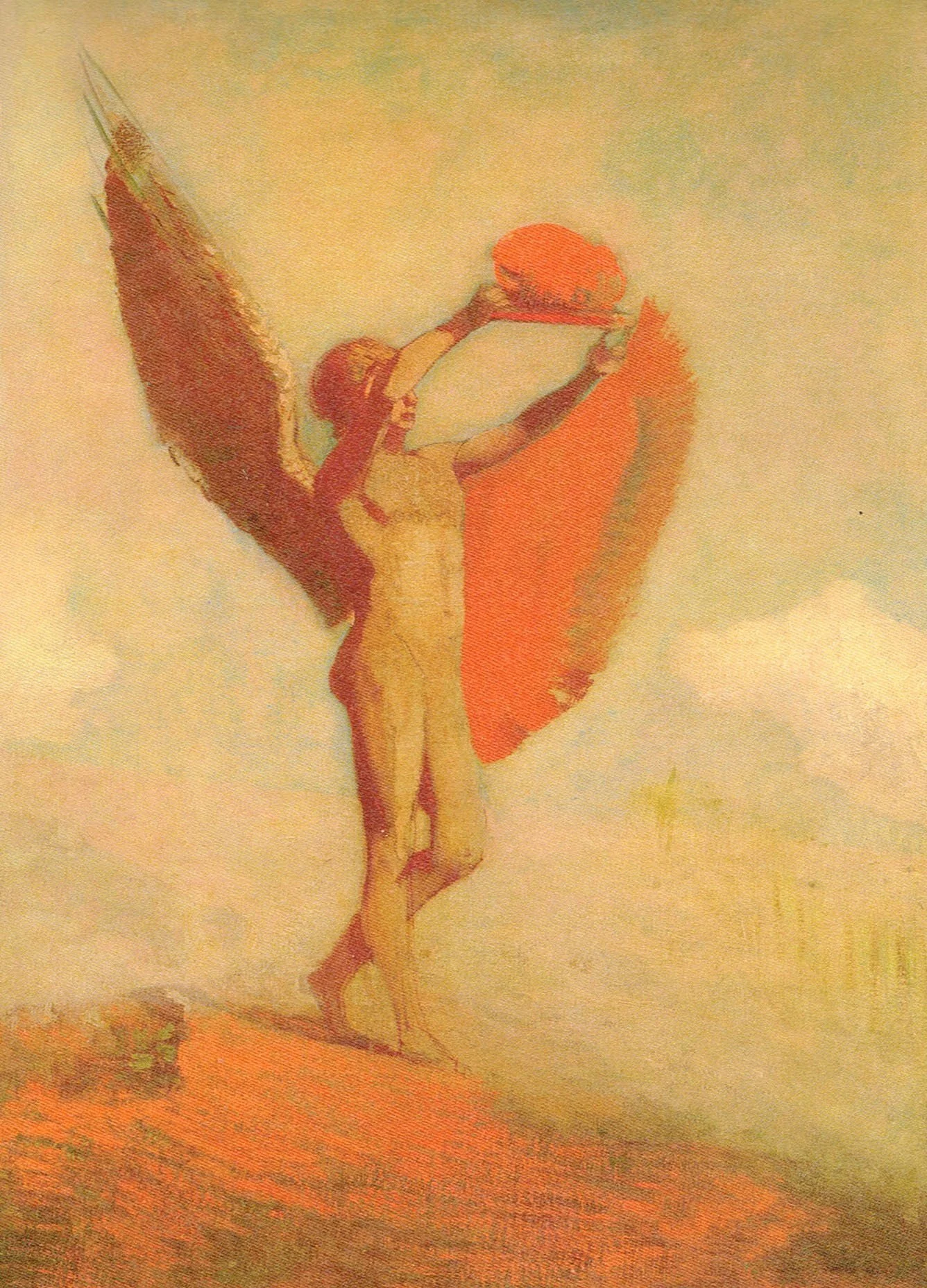
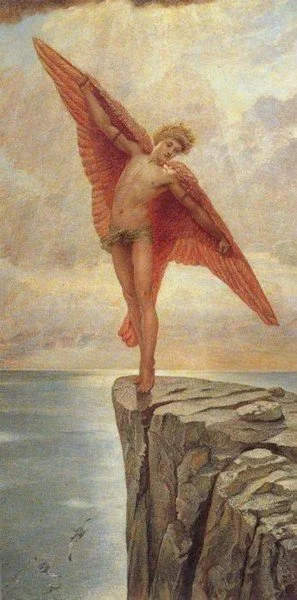
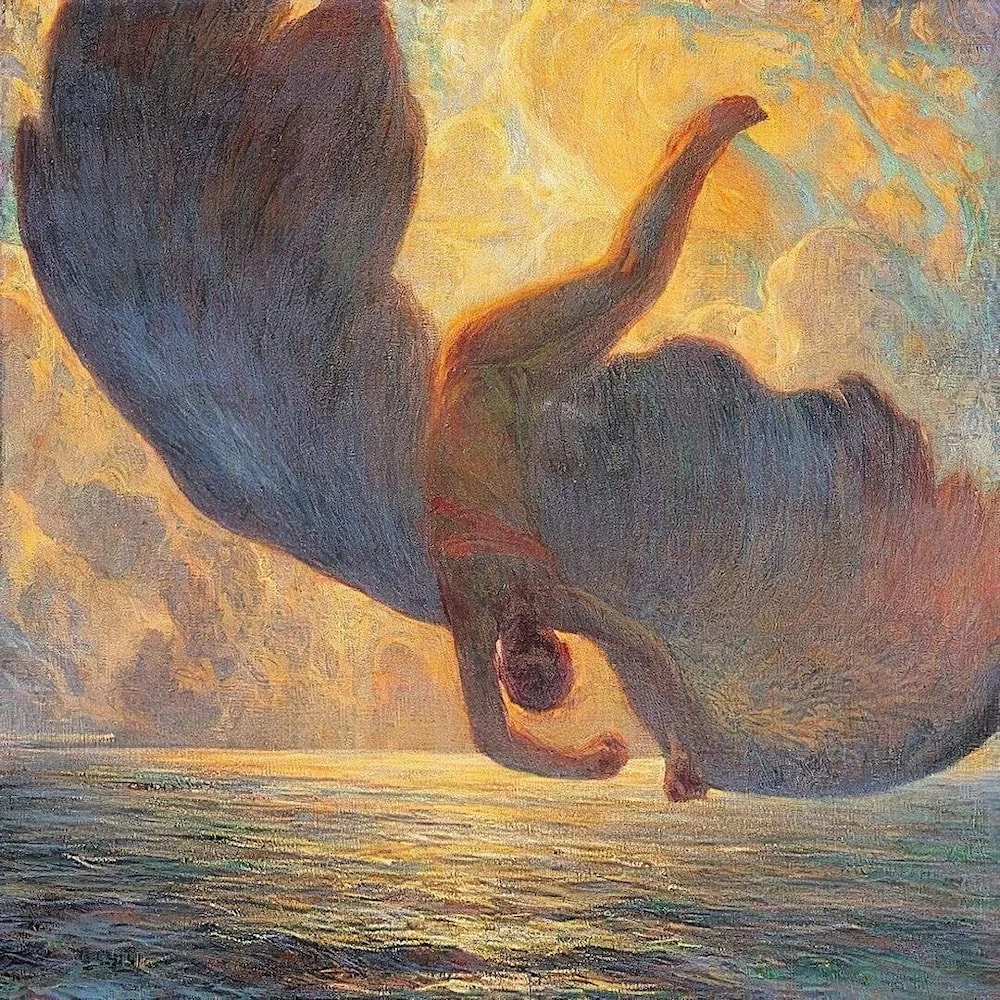
In flight?
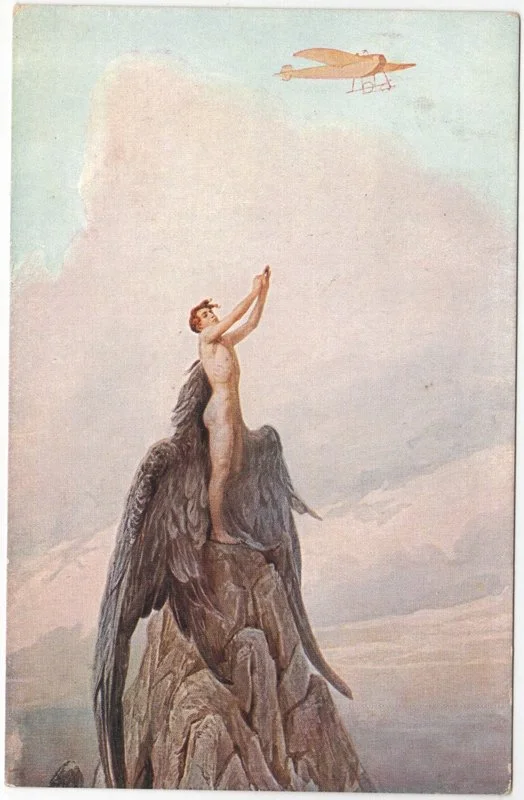
Icarus, Galileo Chini, 1907, Oil on canvas, approx. 125 × 125 cm, Collection: private collection
During the fall?
Icarus on the rocks, Vlaho Bukovac, 1897, oil on canvas, unknown size, Collection: Modern Gallery, Zagreb
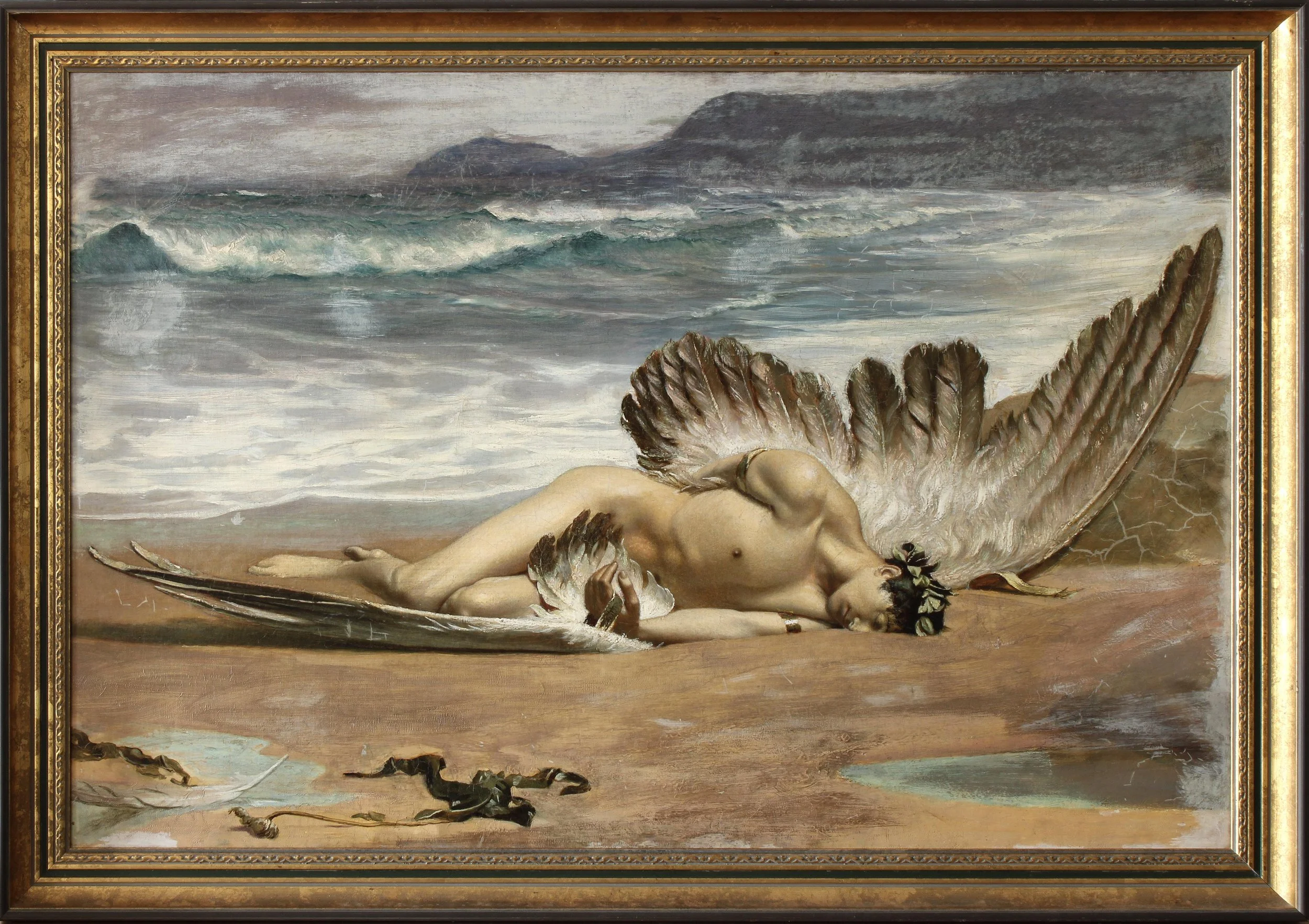
After the fall? Torn apart, or still beautiful?
Dead Icarus Painting (Study for a larger composition), Máthé László, 2016, Oil on Canvas, 70 x 40 cm, Collection: Private Collection
Do you include Daedelus? Or paint it from his perspective, capturing the horror of a loving father that has realized his error?
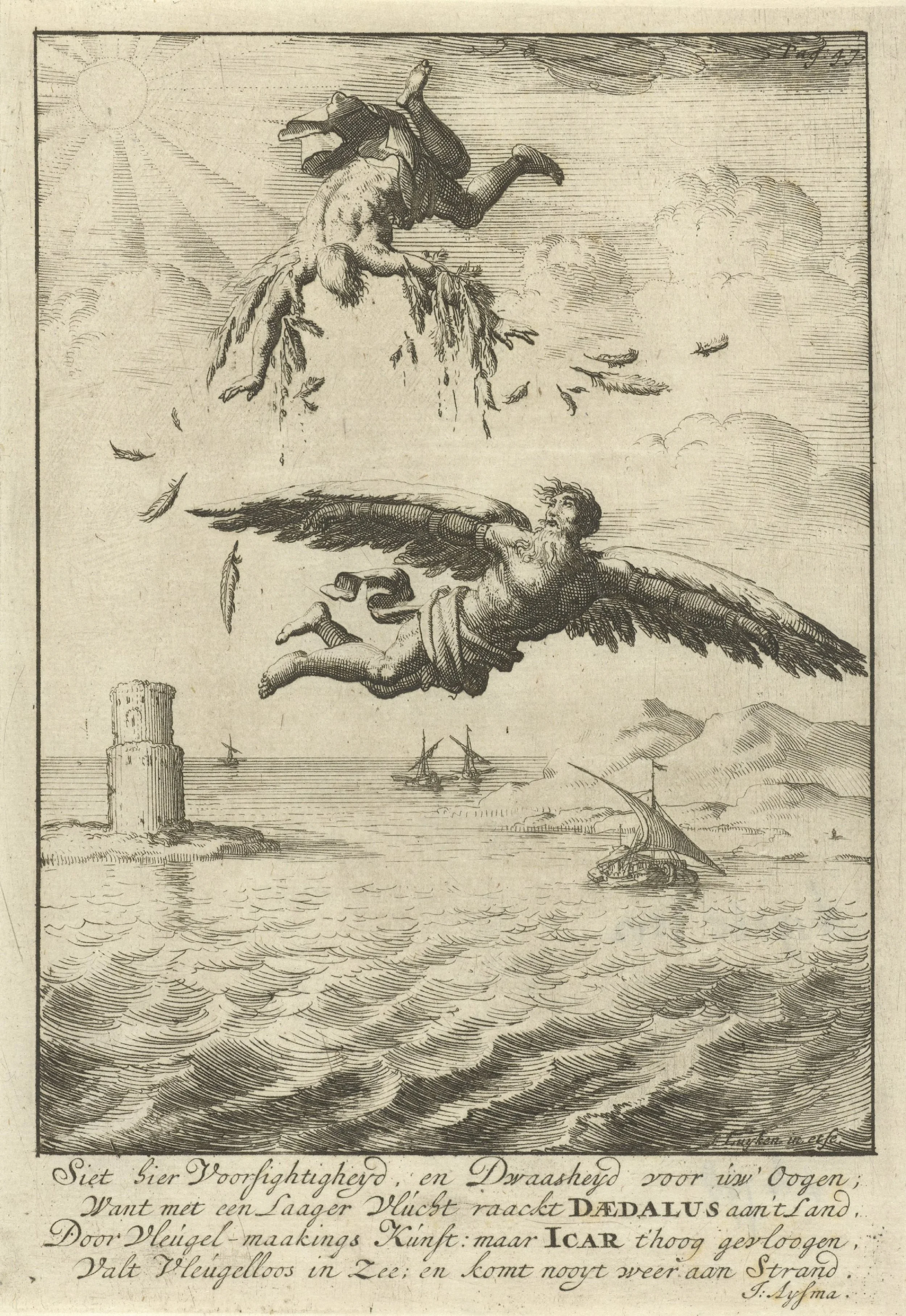
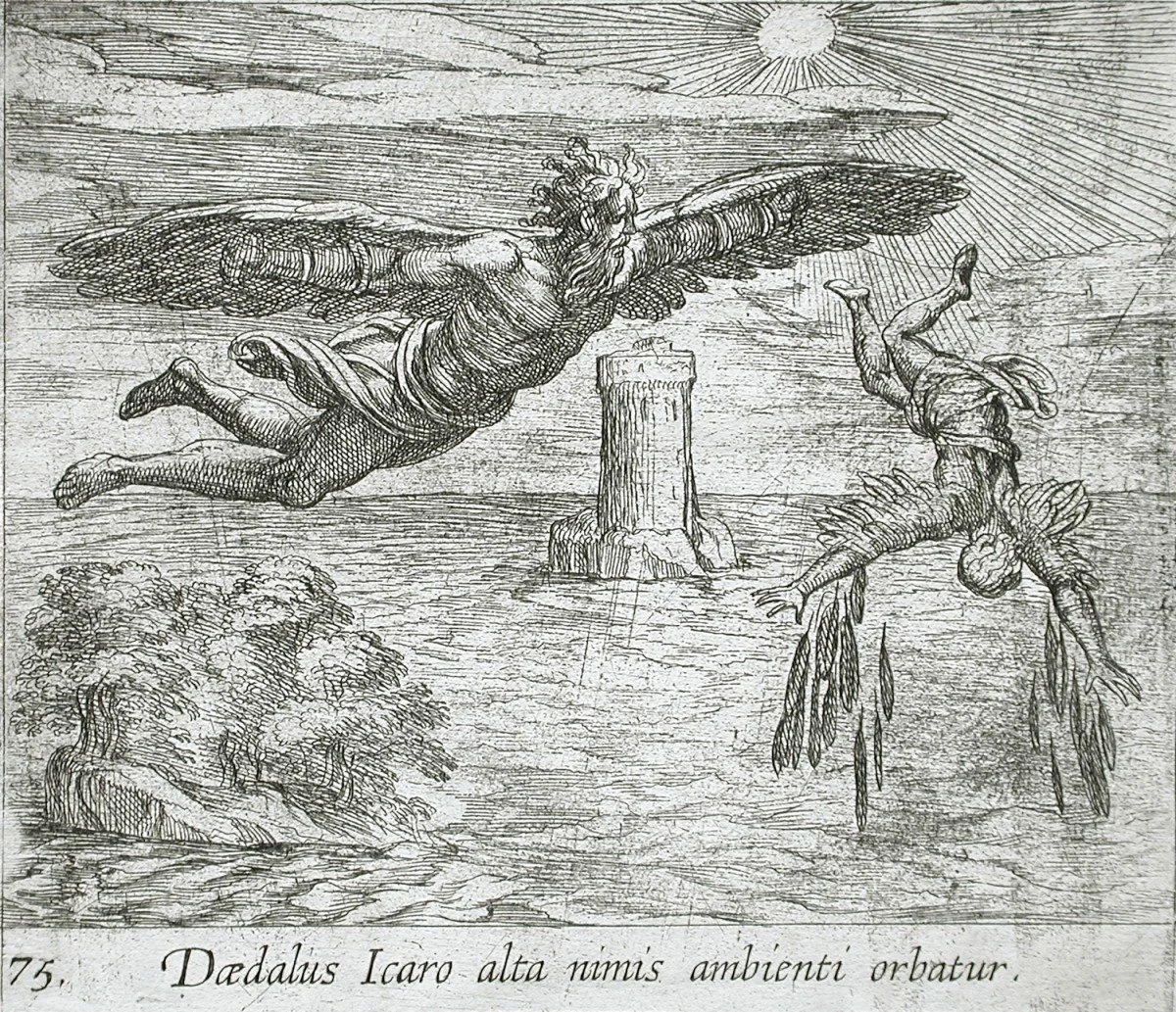
The Fall of Icarus, plate 75 from "The Metamorphoses of Ovid", Antonio Tempesta, published after 1606, Etching, 17.5 x 20 cm, Collection: The Met
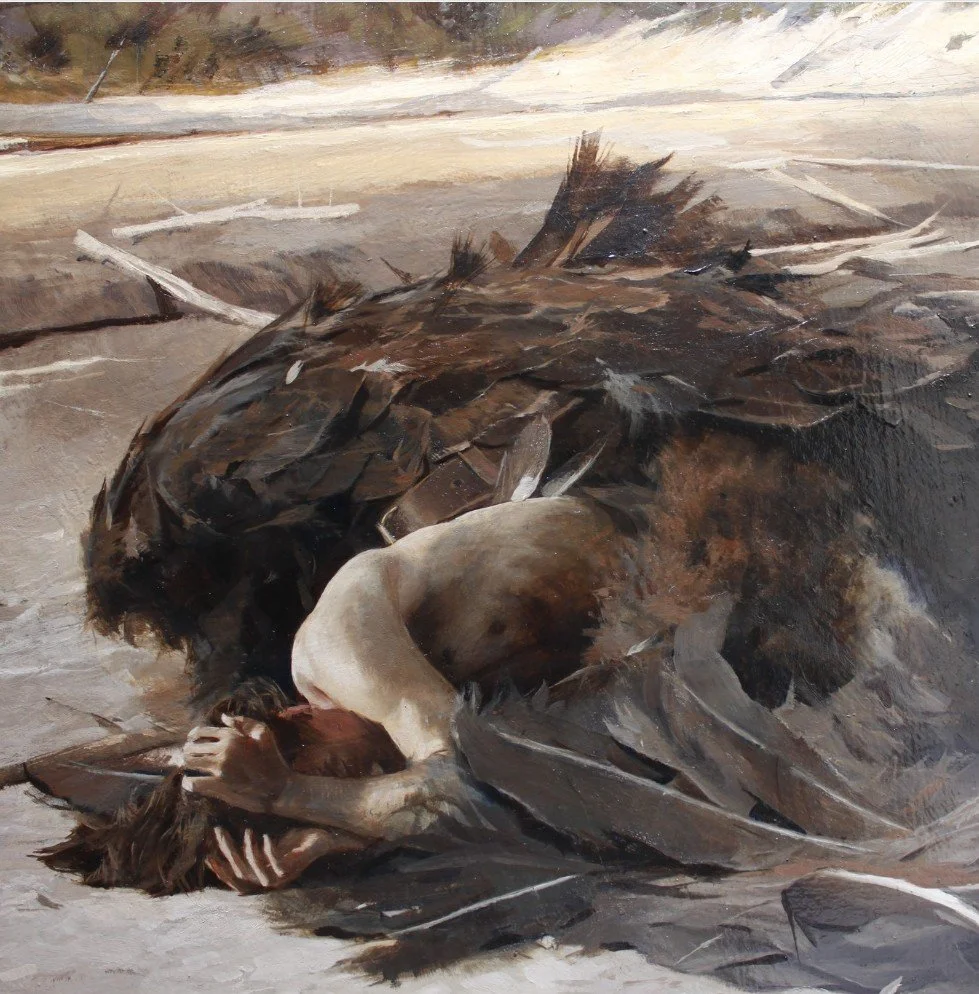
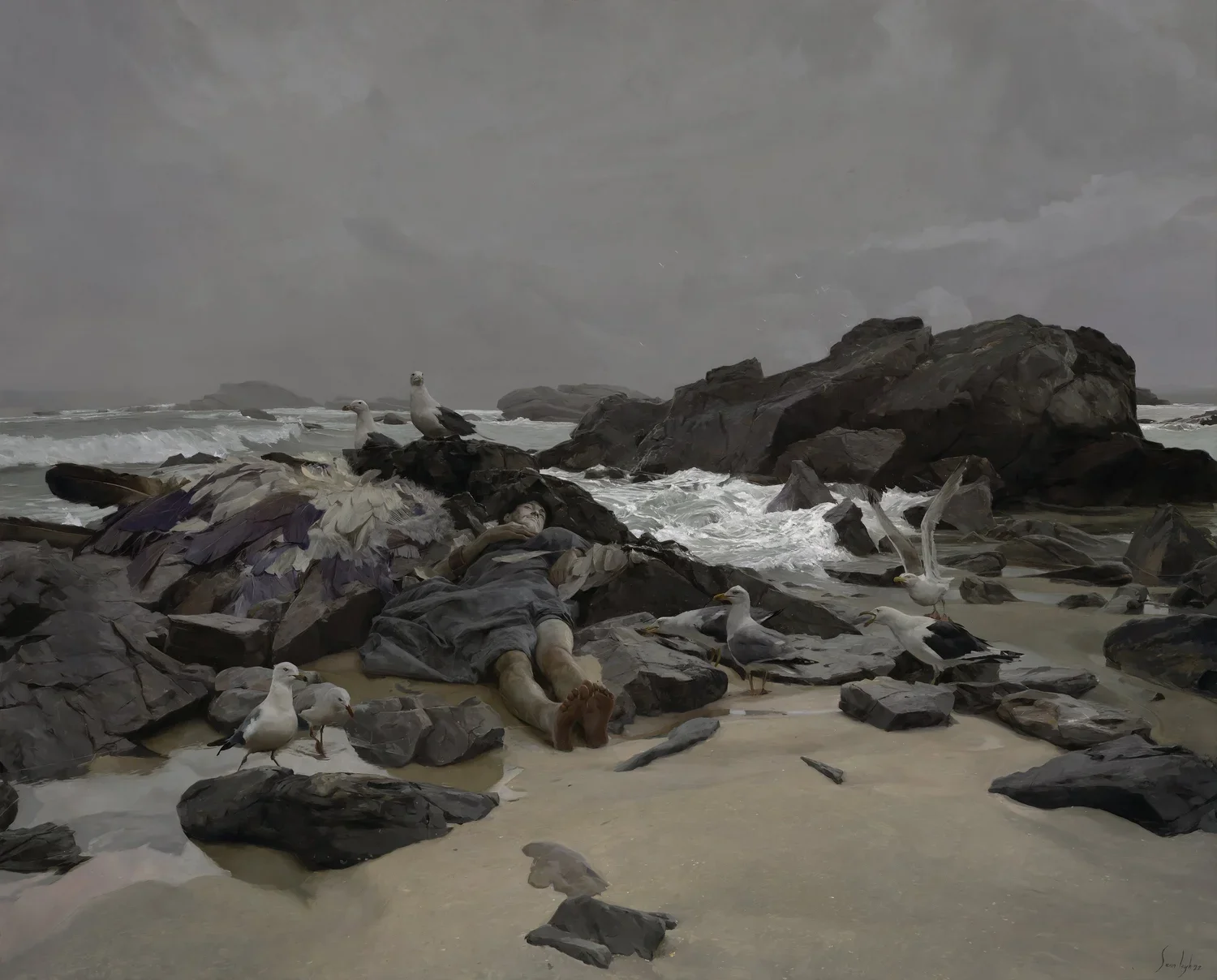
One of my favourites renditions is actually a painting that no longer exists, by the amazing Sean Layh.
Icarus Fallen (detail shot), Sean Layh, 2022, Oil on canvas, unknown size, Collection: destroyed
~
Below is Symposium’s collection of Icarus paintings, as well as Ovid’s excerpt of the story.

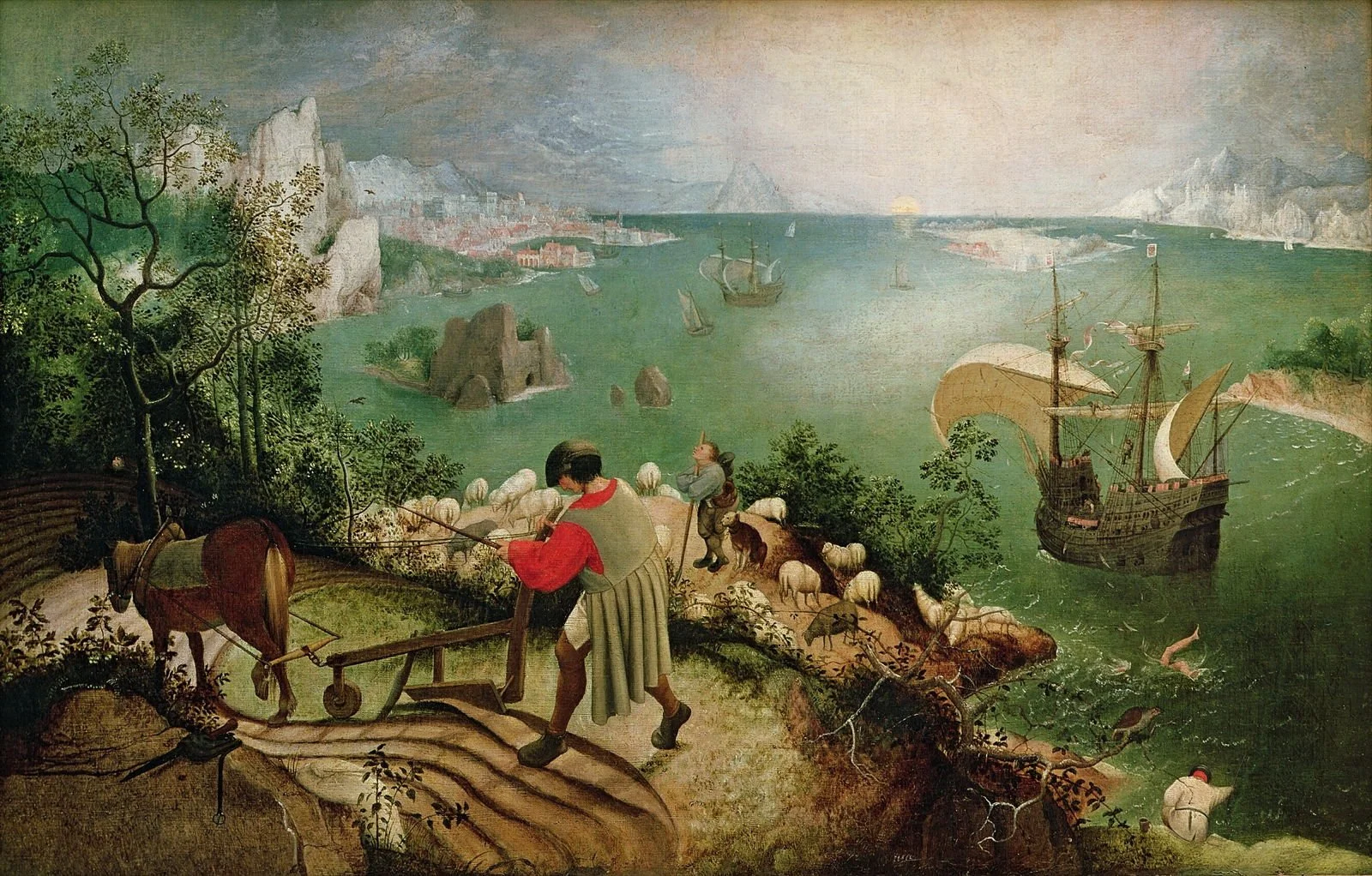
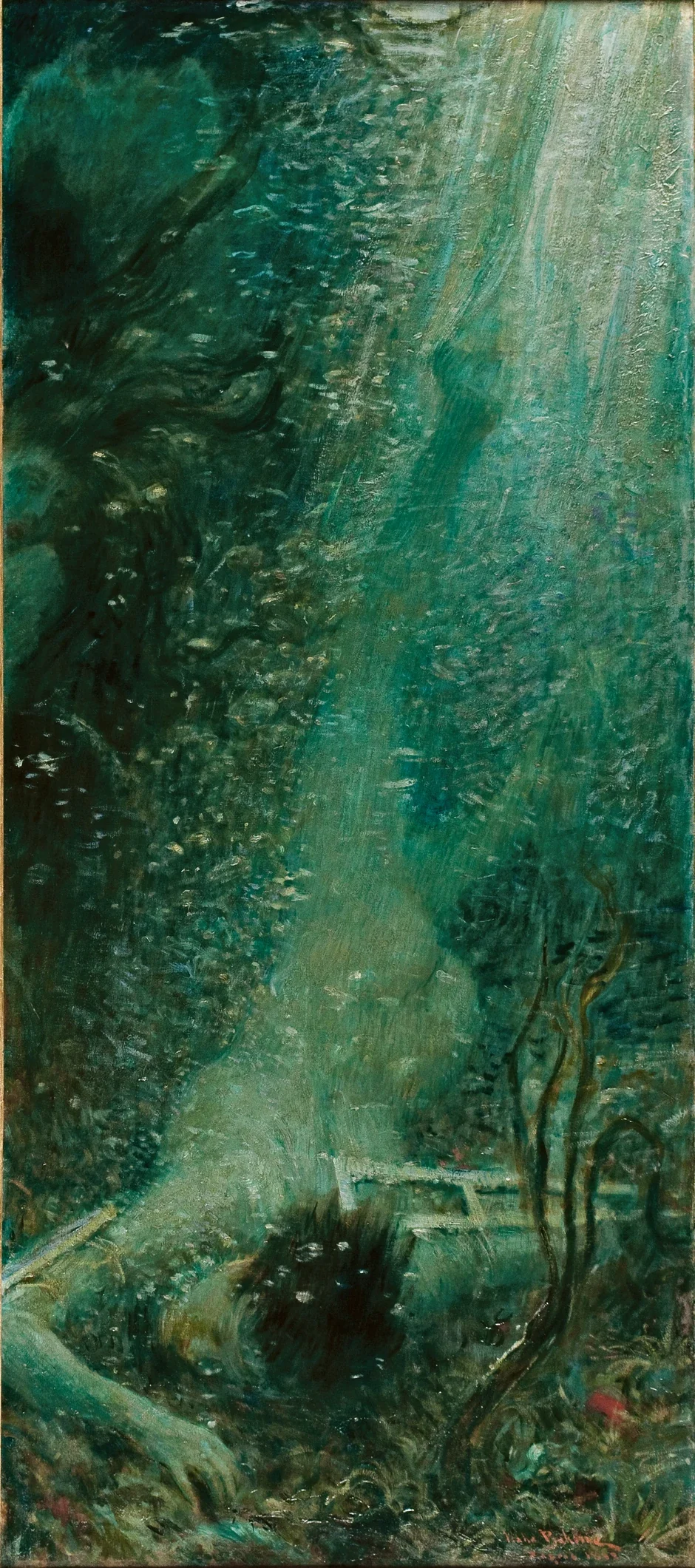
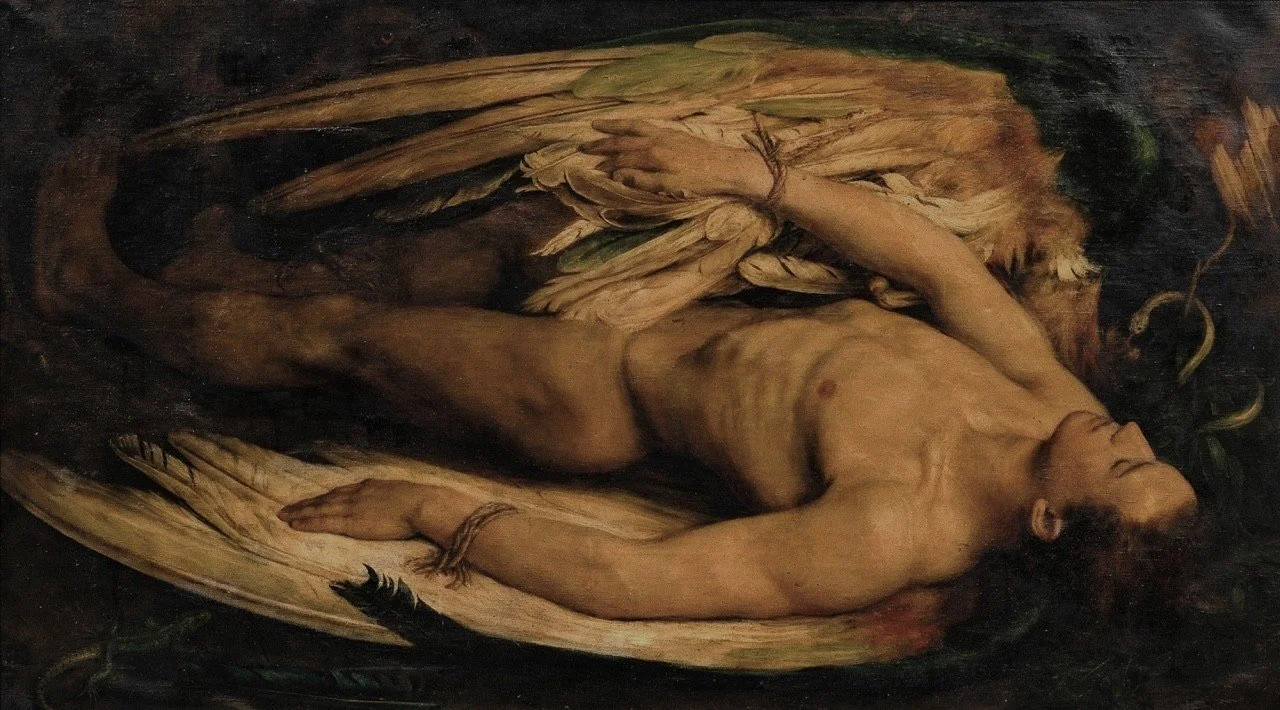
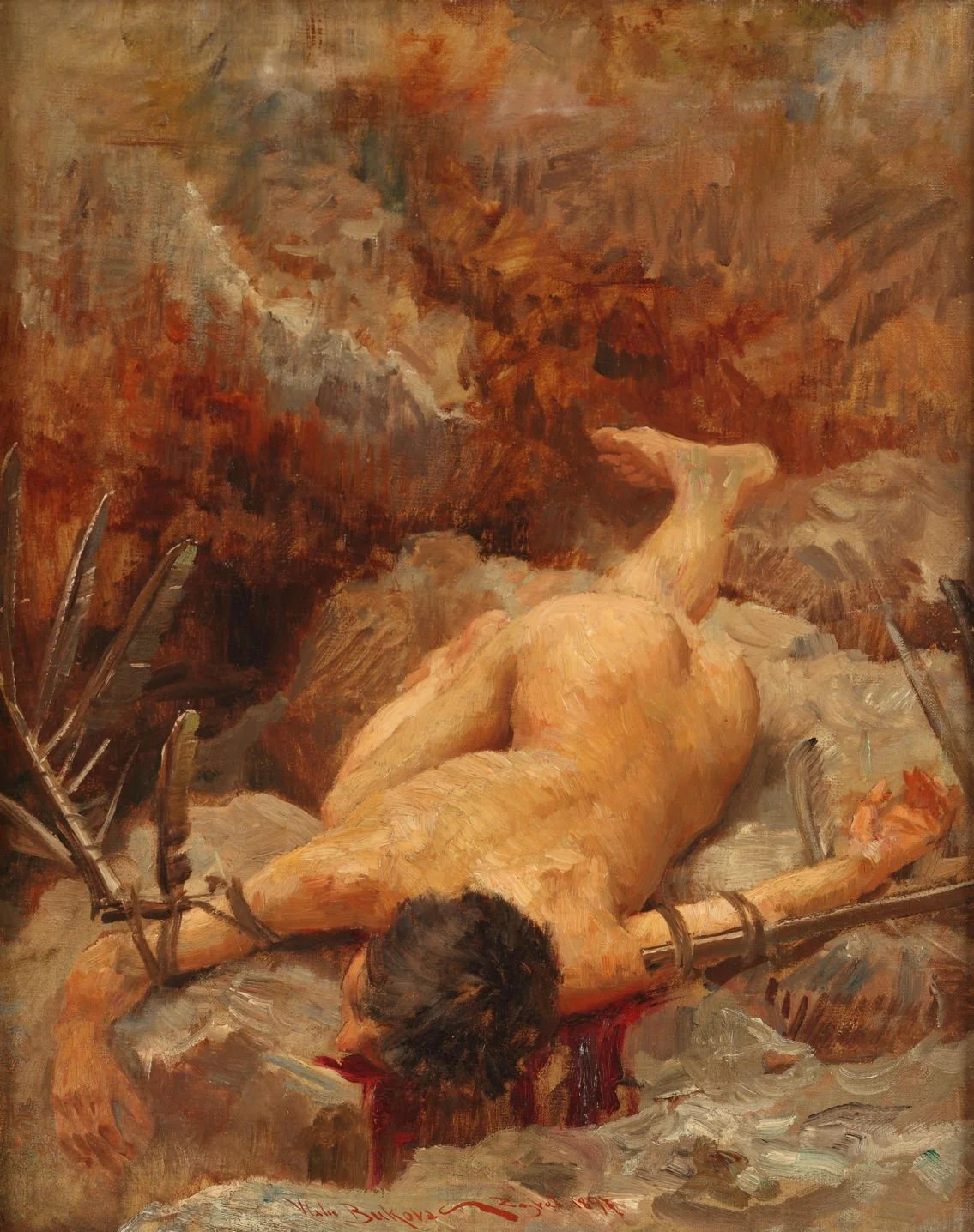

Bk VIII:183-235 Daedalus and Icarus
TRANSLATED BY BROOKES MORE
[183] But Daedalus abhorred the Isle of Crete—and his long exile on that sea-girt shore, increased the love of his own native place. “Though Minos blocks escape by sea and land.” He said, “The unconfined skies remain though Minos may be lord of all the world his sceptre is not regnant of the air, and by that untried way is our escape.” This said, he turned his mind to arts unknown and nature unrevealed. He fashioned quills and feathers in due order—deftly formed from small to large, as any rustic pipe prom straws unequal slants. He bound with thread the middle feathers, and the lower fixed with pliant wax; till so, in gentle curves arranged, he bent them to the shape of birds. While he was working, his son Icarus, with smiling countenance and unaware of danger to himself, perchance would chase the feathers, ruffled by the shifting breeze, or soften with his thumb the yellow wax, and by his playfulness retard the work his anxious father planned.
[200] But when at last the father finished it, he poised himself, and lightly floating in the winnowed air waved his great feathered wings with bird-like ease. And, likewise he had fashioned for his son such wings; before they ventured in the air he said, “My son, I caution you to keep the middle way, for if your pinions dip too low the waters may impede your flight; and if they soar too high the sun may scorch them. Fly midway. Gaze not at the boundless sky, far Ursa Major and Bootes next. Nor on Orion with his flashing brand, but follow my safe guidance.” As he spoke he fitted on his son the plumed wings with trembling hands, while down his withered cheeks the tears were falling. Then he gave his son a last kiss, and upon his gliding wings assumed a careful lead solicitous. As when the bird leads forth her tender young, from high-swung nest to try the yielding air; so he prevailed on willing Icarus; encouraged and instructed him in all the fatal art; and as he waved his wings looked backward on his son. Beneath their flight, the fisherman while casting his long rod, or the tired shepherd leaning on his crook, or the rough plowman as he raised his eyes, astonished might observe them on the wing, and worship them as Gods.
[220] Upon the left they passed by Samos, Juno's sacred isle; Delos and Paros too, were left behind; and on the right Lebinthus and Calymne, fruitful in honey. Proud of his success, the foolish Icarus forsook his guide, and, bold in vanity, began to soar, rising upon his wings to touch the skies; but as he neared the scorching sun, its heat softened the fragrant wax that held his plumes; and heat increasing melted the soft wax—he waved his naked arms instead of wings, with no more feathers to sustain his flight. And as he called upon his father's name his voice was smothered in the dark blue sea, now called Icarian from the dead boy's name. The unlucky father, not a father, called, “Where are you, Icarus?” and “Where are you? In what place shall I seek you, Icarus?” He called again; and then he saw the wings of his dear Icarus, floating on the waves; and he began to rail and curse his art. He found the body on an island shore, now called Icaria, and at once prepared to bury the unfortunate remains.’