Truth and Beauty: The Foundation
n
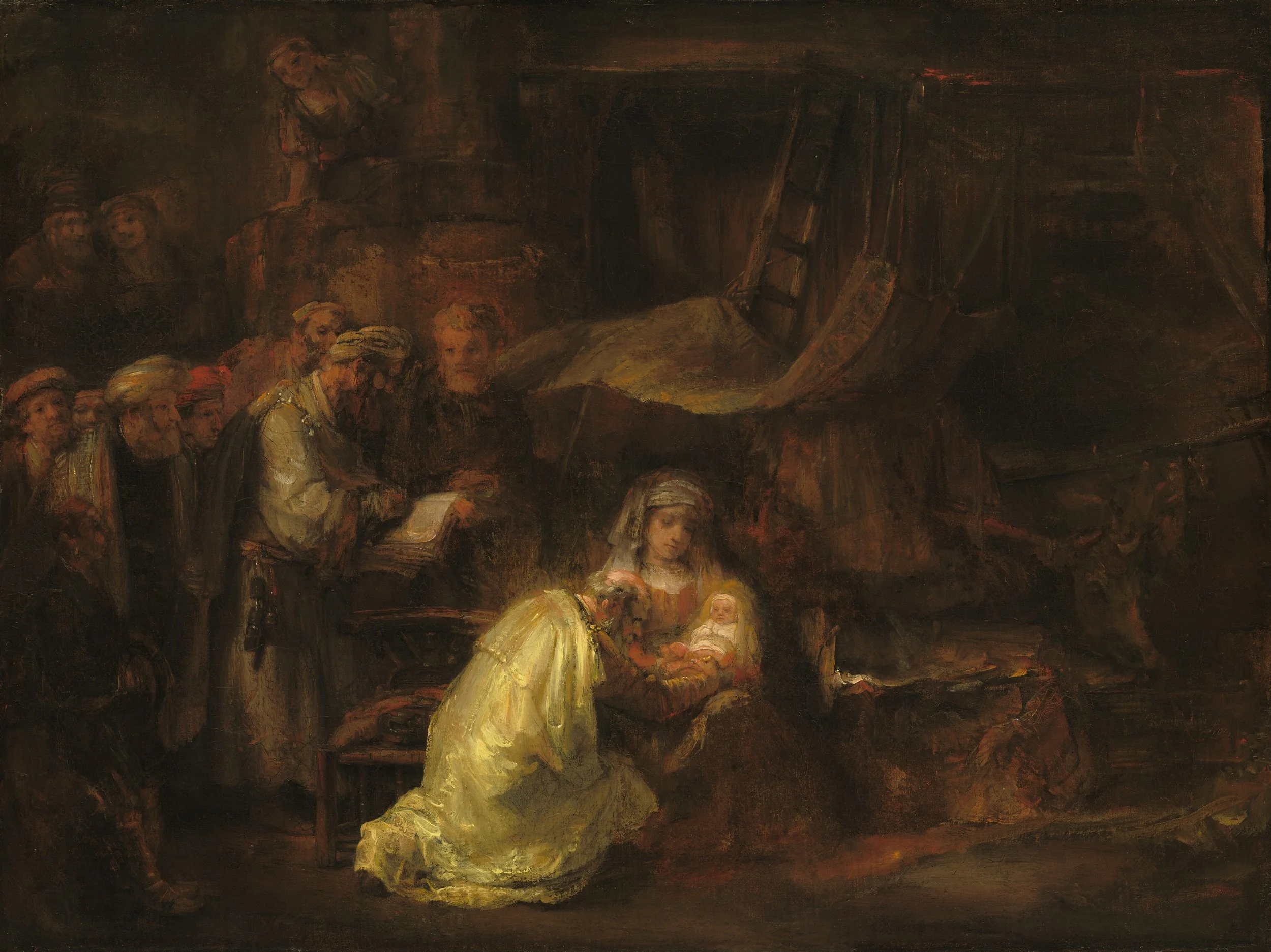
The Circumcision, Rembrandt van Rijn, 1661, 56.5 x 75 cm, National Gallery of Art Washington DC
Beauty is clearly more than a simple matter of aesthetics. There are many pieces of art, that despite meeting many laws of aesthetics, and despite having merit in their craftsmanship, are unremarkable. There is, conversely, a type of art that can evoke an array of emotions— joy, wonder, compassion, sadness, loneliness, horror— and through those emotions, they manage to captivate us.
What is that? What is that element that magnetizes your gaze?
As far back as the classical period in Ancient Greece, the earliest concepts of beauty entangled it with a deeper moral goodness. Platos’ Symposium then links beauty to truth. Part the subjectivity of art complies with how the perception of truth can change, but it's owing to the presence and presentation of that truth that makes a piece of art more than simply pretty. The purpose of beauty, its profound power, then comes from the way it conveys Truth.
‘Truth is ugly. We possess art lest we perish of the truth.’
- Nietzsche
Aaron Ridley in his 2010 paper perfectly elucidates Beauty’s vassalship of truth through this Nietzsche quote:
‘I argue that it is not helpful to construe this remark as a claim to the effect that art falsifies the truth by, for example, peddling lies or deceptions. Rather, I suggest, the remark should be taken to refer to the various ways in which art can present us with the truth in such a manner that we do not perish of it. And of these ways, I argue, the most interesting is that in which art facilitates awareness of putatively ugly truths while actually abolishing their ugliness: a striking discussion of this possibility is to be found in Nietzsche’s first.”
And so beauty is not a distortion of the truth, but a removal of the ugly, the ugly being the discordant and irrelevant. [1]
Beauty is the harmony and clarity through which is truth is communicated. As the trumpet is to the sound it makes, so the beauty is the crafted instrument that sings a truth we can hear.
Truth
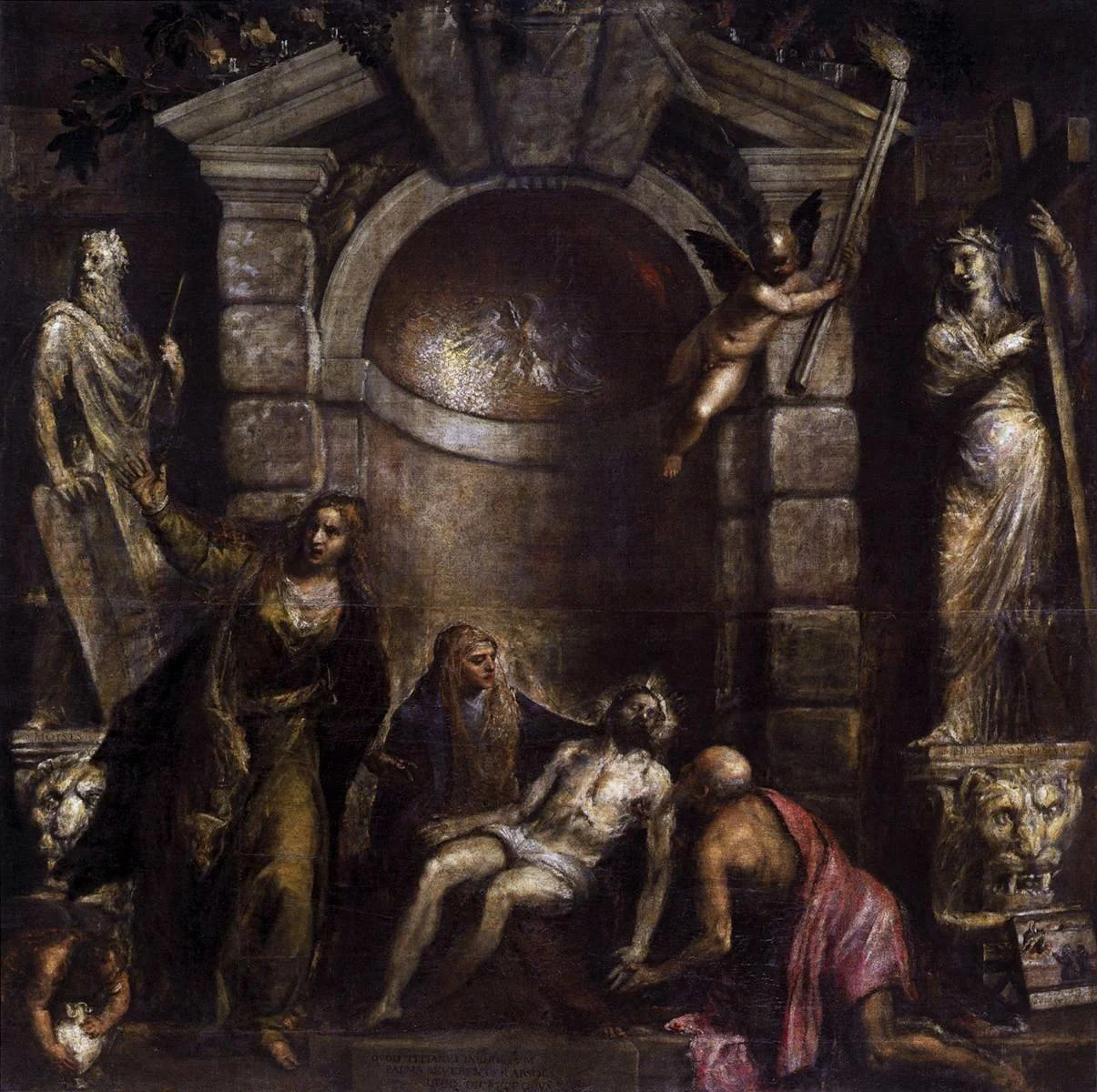
Pieta, Titian, 1576, Oil on canvas, 353 x 347 cm, Gallerie dell’Accademia Venice
Beauty is the clarity and harmony through which truth is communicated.
But a truth, whether it's clearly communicated or not, can still be beyond our grasp and comprehension. What captures our gaze, and keeps us looking at the greatest works of art centuries after their creation, owes to the unknown, the inexplicable mystery of the beauty and truth of art.
The Known and The Unknown in Art
If you were to take one of the greatest works of art, and try and describe everything that makes it beautiful, everything that makes it truthful, you might start by having a doctor look at the anatomical accuracy.
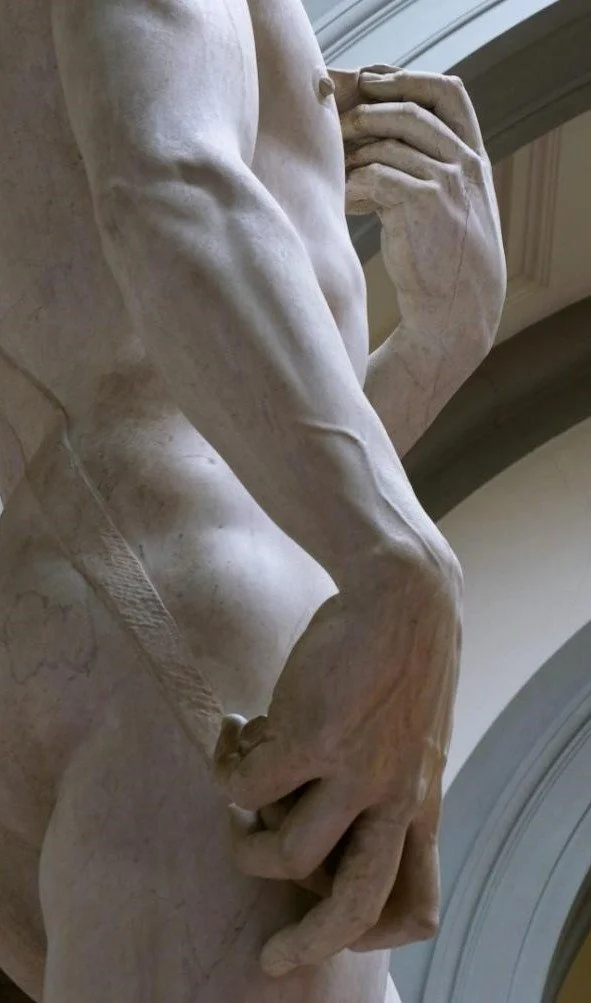
You might get an artist who notes how, much like the fractured sculptures of antiquity, unity through rhythm and form exist as much in each part of the sculpture as they do in the whole.
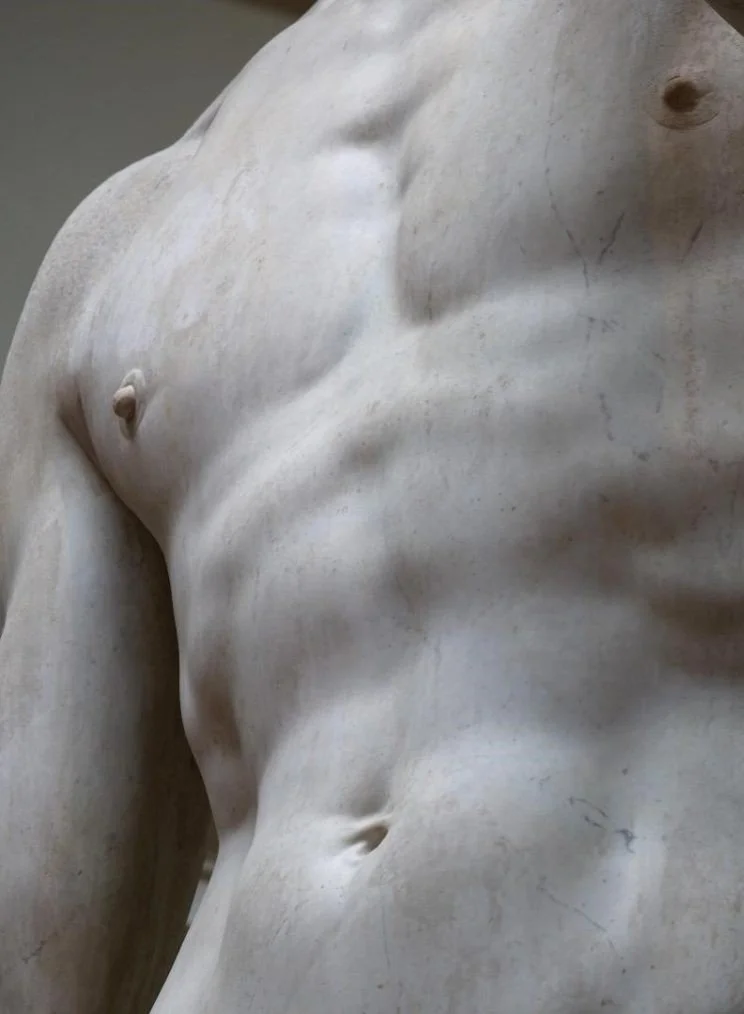
A historian might then explain the biblical and historical significance of the figure. Every aspect of the sculpture might be analysed by every different discipline to discuss and debate what causes the strength of the gravity of this work.
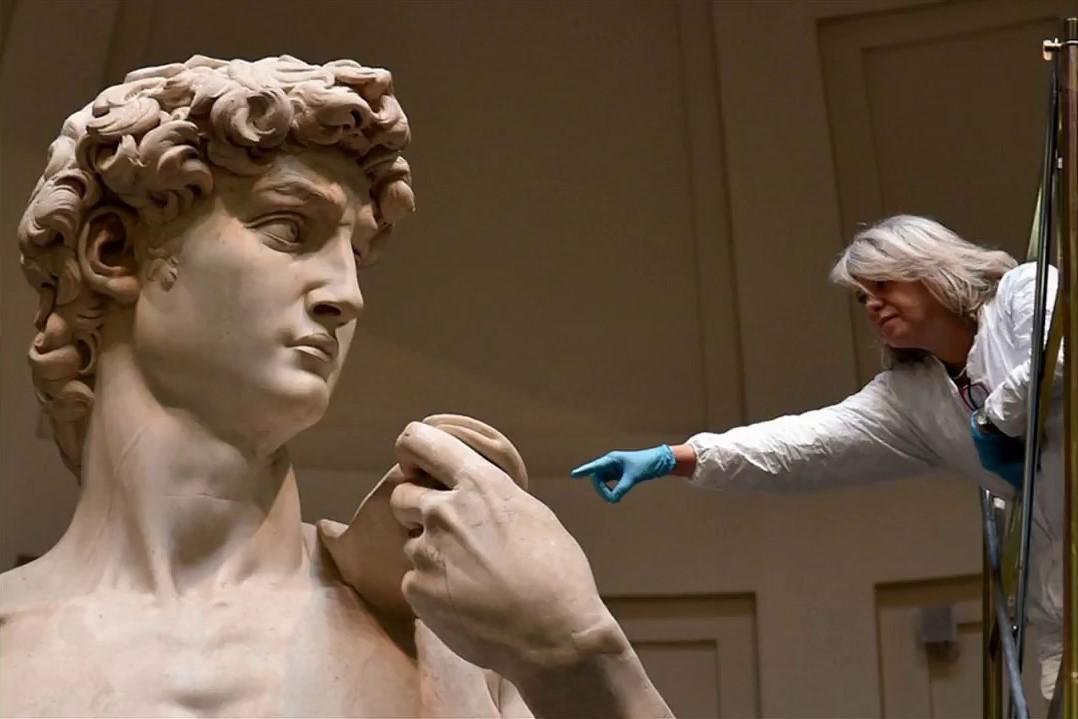
And yet, the magic of art is that after all this, the sculpture and its beauty will still contain an inexplicable grasp that no other artwork does. Nobody can fully explain it. And so, the nature of art is that one foot of it stands in the known, and the other foot in the unknown. This is what manages to capture our gaze, and keeps us looking at the greatest works of art, centuries after their creation.
The known in art what we can describe, categorise: it's the meaning we can understand in the content, the composition and technique of the painting, the instrumentation of the music etc. The unknown is in the inexplicable mystery of the beauty of art.
Truth can exist in a clear and harmonious form and still not be fully comprehensible. That's the nature of truth. Universal truth exists in a way that every element, every atom of it is perfectly integrated into and bonded within the whole. Of course then truth exists for us in a partial and incomprehensible way, because we cannot know everything and so can never see the whole. It is this struggle that art serves.
The more you speak the truth and the more you surround yourself with the truth, the more sensitive you become to when something feels true. And so the purpose of beauty, of art is to teach us the truths of life through its foot in the known, and through its foot in the unknown to grow your sensitivity to truth, even when you don't understand it enough to navigate life.
[1] Montemaggi, Vittorio, and Regina Schwartz. “ON RELIGION AND LITERATURE: TRUTH, BEAUTY, AND THE GOOD.” Religion & Literature, vol. 46, no. 2/3, 2014, pp. 111–28. JSTOR, http://www.jstor.org/stable/24752907.